By Yasmin Chaudhary — The Inkwell Times
Angolan spirituality does not live in temples alone. It lives in memory, in the land, in the body, and in the way ancestors are spoken of in the present tense. Long before colonial borders or Christian missions, the people of Angola developed rich spiritual systems rooted in continuity—between the living, the dead, and those yet to be born.
To understand Angola’s mythology is to understand how belief survives even when names change.
The Spiritual Foundations of Angola
Angola is home to many ethnic groups, including the Bakongo, Kimbundu, Ovimbundu, Chokwe, and others. While practices differ by region, Angolan mythology shares a core belief: life is cyclical, not linear.
One of the most influential spiritual systems comes from the Bakongo, whose worldview shaped much of Angola’s ancestral belief.
At the center of this worldview is the understanding that the physical world and the spiritual world are deeply intertwined.
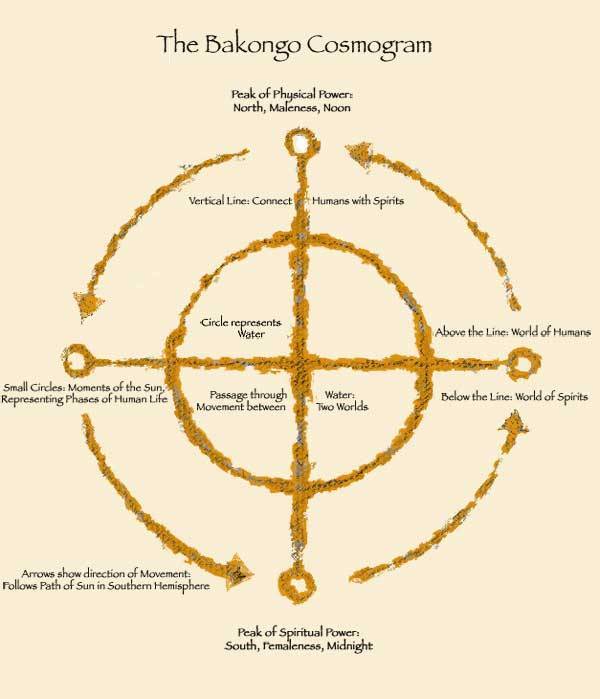
The Dikenga Cosmogram: The Cycle of Life
Dikenga (also known as the Kongo cosmogram) is one of the most important spiritual symbols in Angolan mythology.
It represents:
- Birth
- Life
- Death
- Rebirth
The cosmogram is often drawn as a circle with a cross inside, marking the passage of the sun and the soul through different stages of existence. The boundary between worlds—called the kalûnga line—separates the living from the ancestors, but it is not a permanent barrier.
Death is not an ending. It is a transition.
Ancestors as Active Presences
In Angolan belief systems, ancestors are not distant spirits. They are active participants in daily life.
Ancestors:
- Protect families
- Guide decisions
- Require respect and remembrance
This reverence is not worship—it is relationship.
Still practiced today:
- Pouring libations before important events
- Speaking ancestors’ names aloud
- Consulting elders for spiritual guidance
- Maintaining family burial grounds
Even Angolans who identify as Christian often continue these practices quietly, viewing them as cultural duty rather than religion.
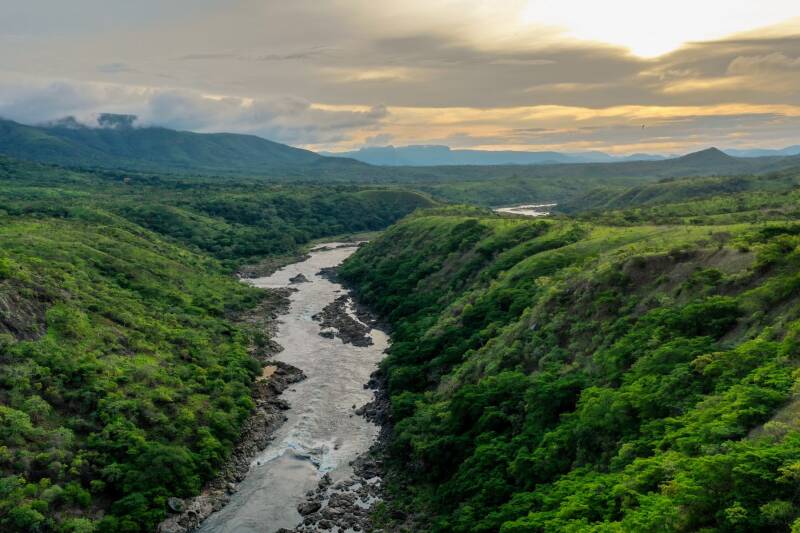
Photo: NRS, Kayaking the Kwanza River, Angola
Spirits, Nature, and Sacred Space
Angolan mythology teaches that spirits inhabit:
- Rivers
- Forests
- Mountains
- Crossroads
Certain places are treated with caution and respect. Silence, offerings, or verbal acknowledgment may be required before entering.
This belief system aligns with later Christian concepts of angels and demons, allowing traditional spirituality to survive beneath new religious language.
Colonialism, Christianity, and Survival
Portuguese colonization and Christian missionization attempted to suppress Angolan spiritual systems. Rituals were renamed “superstition.” Sacred practices were pushed underground.
But they did not disappear.
Instead, they adapted.
Christian prayer blended with ancestral reverence. Saints took on attributes of older spirits. Funerary customs retained Indigenous structure even when Christian symbolism was added.
Survival required quiet transformation.
What Still Endures Today
Modern Angolan spiritual life often includes:
- Christian faith practiced alongside ancestral customs
- Respect for elders as spiritual authorities
- Ceremonial meals tied to remembrance
- Belief in spiritual causality—nothing happens without reason
In rural areas especially, traditional healers and spiritual intermediaries still play important roles in community health and guidance.
Why Angolan Mythology Matters
Angolan mythology reminds us that spirituality is not static. It moves, adapts, and survives even under violence and erasure.
It teaches:
- Continuity over rupture
- Relationship over doctrine
- Memory as resistance
For Angola, ancestral belief is not about the past.
It is about presence.
Closing Reflection
To speak of Angolan mythology is to speak of endurance.
The ancestors are not gone.
They are listening.
They are remembered.
They are still walking with the living.
And that, perhaps, is the truest definition of spirit.
Add comment
Comments