By Yasmin Chaudhary - The Inkwell Times
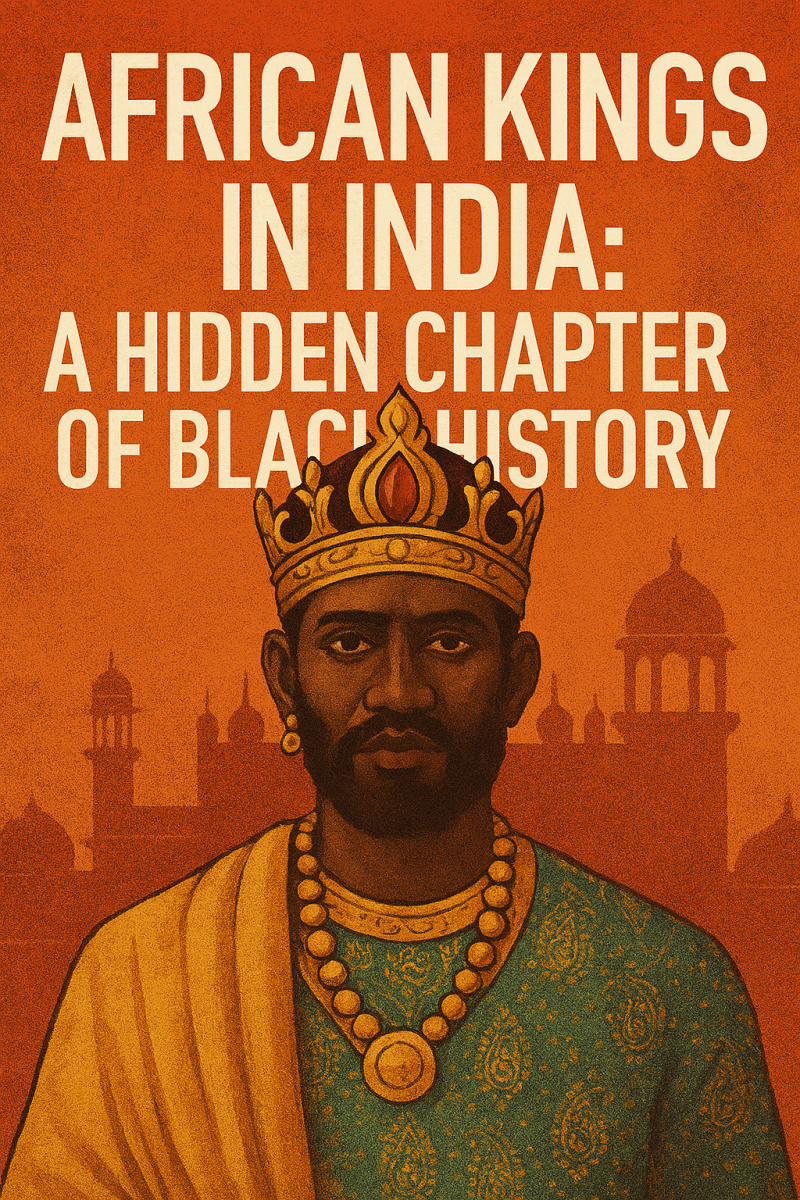
When we think of Black history, it’s easy to picture the Atlantic world—Africa to the Americas. Yet there is a long, fascinating story of Africans who came to the Indian subcontinent, some rising to power as soldiers, rulers, and kings. Their legacy is still alive today, connecting communities across continents.
African Arrivals on the Indian Subcontinent
Between the 13th and 17th centuries, Africans arrived in India through the Indian Ocean and Arabian Sea trade routes. Many were enslaved, others were merchants or soldiers. They were known as Habshi (from al-Habash, referring to Abyssinia/Ethiopia) and later as Siddi or Sheedi, names that still identify Afro-Indian communities today.
Unlike other parts of the world where enslaved Africans had little opportunity for advancement, India offered unique avenues of social mobility. Some Africans rose through military ranks or court service to wield real power.
From Slaves to Sovereigns
- Malik Ambar (1548–1626): Born in Ethiopia, enslaved as a youth, brought to India, and eventually became the regent of the Ahmadnagar Sultanate in the Deccan. He was known for his military skill and innovative governance.
- The Habshi Dynasty of Bengal (1487–1493): Four rulers of African descent held power in Bengal after a palace coup, showing that Africans could attain sovereignty on the subcontinent.
- Janjira State (Maharashtra): Ruled by the Siddi dynasty, this island fortress on the Konkan coast remained independent from conquest and was recognized as a princely state by the British until 1948.
These examples remind us that African presence in India was not just marginal or subservient—it was powerful, influential, and politically significant.
Cultural and Social Legacy
The descendants of these African rulers are still present today, forming communities known as the Siddi in India and Sheedi in Pakistan. They preserve unique cultural traditions, such as the drum-based Goma dance in Gujarat and Maharashtra, which carries echoes of Bantu heritage.
Monuments like the Murud-Janjira fort and surviving structures from the Habshi period in Bengal stand as reminders of this history. Yet, despite this rich heritage, many Afro-Indian communities face poverty, marginalization, and limited recognition.
Why This History Matters
- Expands Black history globally: It shows that African influence reached Asia centuries ago.
- Highlights resilience and agency: Africans in India navigated systems of power to become rulers and leaders.
- Demonstrates cultural hybridity: African traditions blended with Indian culture, creating new identities.
- Challenges historical erasure: Teaching this story helps ensure Afro-Indian contributions are remembered.
Today, the Siddi communities remain living links to this past, carrying traditions, music, and stories that connect Africa and India across centuries. Their history is a reminder that Black history is not limited to one region—it’s global, complex, and ongoing.
Reflection for Readers:
- What does “king” mean in a context where African origin individuals ruled in India?
- How can we honor histories often excluded from textbooks?
- How are Afro-Indian communities preserving their identity today?
Exploring these questions invites us to see history in its full, interconnected depth—and recognize that Black power, resilience, and influence exist in every corner of the globe.
Add comment
Comments