By Yasmin Chaudhary — The Inkwell Times
For as long as I can remember, I’ve carried a memory that may or may not be entirely accurate.
I have long remembered my sister being friends with a girl whose brother became involved in a murder. Whether memory has blurred some of the details over the years, I cannot say with complete certainty. What I do know is that the case left a lasting impression on me, and decades later, I still find myself thinking about it.
I grew up in the Springfield and Newington area of Northern Virginia and attended Saratoga Elementary School. Back then, the community felt small. Friends knew friends, parents knew one another, and news traveled quickly. When something tragic happened, it didn’t feel distant. It felt close.
One story in particular never left me.
As I remember it, my sister had a friend whose brother became connected to a murder case that shocked our community. When my mother learned about the connection, she immediately ended the friendship. Not long afterward, I remember hearing that the family had moved away.
For years, only fragments remained in my mind.
I remembered a screwdriver.
I remembered two perpetrators.
I remembered a young victim.
Most of all, I remembered the way adults reacted whenever the case came up. Conversations lowered to whispers. Faces became serious. Even as a child, I understood that something terrible had happened.
Recently, I decided to revisit the case and see whether the memories that had lingered in my mind for decades matched what actually occurred.
A Murder That Shocked Springfield
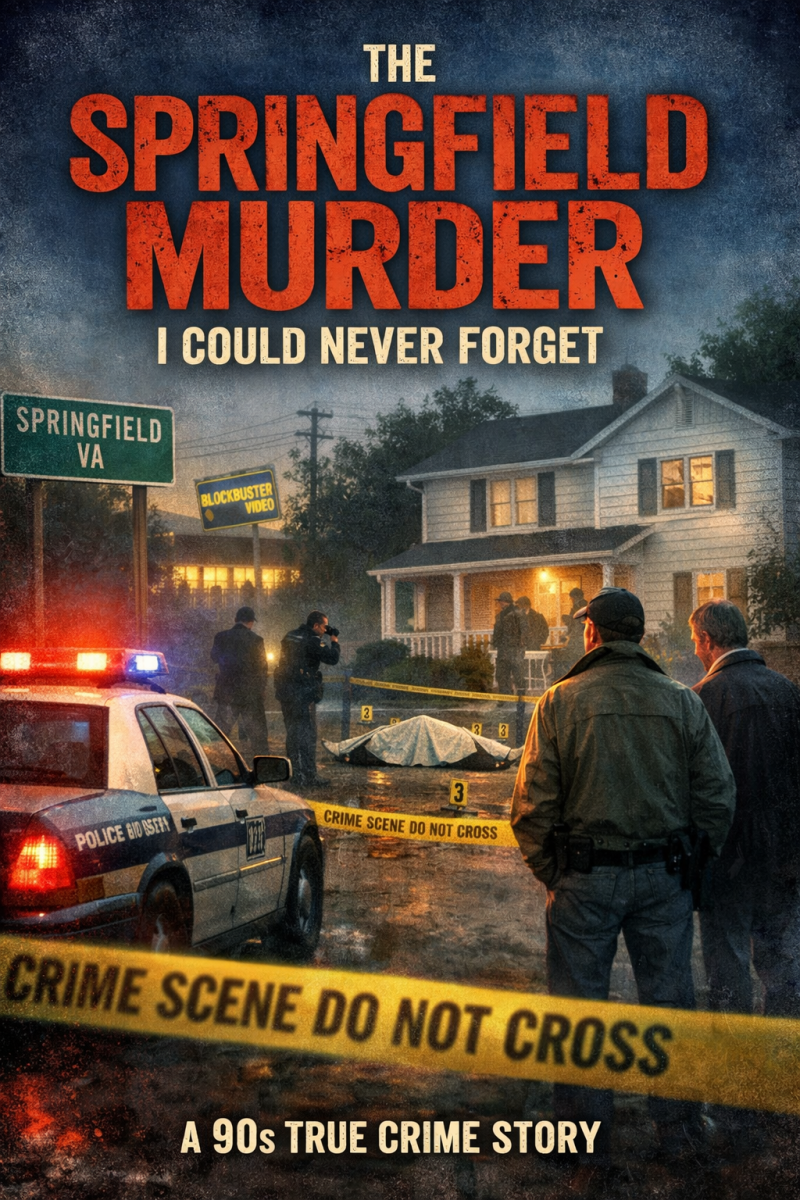
In December 1995, 13-year-old Jonathan Hall was murdered in Springfield, Virginia. According to contemporary news reports, Hall was stabbed dozens of times with a Phillips-head screwdriver. The brutality of the crime stunned the community and generated significant media attention throughout Northern Virginia.
Two people were ultimately charged in the case: 16-year-old Jason Garrison and 44-year-old James “Buck” Murray.
As I read through reports from the time, I was struck by how many details matched my childhood memories. The screwdriver. The involvement of multiple perpetrators. The fact that one of them was a local teenager.
Other details did not match what I remembered.
For years, I had pictured the victim as a much younger child. Looking back, I suspect that was simply the way my younger mind processed the tragedy. To a child, a thirteen-year-old can seem very young.
Whether this was the exact case connected to the memories I carried for so many years, I cannot prove with complete certainty. Yet the similarities were enough to make me pause.
How Memory Changes Over Time
One of the strangest things about memory is that emotions often survive long after details fade.
We may forget names, dates, or specific facts, but we remember how events made us feel.
What remains strongest in my mind is not the crime itself. It is the atmosphere surrounding it. The shock. The fear. The sense that something unimaginable had happened close to home.
I also remember my mother’s reaction.
Whether she personally knew the family involved or simply felt uneasy about the connection, she decided my sister would no longer spend time with her friend. That decision became intertwined with my memory of the case itself.
Over time, memories can blur. Details can shift. Stories can become tangled with the emotions surrounding them.
Yet some moments never completely leave us.
The Ripple Effects of Tragedy
When people discuss true crime, the focus is usually on the victim, the investigation, and the perpetrators.
What often receives less attention are the countless other lives touched by a tragedy.
Parents, siblings, classmates, neighbors, teachers, and friends all experience the aftermath in different ways.
If my memory is correct and my sister truly was friends with a sibling of one of the individuals involved, then that family undoubtedly faced their own painful consequences. Nothing can compare to the loss suffered by the victim’s loved ones, but violent crime creates shockwaves that extend far beyond those directly involved.
Communities change.
Friendships end.
Families relocate.
People spend years trying to move beyond events they never chose to be connected to.
Why I Still Think About It
Decades later, this case still comes to mind from time to time.
Partly because it happened close to where I grew up.
Partly because of the possibility that someone connected to my family was only a degree or two removed from the people involved.
But mostly because it reminds me how quickly tragedy can transform something from a headline into a personal memory.
As children, we often think terrible things happen somewhere else. Then one day a story reaches your neighborhood, your school, or someone you know.
Suddenly it no longer feels distant.
It becomes part of the landscape of your childhood.
And years later, you may still find yourself trying to separate memory from fact, piecing together fragments of a story that never completely left you.
Author’s Note: This article reflects my personal memories of events from my childhood. While details about the criminal case are based on contemporary reporting, my recollections regarding any personal connections to those involved remain memories that I have not independently verified.
Add comment
Comments
I just made a comment on the post about the murder. That must have been scary for your mother to learn and she did well by keeping your sister away. I think something was wrong with the parents given the man had prior record. I am studying criminal justice now.