By Yasmin Chaudhary — The Inkwell Times
Food has a way of telling stories that history books sometimes cannot. A single dish can reveal where people came from, what they survived, and what they continue to celebrate.
In Cameroon, one dish carries that story beautifully: ndolé.
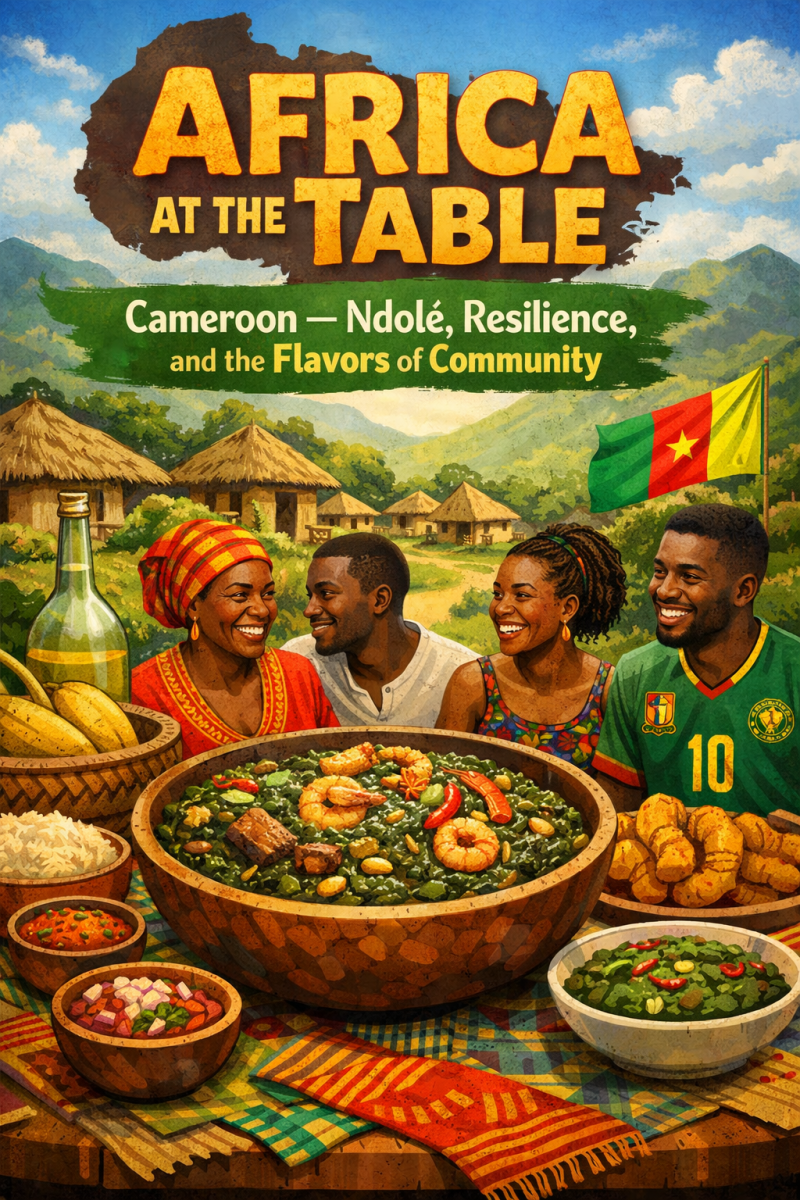
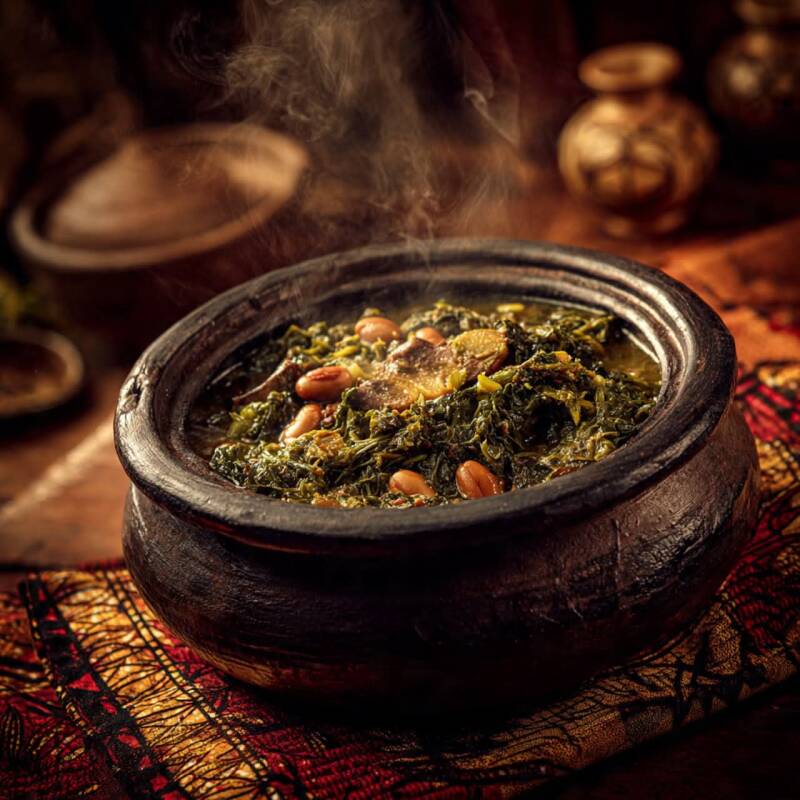
Often recognized as one of Cameroon’s national dishes, ndolé is a flavorful stew made with bitterleaf, peanuts, and protein such as shrimp, fish, beef, or chicken. More than a meal, it represents community, tradition, and the connection between generations.
With its rich flavors and careful preparation, ndolé reflects the heart of Cameroonian cuisine: patience, resourcefulness, and togetherness.
A Country of Many Flavors
Cameroon is often called “Africa in miniature” because of its incredible cultural and geographic diversity.
From coastal communities along the Atlantic Ocean to forest regions and northern grasslands, Cameroon is home to hundreds of ethnic groups, each with unique traditions and foodways.
Cameroonian cuisine has been shaped by:
- Local agriculture and indigenous ingredients
- Coastal fishing traditions
- Regional trade routes
- Cultural exchange across Central and West Africa
Food is deeply connected to identity. Recipes are not only instructions—they are memories passed from parents and grandparents to younger generations.
The Story of Ndolé
Ndolé originates from the coastal region of Cameroon, particularly among the Sawa communities.
The dish is built around bitterleaf, a leafy green known for its distinct flavor. Traditionally, preparing bitterleaf requires careful washing and preparation to reduce its bitterness while preserving its unique character.
The other essential ingredient is peanuts.
Ground peanuts create a rich, creamy base that balances the bitterness of the greens and gives the stew its signature taste.
Depending on the family and region, ndolé may include:
- Shrimp
- Fish
- Beef
- Chicken
- Other locally available proteins
Like many traditional dishes, every household may have its own version.
Food as Community
Ndolé is not usually considered an everyday quick meal. It is often prepared for meaningful occasions and gatherings.
The dish may be served during:
- Weddings
- Holidays
- Family celebrations
- Community events
- Special gatherings
The preparation itself is part of the tradition.
Families often work together to wash greens, grind ingredients, and prepare the meal. These moments create opportunities for storytelling, laughter, and connection.
The kitchen becomes a place where culture is preserved.
Ingredients Shaped by History
The ingredients found in ndolé reflect generations of adaptation.
Bitterleaf represents local knowledge of plants and agriculture, while peanuts became an important ingredient throughout many African cuisines because of their nutritional value and versatility.
Across the continent, communities transformed available ingredients into dishes that could nourish families while reflecting local environments.
Ndolé is an example of how creativity often grows from necessity.
Colonialism and Cultural Preservation
Cameroon’s history includes German colonization followed by French and British administration. These periods brought major changes to language, politics, and economic systems.
However, traditional foods remained powerful forms of cultural preservation.
While outside influences affected cooking methods and available ingredients, dishes like ndolé continued to connect people to their heritage.
Food became a way of remembering:
- Family origins
- Regional identity
- Cultural traditions
- The knowledge of previous generations
Ndolé Beyond Cameroon
Like many African dishes, ndolé has traveled with the Cameroonian diaspora.
Cameroonian communities around the world continue preparing the dish as a way to stay connected to home.
Whether enjoyed in Cameroon or abroad, ndolé carries more than flavor. It carries stories of childhood, family gatherings, and cultural pride.
For many people living away from their homeland, preparing traditional food becomes an act of remembrance.
Easy Ndolé-Inspired Peanut Chicken Stew
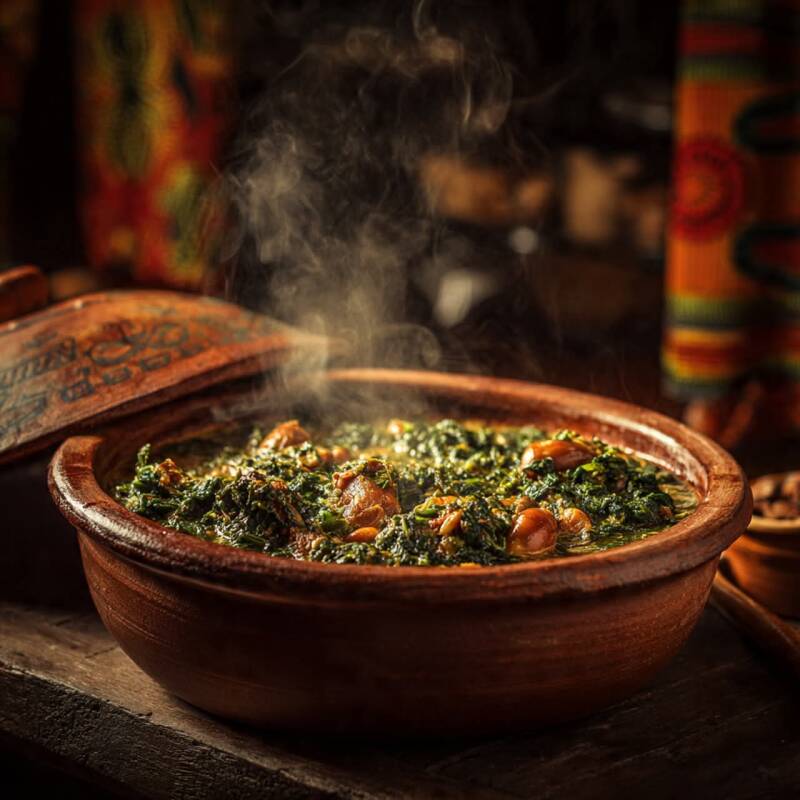
Traditional ndolé requires specialty ingredients and a careful preparation process. This simplified version captures the comforting peanut-based flavors while using ingredients that are easier to find.
Ingredients
- 1 pound chicken thighs or chicken breast, cut into pieces
- 2 tablespoons oil
- 1 medium onion, chopped
- 3 cloves garlic, minced
- 4 cups spinach or kale, chopped
- 1 cup natural peanut butter
- 3 cups chicken broth
- 1 teaspoon paprika
- ½ teaspoon cayenne pepper (optional)
- Salt and black pepper to taste
Instructions
- Heat oil in a large pot over medium heat.
- Add onion and cook until softened.
- Add garlic and cook for 30 seconds.
- Add chicken and cook until lightly browned.
- Season with paprika, cayenne, salt, and pepper.
- Add chicken broth and bring to a simmer.
- Stir in peanut butter until smooth.
- Add spinach or kale and allow the stew to simmer for 15–20 minutes.
- Continue cooking until the sauce thickens and flavors combine.
- Serve warm over rice.
Recipe Note:
This is an inspired adaptation rather than a traditional ndolé recipe. Authentic ndolé is made with bitterleaf and may include seafood or other proteins depending on regional and family traditions.
The goal of this version is to introduce readers to the flavors and spirit of the dish while making it approachable for home kitchens.
Closing Reflection
Ndolé is more than a recipe.
It is a reminder that food carries memory.
That kitchens preserve history.
That a shared meal can connect generations.
In Cameroon, a bowl of ndolé represents resilience, community, and the traditions that continue to bring people together.
Around the table, stories remain alive.
Add comment
Comments