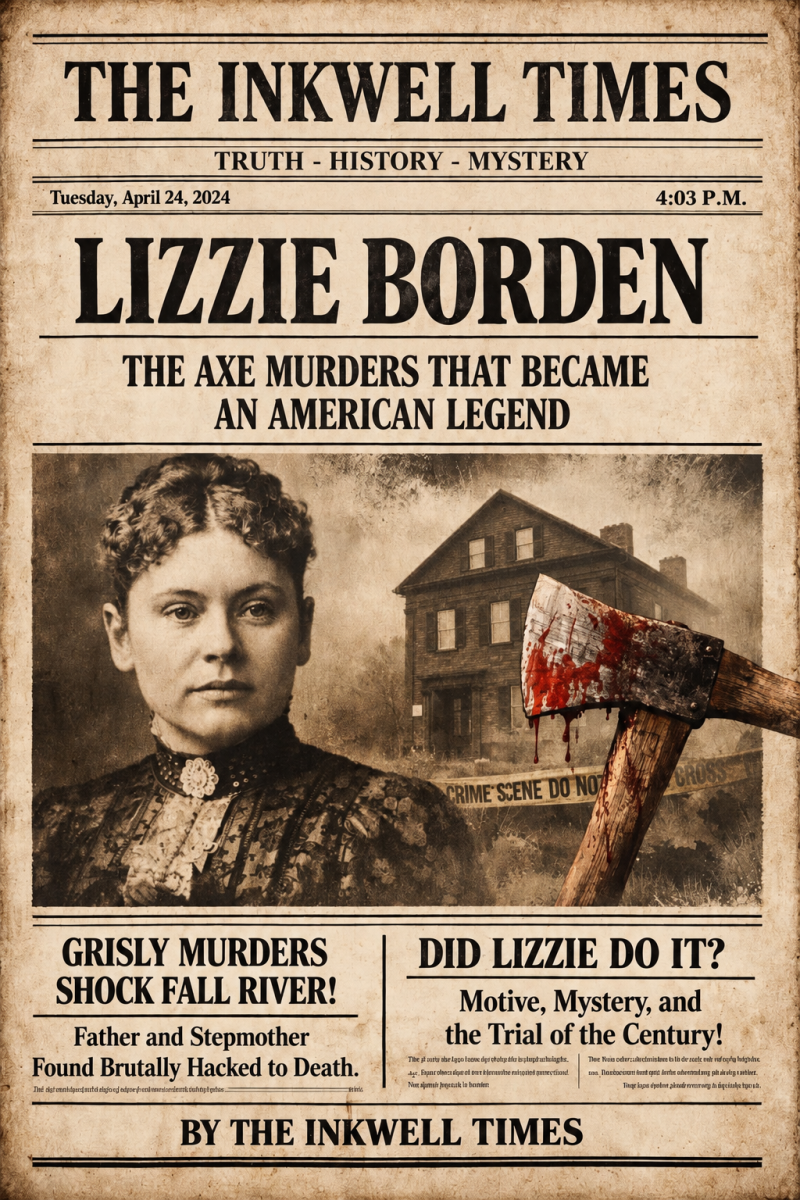
More than a century before Netflix turned her story into Monster, Lizzie Borden stood trial for one of the most infamous double murders in American history. A jury acquitted her. America never stopped wondering whether they got it right.
Content Warning: This article discusses murder, graphic injuries, and descriptions of a violent crime scene.
There are some true crime cases that eventually fade into history.
And then there is Lizzie Borden.
Even if you have never read a book about her, watched a documentary, studied the trial, or stood outside the house at 92 Second Street in Fall River, Massachusetts, you probably know the rhyme:
Lizzie Borden took an axe…
You know the rest.
Or at least you think you do.
Because that is the problem with the Lizzie Borden case. Somewhere during the last 134 years, two very real murders became folklore. Andrew and Abby Borden became characters in a rhyme. Lizzie became an axe-wielding boogeywoman. The facts blurred with rumors, theories, movies, books, plays, television shows, and now Netflix’s Monster: The Lizzie Borden Story, which premiered September 17, 2026. (Netflix)
And before we go any further, I need to make something very clear.
Netflix is telling a story.
History does not know who killed Andrew and Abby Borden.
Lizzie was accused. Lizzie was prosecuted. Lizzie stood trial.
And Lizzie Borden was acquitted.
Those facts matter, especially when a dramatized television series portrays events, relationships, motives, and even guilt in ways the historical evidence cannot establish.
So, for this October edition of The Inkwell Times, we are going back to the beginning.
Not the rhyme.
Not Netflix.
Not the legend.
The murders.
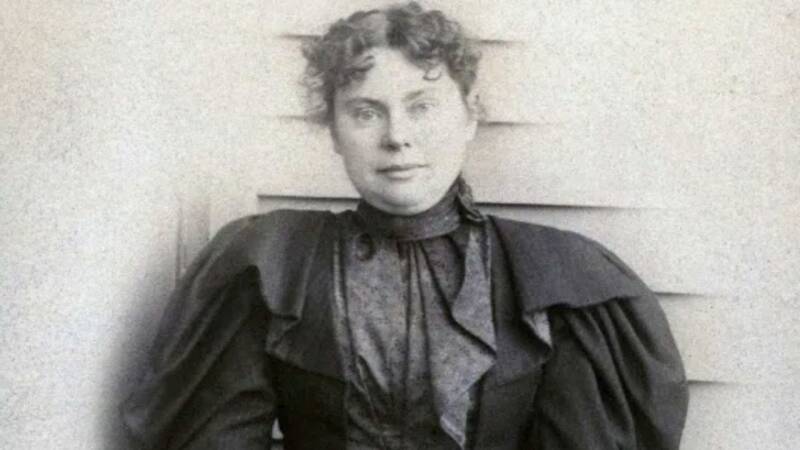
Before Lizzie Became a Legend
Lizzie Andrew Borden was born in Fall River, Massachusetts, in 1860.
By the summer of 1892, she was 32 years old and living with her father, Andrew Jackson Borden, her stepmother, Abby Durfee Gray Borden, her older sister Emma, and the family’s Irish domestic servant, Bridget Sullivan.
Andrew Borden was a wealthy businessman.
But if you are picturing the Bordens living like the Gilded Age version of the Kardashians, not exactly.
Andrew had accumulated considerable wealth through business and property, but he had a reputation for frugality. The family lived at 92 Second Street rather than in Fall River’s more fashionable neighborhood, despite apparently having the means to do so.
Money would eventually become part of the speculation surrounding the murders.
So would family tension.
Abby was not Lizzie and Emma’s biological mother. Their mother, Sarah, died when Lizzie was a small child, and Andrew later married Abby.
Over the years, resentment reportedly developed over Andrew’s financial dealings with Abby’s relatives and questions of property and inheritance.
That does not prove motive.
Family members arguing about money is not the same thing as evidence of murder.
But in August 1892, investigators would begin examining virtually every tension inside the Borden household.
Because something horrific was about to happen inside that house.
August 4, 1892
Thursday, August 4 began like an ordinary summer morning.
It would end with two people dead and one of the most famous murder mysteries in American history.
Several people had reportedly experienced stomach illness in the household around this time. The family had eaten breakfast that morning, and Andrew’s brother-in-law John Morse had stayed overnight.
After breakfast, Morse left the house.
Andrew later left to conduct business in town.
Emma Borden was away from home.
That left Abby, Lizzie, and Bridget Sullivan at the house for portions of the morning.
At some point that morning, Abby went upstairs into the guest bedroom.
She would never leave it alive.
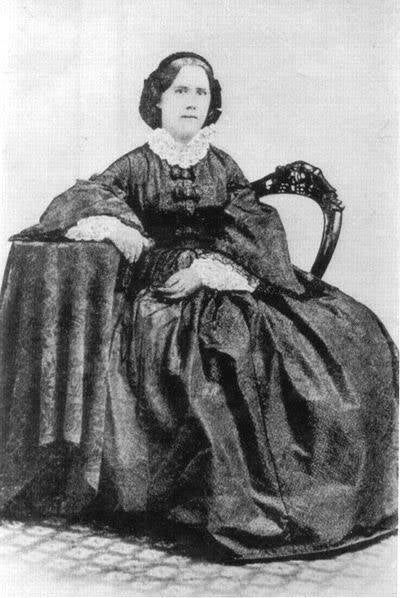
The Murder of Abby Borden
Abby was killed first.
She was found lying face down on the floor of the guest room.
Her killer had struck her repeatedly in the head with a hatchet-like weapon. Historical accounts generally describe 19 wounds to Abby’s head.
Think about that for a moment.
Not because I want to sensationalize what happened to her.
Quite the opposite.
Because when people hear “Lizzie Borden,” Abby often gets reduced to one line in a children’s rhyme.
“Gave her mother forty whacks.”
Her name was Abby Borden.
She was 64 years old.
And she was murdered inside her own home.
Investigators believed Abby had been dead for considerably longer than Andrew would be when his body was discovered.
Which creates one of the strangest aspects of the case:
Someone killed Abby inside the Borden home.
Time passed.
Andrew came home.
And then someone killed him too.
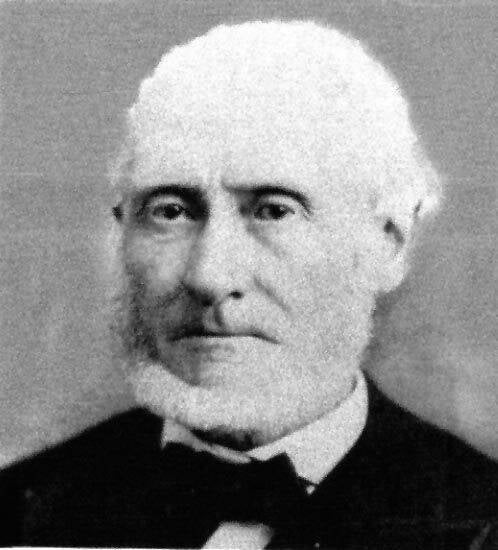
Andrew Comes Home
Andrew returned to 92 Second Street sometime around 10:45 that morning.
According to accounts of the household movements, Bridget Sullivan let him inside.
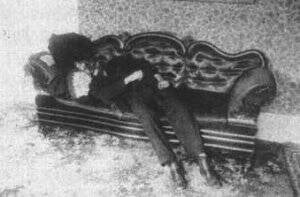
He eventually settled onto a sofa in the sitting room.
At some point shortly afterward, Andrew Borden was attacked.
His killer struck him approximately 10 or 11 times in the head and face with a hatchet-like weapon.
The attack was devastating.
And sometime around 11:00 a.m., Andrew Borden was dead.
“Father’s Dead”
This is where Lizzie enters the center of the story.
Lizzie called for Bridget.
Her father was dead.
Andrew’s body was on the sofa downstairs, his injuries immediately making it obvious that this was not a natural death.
A doctor was summoned.
Neighbors came.
Police arrived.
And then someone asked a very important question.
Where was Abby?
Lizzie reportedly suggested that Abby might have returned to the house.
A search began.
Bridget Sullivan and neighbor Adelaide Churchill went upstairs.
From the staircase, part of Abby’s body could be seen beneath the bed in the guest room.
There were now two murder victims inside 92 Second Street.
And there was no obvious killer.
A House That Should Not Have Been Easy to Enter
This is one of the reasons the Borden case remains so fascinating.
The house was not a sprawling mansion filled with dozens of servants and visitors.
It was relatively contained.
Doors were commonly kept locked.
People could account for many of the movements inside and around the home.
Yet someone apparently murdered Abby upstairs, remained undetected—or left and somehow returned—and then murdered Andrew downstairs roughly an hour and a half later.
No one reported seeing a blood-covered stranger sprinting from the property.
No obvious murder weapon was definitively connected to the killer.
There was no neat explanation waiting for detectives.
Instead, suspicion gradually began turning toward someone already inside the house.
Lizzie.
Why Police Began Suspecting Lizzie
This is where discussing the case requires some care.
There is a difference between suspicious behavior and proof.
Investigators became increasingly interested in Lizzie because portions of her account appeared inconsistent.
Questions arose about where she had been during the critical periods.
Lizzie said she had spent time in the barn around the time her father was killed, reportedly looking for fishing equipment and eating pears.
Meanwhile, Abby had supposedly received a note asking her to visit someone who was ill.
That alleged note was never found.
Nobody could definitively identify who had supposedly sent it.
There were also discrepancies in Lizzie’s descriptions of when she had last seen Abby.
None of that proves murder.
But when two people have been killed inside a locked-down household, investigators are going to scrutinize every minute.
And then came the dress.
The Burned Dress
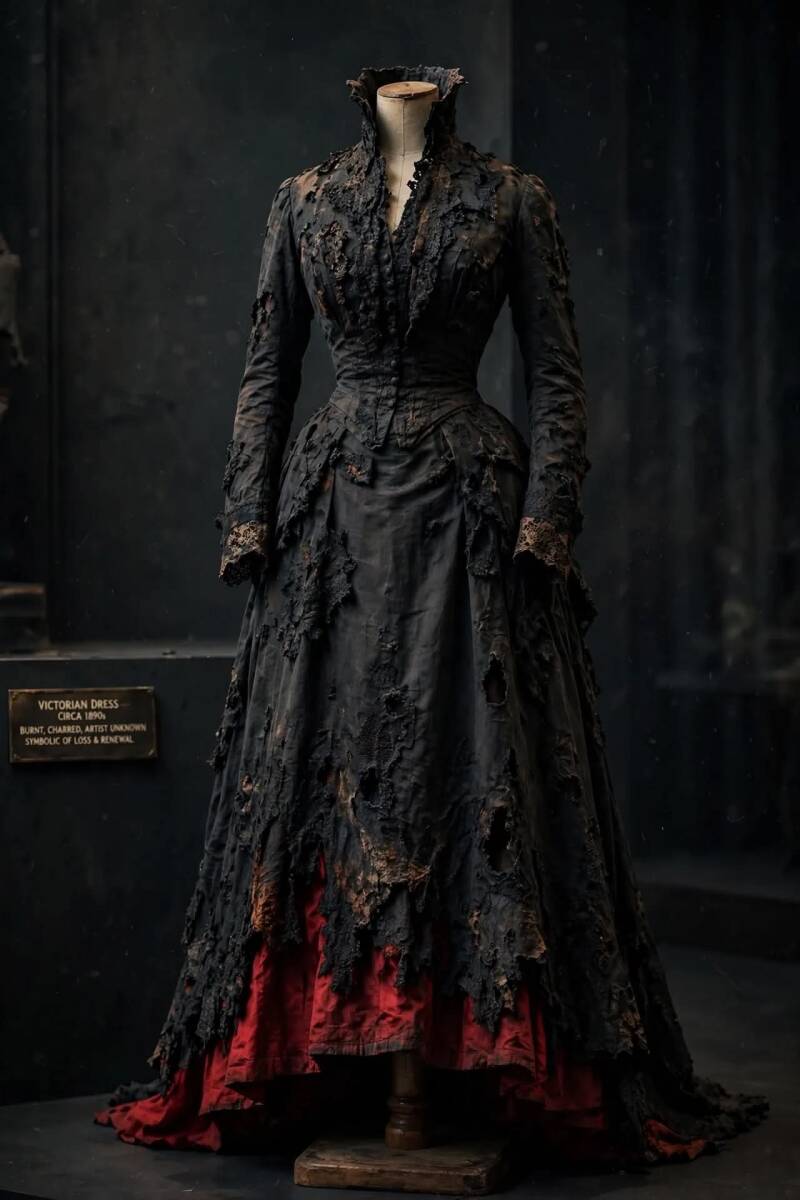
Several days after the murders, family friend Alice Russell reportedly saw Lizzie burning a dress in the kitchen stove.
According to Lizzie’s explanation, the dress had been stained with paint and was being destroyed because it was ruined.
To prosecutors, that looked considerably more sinister.
If Lizzie had committed the murders, they argued, perhaps the dress had contained blood evidence.
There was one enormous problem.
Nobody could prove that it did.
No blood evidence from the victims was established on that dress before it was burned.
Lizzie’s sister Emma supported the explanation that the garment had been damaged by paint.
Again, suspicious?
You can certainly understand why investigators noticed it.
Proof that she murdered two people?
No.
Then There Was the Poison
Another detail became infamous.
A drugstore clerk claimed that shortly before the murders, Lizzie attempted to purchase prussic acid, also known as hydrogen cyanide.
She allegedly said she wanted it for cleaning a sealskin garment.
The clerk refused to sell it to her without the necessary authorization.
The prosecution wanted jurors to hear about the attempted purchase.
They didn’t.
The judge excluded that evidence from the trial after determining that prosecutors had not sufficiently connected the alleged poison purchase with the murders.
Something appearing in newspaper coverage—or becoming famous afterward—doesn’t necessarily mean the jury heard it.

Bridget Sullivan
And then we have Bridget Sullivan, frequently called “Maggie” by members of the Borden household.
Bridget has become almost a secondary character in the mythology of the case.
But she was a real woman.
An Irish immigrant.
A domestic worker.
And one of the people inside 92 Second Street that morning.
She testified about the family’s movements and the events surrounding the discovery of Andrew’s body.
Naturally, theories developed around her.
Could Bridget have killed the Bordens?
Could she have helped Lizzie?
Could she have known something she never revealed?
People have been asking versions of those questions for more than a century.
But there is no established historical evidence proving that Bridget murdered Andrew or Abby.
And this is particularly worth saying now because Netflix takes enormous creative liberties with Bridget and Lizzie’s relationship.

Monster Is Not a Documentary
Netflix’s Monster: The Lizzie Borden Story premiered on September 17, 2026, with Ella Beatty portraying Lizzie and Vicky Krieps portraying Bridget Sullivan.
And I already know what happens whenever a huge dramatization of a true crime case comes out.
People watch it.
Then details from the series slowly start becoming “facts” online.
We saw versions of this with the Menendez brothers.
We saw it with Dahmer.
We see it constantly whenever entertainment and true crime collide.
So consider this your friendly Inkwell Times reminder:
A dramatization is not evidence.
Netflix’s series depicts a sexual relationship between Lizzie and Bridget and builds a story around repression, sexuality, rage, power, and revenge.
There is no established historical evidence demonstrating that Lizzie and Bridget had such a relationship.
Even Netflix’s own material acknowledges that the production created a fictionalized version of Lizzie using pieces of the historical record as inspiration.
The series also connects Lizzie symbolically with serial killer Aileen Wuornos.
Again: storytelling.
Netflix acknowledges there is no evidence that the real Wuornos had the kind of Lizzie Borden fixation depicted by the show.
Enjoy historical drama for what it is.
Just don’t let Ryan Murphy testify from beyond the grave.
The Arrest of Lizzie Borden
Suspicion continued building after the murders.
On August 11, 1892—one week after Andrew and Abby were killed—Lizzie was arrested.
She was eventually indicted for their murders.
Imagine the scandal.
This wasn’t merely a murder case.
A respectable unmarried woman from an affluent New England family was being accused of taking a hatchet and brutally killing her father and stepmother.
Victorian ideas about womanhood collided head-on with the gruesomeness of the crime.
Could a woman like Lizzie do something like this?
For many people at the time, even the concept seemed almost unthinkable.
But prosecutors were prepared to argue that she had.
The Trial of Lizzie Borden
Lizzie’s murder trial began in June 1893.
The prosecution faced a problem from the start.
They had suspicion.
They had circumstantial evidence.
They had conflicting statements.
They had the burned dress.
They had a horrific crime committed inside a house where Lizzie had been present.
But what they did not have was incredibly important.
They did not have eyewitness testimony placing a weapon in Lizzie’s hands.
They did not have a confession.
They did not have a conclusively identified murder weapon tied to her.
They did not have bloody clothing belonging to her.
And some evidence prosecutors wanted to introduce never reached the jury.
Lizzie’s own inquest testimony, which contained damaging inconsistencies, was excluded.
The prussic-acid evidence was also excluded.
Then there was the cultural reality surrounding the trial.
Lizzie appeared in court as a respectable Victorian woman.
Her defense leaned heavily into the implausibility—at least in the minds of many nineteenth-century jurors—that a woman of her class and background could commit such savage violence.
Whether those gender expectations helped save Lizzie is something historians still debate.
But ultimately the case came down to one question:
Had the prosecution proven beyond a reasonable doubt that Lizzie Borden killed Andrew and Abby Borden?
The jury said no.
Not Guilty
On June 20, 1893, the jury returned its verdict.
Not guilty.
Lizzie Borden was acquitted.
The jury had deliberated for roughly an hour and a half.
She walked out of the courthouse a free woman.
And this is where I think true crime discussions sometimes become careless.
An acquittal does not mean historians can prove Lizzie was factually innocent.
But suspicion does not allow us to declare her factually guilty either.
Lizzie Borden was tried for the murders of Andrew and Abby Borden and found not guilty.
That is the legal outcome.
No one else was ever convicted of the murders.
The case remains unsolved.

But What About the Axe?
Here’s another misconception created partly by the famous rhyme.
The murder weapon has never been definitively established.
Investigators found hatchets and other tools on the Borden property, including a hatchet head that drew considerable attention.
But prosecutors could never conclusively prove that a particular weapon recovered from the house was the weapon used to murder Andrew and Abby.
Which makes the rhyme even more misleading.
Because speaking of that rhyme…
The Rhyme Lied
You know it:
Lizzie Borden took an axe,
And gave her mother forty whacks.
When she saw what she had done,
She gave her father forty-one.
Catchy.
Creepy.
Also wildly inaccurate.
First:
Abby was Lizzie’s stepmother, not her biological mother.
Second:
Abby was not struck forty times.
Historical accounts generally put her wounds at around 19.
Andrew wasn’t struck forty-one times either.
He suffered approximately 10 or 11 blows.
Third:
We do not know that Lizzie “took an axe” at all.
She was acquitted.
The killer has never been definitively identified.
Somehow a complicated unsolved double homicide became a four-line playground chant that simply announces Lizzie’s guilt as fact.
That is actually fascinating when you think about it.
A jury cleared her.
Folklore convicted her forever.
Who Else Could Have Done It?
If Lizzie didn’t kill Andrew and Abby, then somebody did.
And over 134 years, people have suggested almost everyone imaginable.
Bridget Sullivan has been theorized as a possible killer or accomplice.
Lizzie’s uncle John Morse, who had arrived shortly before the murders, attracted suspicion largely because of the timing of his visit and his unusually detailed alibi.
Emma Borden has occasionally been dragged into theories despite being away at the time.
Some theories involve disgruntled business associates.
Others involve alleged illegitimate relatives.
A later axe murderer was even suggested.
And because human beings apparently cannot encounter an unsolved nineteenth-century murder without doing this, Jack the Ripper has been dragged into theories too.
Of course he has.
But theories are not evidence.
Many alternative suspects arose from speculation, prejudice, rumor, or attempts to fill gaps investigators could never close. Historians still debate various possibilities, but none has been proven responsible.
Which leaves us exactly where investigators were more than a century ago.
With two dead people.
And no confirmed killer.
What Happened to Lizzie Afterward?
An acquittal freed Lizzie from prison.
It did not free her from the case.
After the trial, Lizzie and Emma purchased a large home in a wealthier section of Fall River.
Lizzie named it Maplecroft.
She also began using the name Lizbeth.
For a woman once portrayed as trapped by her father’s frugality, she now had access to the inheritance that came after his death.
But money could not purchase a new reputation.
Many people in Fall River continued believing Lizzie had committed the murders.
She lived beneath the shadow of the accusations for the rest of her life.
Years later, Lizzie became friendly with actress Nance O’Neil.
This relationship has fueled speculation about Lizzie’s sexuality for decades, but speculation is exactly what it is. The historical record doesn’t justify turning rumors about Lizzie’s intimate life into established fact.
Emma eventually moved out of Maplecroft in 1905.
The sisters never reconciled.
Recent historical fact-checking of the Netflix series notes that Emma had actually supported Lizzie during the trial; dramatizations portraying Emma as possessing secret certainty about Lizzie’s guilt go beyond what historical evidence establishes.
Lizzie died in 1927 at age 66.
Emma died just nine days later.
They were buried in the Borden family plot.
Near Andrew and Abby.
And Then Lizzie Became Immortal
Andrew and Abby died in 1892.
But Lizzie Borden never really left American culture.
Books.
Movies.
Television.
Plays.
Documentaries.
Podcasts.
Ghost stories.
Halloween attractions.
True crime specials.
And that rhyme.
Always that rhyme.
There is even something strangely uncomfortable about how completely the accused person swallowed the victims’ identities.
Say Lizzie Borden, and almost everyone recognizes the name.
Say Abby Durfee Borden, and considerably fewer people do.
That is one reason I wanted to write this article.
The cultural story became:
“Did Lizzie do it?”
The human story began with:
Someone murdered Andrew and Abby Borden.
Those two things are not quite the same.
So… Did Lizzie Borden Do It?
This is where you might expect me to give you my grand true-crime verdict.
I won’t.
Because I can’t.
And neither can Netflix.
There are things about Lizzie’s behavior that deserve scrutiny.
The conflicting statements bother me.
The alleged missing note bothers me.
The timing bothers me.
The dress being burned only days after two people were hacked to death inside that house?
Yeah.
That bothers me too.
I understand exactly why investigators looked at Lizzie.
I understand exactly why people continue suspecting her.
But suspicion is not proof.
There are also enormous problems with the prosecution’s case.
Where was the blood?
Where was the conclusively identified weapon?
If Lizzie brutally killed Abby and then Andrew roughly 90 minutes apart, how did she successfully clean herself and conceal the evidence while moving around a household where other people were present?
How did nobody see enough to definitively place her at either murder?
Why could investigators never establish a physical trail connecting her to the attacks?
And why, after more than a century of obsessive examination, can nobody produce the missing piece that conclusively solves the case?
Maybe Lizzie did it.
Maybe she didn’t.
Maybe someone helped her.
Maybe the real explanation died with everyone who was inside 92 Second Street that morning.
That uncertainty is not a flaw in the story.
It is the story.
Netflix Can Give Us a Monster. History Can’t.
That is perhaps the biggest difference between Monster: The Lizzie Borden Story and the actual Borden murders.
Television needs answers.
Characters need motives.
Episodes need arcs.
Stories need endings.
Real life doesn’t owe us any of those things.
Netflix can decide who its Lizzie is.
Writers can imagine conversations nobody recorded.
Actors can give characters emotions we cannot verify.
A show can turn rumor into a scene because the scene makes compelling television.
History has a harder job.
History has to say:
We don’t know.
Netflix describes its series as exploring themes surrounding female repression, rage, sexuality, and freedom. Ella Beatty has spoken about approaching the character through those themes, while Netflix’s own behind-the-scenes discussion acknowledges that the production created a fictionalized Lizzie rather than simply reproducing the historical woman.
That can make fascinating television.
It doesn’t make it testimony.
The Victims Behind the Legend
Before we end, I want to return to Andrew and Abby.
Neither was a perfect person.
Victims don’t have to be perfect people.
Andrew’s relationship with his daughters may have been complicated.
There appear to have been resentments involving money, property, Abby, and extended family.
Maybe those tensions had something to do with what happened.
Maybe they didn’t.
But Andrew Borden was 69 years old when someone attacked him while he rested on his sofa.
Abby Borden was 64 when someone attacked her in an upstairs bedroom.
Their bodies became evidence.
Their skulls were eventually displayed during Lizzie’s trial.
Their deaths became newspaper spectacle.
Then folklore.
Then entertainment.
Then a nursery rhyme.
And now, more than 130 years later, another generation is discovering them through Netflix.
So when we talk about Lizzie Borden, I think we should remember why we know her name in the first place.
Two people were murdered.
No one was ever convicted.
134 Years Later
There is something uniquely unsettling about an old unsolved murder.
Everyone involved is gone.
There will probably never be a confession.
No modern DNA miracle appears likely to suddenly produce an obvious killer.
There are no living eyewitnesses left to reconsider what they saw.
The house still exists.
The photographs still exist.
The testimony still exists.
The newspaper articles still exist.
And the unanswered question remains exactly where it was in 1892.
Who killed Andrew and Abby Borden?
Maybe the answer really was Lizzie.
Maybe the jury freed a murderer.
Or maybe one of the most vilified women in American history spent the rest of her life being punished for a crime a jury correctly determined prosecutors could not prove she committed.
That is what makes this case more disturbing to me than the rhyme ever could.
Because the scariest part isn’t knowing that Lizzie Borden took an axe.
It’s realizing that, 134 years later, we still don’t know who did.
The Inkwell Times
True Crime • History • Unsolved Cases
Editor’s Note: Monster: The Lizzie Borden Story is a dramatized television series inspired by historical events. Scenes, relationships, dialogue, motives, and depictions in the series should not be treated as established facts about the Borden case. Lizzie Borden was acquitted of the murders of Andrew and Abby Borden in 1893, and no other person was convicted. Their murders remain officially unsolved.
Add comment
Comments