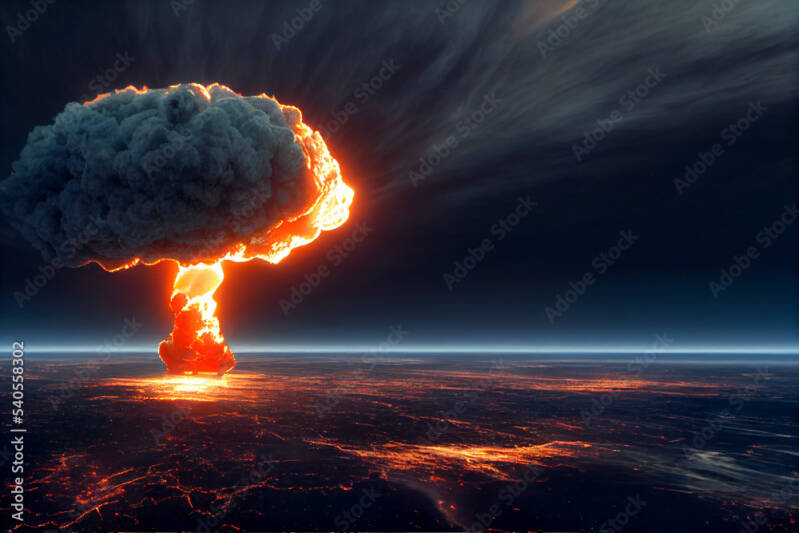
Source: Adobe Stock
By Yasmin Sultana Chaudhary | The Inkwell Times
Eighty years after the United States began detonating nuclear weapons in the Marshall Islands, the people who inherited the consequences are still asking the world to acknowledge what happened to them.
Between 1946 and 1958, the United States conducted 67 nuclear weapons tests in the Marshall Islands, including some of the most powerful nuclear explosions ever produced by the United States.
The explosions ended nearly seven decades ago.
Their consequences did not.
Marshallese communities were displaced from ancestral islands. Radioactive fallout reached inhabited areas. Some communities remain unable to permanently return home. Generations have lived with questions about radiation exposure, illness, environmental contamination and whether adequate compensation will ever come.
And now Marshall Islands President Hilda Heine is again demanding recognition and accountability.
Speaking before the United Nations General Assembly in September 2026, Heine reminded world leaders that this year marks 80 years since nuclear testing began in her country. She called on the United Nations to acknowledge and apologize for the harm inflicted upon the Marshallese people while their islands were under the U.N. trusteeship system.
For the Marshall Islands, this is not simply history.
It is unfinished business.
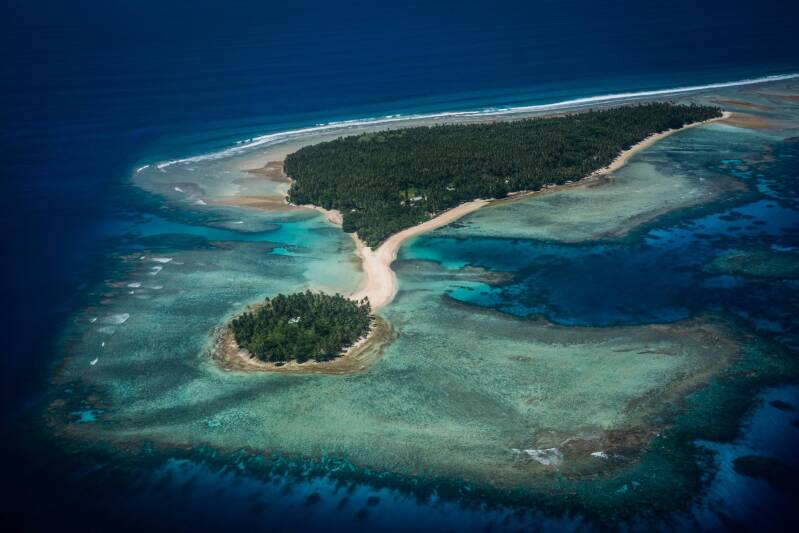
Subject: The Marshall Islands Source: Pacific Living
Islands Chosen for Nuclear Testing
After World War II, American military planners needed somewhere to test a rapidly expanding nuclear arsenal.
They chose the Marshall Islands.
U.S. researchers described the northern Marshall Islands as attractive for testing because of their remote location, relatively stable weather and the comparatively small number of inhabitants who would have to be relocated.
That language reveals something important.
There were inhabitants.
These islands weren’t empty dots scattered across a map of the Pacific. They were people’s homes.
Marshallese identity is deeply connected to land, family and community. U.N. reporting has described land as integral to Marshallese cultural identity and documented how displacement caused by nuclear testing separated communities from ancestral places central to their way of life.
Beginning in 1946, the United States turned parts of those homelands into a nuclear proving ground.
Over the next twelve years, 67 atomic and thermonuclear weapons were detonated.
Then came Castle Bravo.
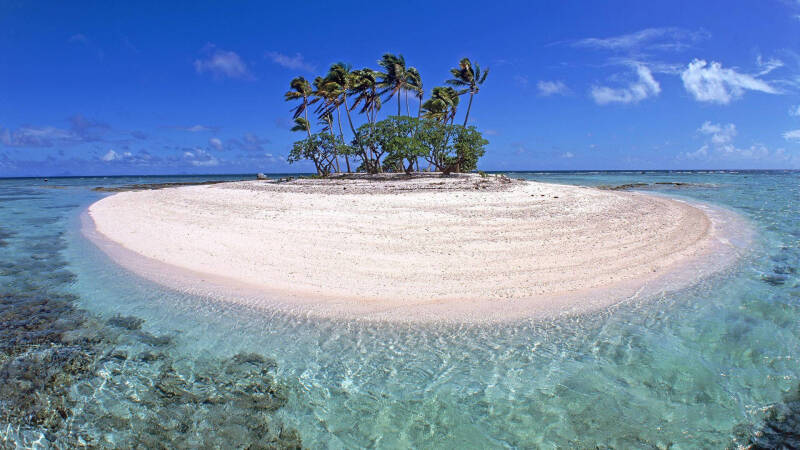
Subject: Bikini Atoll Source: Inspired Pencil
March 1, 1954
On March 1, 1954, the United States detonated Castle Bravo at Bikini Atoll.
The experimental thermonuclear weapon produced an estimated yield of 15 megatons.
It remains the most powerful nuclear device ever detonated by the United States.
The explosion was vastly more powerful than the atomic bomb dropped on Hiroshima in 1945, and radioactive fallout spread across inhabited islands, including Rongelap and Utrik. Marshallese residents were subsequently evacuated.
But exposure had already occurred.
The U.S. Department of Energy continues operating a special medical program for a defined population of people from Rongelap and Utrik who were directly exposed to fallout from Castle Bravo. That program includes cancer screening and treatment.
The fact that such a program still exists more than 70 years after Castle Bravo should tell us something.
A nuclear explosion lasts seconds.
Its consequences can last generations.
When Home Is No Longer Home
Radiation did more than affect bodies.
It changed where people could live.
Residents of Bikini were moved before nuclear testing began. Although the United States later declared Bikini safe for habitation, people who returned were evacuated again in 1978 after troubling radiation levels were detected in their bodies. Bikini has never been permanently resettled.
Residents of Rongelap returned after Castle Bravo but were evacuated again decades later following concerns about radiation exposure.
People from Enewetak were eventually able to return after extensive cleanup efforts.
And across affected communities, displacement changed relationships with land that cannot simply be replaced with money or another island.
That distinction matters.
Imagine being told your family must leave the place generations of your ancestors called home.
Then imagine being told decades later that returning may still expose your family to radiation.
How do you put a dollar amount on that?
The Health Legacy
The health consequences of the nuclear-testing era remain one of its most painful chapters.
U.N. human-rights reporting has documented both immediate and continuing effects associated with radiation exposure, including long-term health complications, environmental contamination and displacement. Particular concerns have been raised about thyroid disease and cancer as well as the reproductive-health experiences of Marshallese women.
The U.S. Department of Energy continues environmental monitoring at Bikini, Enewetak, Rongelap and Utrik and provides specialized medical screening and treatment to certain people directly exposed to Castle Bravo fallout. Yet one of the continuing disputes is who qualifies as affected.
The Department of Energy itself says its authority to provide specialized Castle Bravo medical care is restricted to specific populations identified by U.S. law. It cannot simply expand eligibility to everyone who believes their health was affected.
That distinction has helped fuel a decades-long argument over the true geographic and human extent of the nuclear legacy.
America Has Paid Compensation. Marshallese Leaders Say It Has Not Been Enough.
It would be inaccurate to say the United States has provided nothing.
It has.
Under the Compact of Free Association, the United States formally accepted responsibility for compensation for losses to people and property resulting from its nuclear testing program. A $150 million Nuclear Claims Trust Fund was established, along with a Nuclear Claims Tribunal responsible for adjudicating claims.
The United States has also funded environmental monitoring, cleanup, resettlement and medical programs.
More recently, the renewed Compact relationship has brought billions of dollars in broader American assistance to the Marshall Islands. The United States is scheduled to contribute another $700 million to the Marshall Islands Compact Trust Fund by 2027, although that trust fund serves broader purposes and should not simply be described as $700 million in nuclear compensation.
The dispute is therefore not whether America has ever paid anything.
It is whether what has been provided constitutes adequate redress for what was lost.
Marshallese leaders and affected communities have argued for decades that it does not.
Congressional research has noted that the Marshall Islands has claimed roughly $3 billion in uncompensated nuclear damages. The Nuclear Claims Tribunal itself encountered funding shortfalls that prevented some awards from being fully paid.
Money can rebuild infrastructure.
It can finance healthcare.
It can compensate families.
But money cannot recreate an ancestral homeland exactly as it existed before radioactive contamination.
A Concrete Dome on a Radioactive Island
Then there is Runit Dome.
During cleanup operations at Enewetak Atoll in the 1970s, the United States placed radioactive debris into a crater on Runit Island and covered it with a massive concrete structure.
The dome remains there today.
The U.S. Department of Energy says the radioactive inventory inside Runit Dome is relatively small compared with contamination already present in the surrounding lagoon. But it also acknowledges that the structure remains a major concern for Marshallese people.
Climate change has made those concerns even harder to ignore.
The Marshall Islands is extraordinarily vulnerable to rising seas, and Congress has required the Department of Energy to study how climate change could affect Runit Dome and other environmental hazards left by American nuclear testing.
The Government Accountability Office reported in 2024 that radioactive contamination remains measurable on several Marshallese atolls and that some affected areas remain uninhabitable. It also found significant distrust and communication problems surrounding information about contamination.
Think about the cruel symmetry of that.
First, a powerful country used these islands to test weapons capable of destroying cities.
Now, the people who inherited that contamination are watching rising seas threaten the islands themselves.
The United Nations Was There Too
President Heine’s latest demand isn’t directed only at Washington.
It is directed at the United Nations.
The Marshall Islands was part of the U.N. Trust Territory of the Pacific Islands during much of the nuclear-testing period, administered by the United States.
That history is why Heine argues the United Nations cannot treat the nuclear legacy as someone else’s responsibility.
In her September 2026 General Assembly address, she said the consequences remain in Marshallese land, water, health and displaced communities. She argued that the U.N. trusteeship system was supposed to safeguard the well-being of the Marshallese people and called for an apology and acknowledgment of the harm caused during the testing era.
Her demand is not new.
Marshallese leaders have repeatedly sought greater international recognition of the nuclear legacy. Heine said in 2024 that nearly eight decades had passed without an official apology or what she considered meaningful reconciliation.
Two years later, she is still asking.
Nuclear History Usually Starts With the Bomb. It Should Start With the People.
American nuclear history is frequently told through machines.
Bombs.
Planes.
Mushroom clouds.
Megatons.
Scientists.
Presidents.
Wars.
What gets much less attention are the ordinary people who lived where those weapons were tested.
Children who experienced fallout.
Parents who watched families become sick.
People who were moved from islands their ancestors had inhabited for generations.
Communities told they could return home only to discover that home still wasn’t safe.
And descendants who inherited a history they never chose.
That is why the Marshall Islands deserves to be more than a paragraph in America’s Cold War history.
Justice Is More Than Compensation
There is room for complexity in this history.
The United States has acknowledged responsibility for compensation under the Compact. It has spent money on healthcare, environmental monitoring, cleanup and resettlement. It continues programs addressing the nuclear legacy today.
Those facts belong in the story.
So does the fact that many Marshallese people say the response remains inadequate.
Justice is not merely a calculation of how many dollars have been transferred.
It can mean acknowledging what happened.
It can mean releasing information.
It can mean ensuring healthcare reaches everyone legitimately harmed.
It can mean making compensation awards meaningful rather than symbolic.
It can mean protecting contaminated environments.
It can mean listening when the people who endured the consequences tell the world that the matter is not settled.
Most importantly, it means allowing Marshallese people to define what justice looks like for themselves.
Eighty Years Later
The first American nuclear test in the Marshall Islands took place in 1946.
It is now 2026.
Eighty years.
The mushroom clouds disappeared long ago.
The photographs became history.
The scientists went home.
The governments changed.
But Marshallese families remained.
Some still cannot permanently return to ancestral islands. Environmental monitoring continues. Specialized radiation-related medical programs continue. Questions over compensation continue.
And their president is still standing before the world asking for acknowledgment.
That should tell us everything we need to know about whether this story is finished.
It isn’t.
The United States may consider the Marshall Islands nuclear-testing program a chapter of Cold War history.
For the people who inherited its consequences, it is something much more immediate.
It is their land.
Their health.
Their families.
Their history.
And eighty years after the testing began, they are still asking the world for justice.
The least the world can do is listen.
Add comment
Comments