by Yasmin Chaudhary — The Inkwell Times
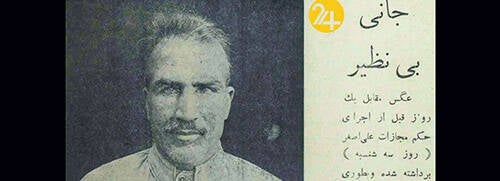
In accounts of Ali Asghar Borujerdi, one number appears repeatedly: 33. It represents the adolescent boys he reportedly confessed to sexually assaulting and killing in Iraq and Iran. Historian Cyrus Schayegh documents that confession in his study of the case, published in Comparative Studies in Society and History in 2005.[1]
But a number cannot convey the lives taken. Each victim deserves to be remembered as a person, even when the available historical accounts offer more information about the perpetrator than those he harmed.
From Iraq to Tehran
Born in Borujerd in 1893, Borujerdi moved to Karbala with his family as a child, then to Baghdad. Schayegh traces his sexual abuse of adolescents to that period. The reported toll was 25 killings in Iraq before he fled to Iran in 1933.[1]
In Tehran, he worked as a porter and vegetable seller. Eight further killings were attributed to him; most of those victims were boys experiencing homelessness.
Their circumstances deserve attention without becoming their entire identity. Describing a victim as homeless tells us something about the conditions in which he lived. It tells us nothing about how much his life mattered. No child’s safety should depend on having money, stable housing, or an influential person willing to demand answers.
Discovery, Arrest, and Execution
Schayegh dates the first discovery of victims’ bodies to December 31, 1933. An initial arrest ended in release for insufficient evidence. Police detained Borujerdi again in early March 1934, when he confessed. Following conviction and an unsuccessful appeal, he was publicly hanged in Tehran’s Sepah Square on June 26, 1934.
Modern summaries contain conflicting details. Wikipedia gives July 6 as his execution date and contains inconsistent arrest dates. This article follows Schayegh’s scholarly chronology. The claim that his final punishment was nine years in prison followed by execution is not supported by that account.
Borujerdi is also frequently described as Iran’s first documented serial killer. Establishing an absolute “first” requires more evidence than that label alone provides. His case can be discussed accurately without treating the description as settled historical fact.
Remembering the Victims
The name “Asghar the Murderer” makes the perpetrator easy to remember. The challenge for anyone retelling the case is to give the victims equal moral attention.
That means resisting the temptation to turn sexual violence into lurid detail or a killer’s notoriety into fascination. It also means acknowledging the limits of the record: a reported confession is not, by itself, an independently verified account of every death.
These boys deserve more than a place in a tally. Their lives mattered before the investigation, before the trial, and before their deaths became part of criminal history.
Add comment
Comments