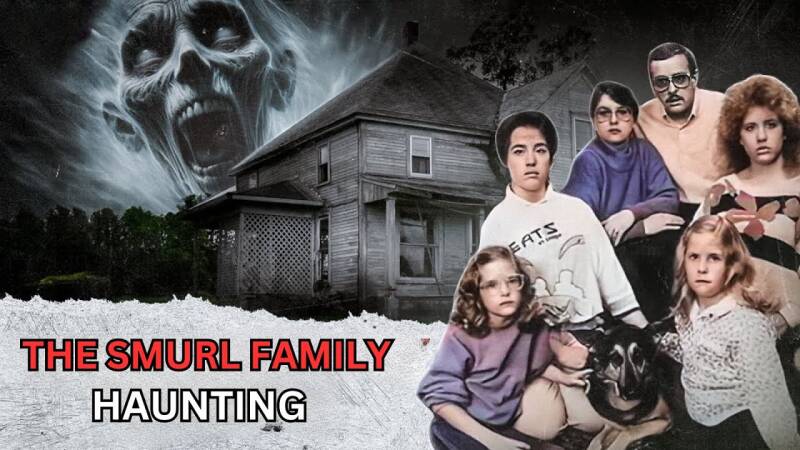
For years, a family in West Pittston, Pennsylvania, claimed that something sinister shared their home. Their story attracted national attention, religious intervention, and two of America’s most controversial paranormal investigators. But was the Smurl family truly haunted, or was something else happening behind closed doors?
By The Inkwell Times | Paranormal & Unexplained | October 27, 2026
A House That Was Supposed to Be a Home
In the quiet borough of West Pittston, Pennsylvania, a modest duplex on Chase Street became the center of one of America’s most controversial alleged hauntings.
Jack and Janet Smurl lived in the property with their four daughters, while Jack’s parents occupied the adjoining residence. It was supposed to be an ordinary family home, a place where children could grow up and everyday life could unfold without fear.
Instead, the family claimed they were sharing their home with something they could neither see nor understand.
Accounts of the haunting commonly trace its beginnings to the 1970s, although the timeline varies between retellings. By the mid-1980s, the Smurls were reporting increasingly disturbing experiences.
What began as unexplained noises and strange smells allegedly escalated into physical attacks, frightening apparitions, and encounters the family believed were demonic.
By August 1986, their story had reached newspapers across the United States.
The Smurls insisted they were telling the truth. Skeptics were far less convinced.
Strange Noises, Unpleasant Odors, and Unseen Visitors
According to the family’s accounts, the disturbances were initially difficult to explain.
They reported knocking and banging sounds coming from the walls, objects disappearing and reappearing, and doors opening or closing without anyone touching them.
At times, the house allegedly filled with the smell of smoke or rotting meat.
The family also described hearing noises resembling animal grunts, hoofbeats, screams, and moans.
Janet reported seeing dark, humanlike shadows and unusual mist inside bedrooms.
These experiences were frightening enough, but the family’s allegations eventually became considerably more disturbing.
They claimed an invisible force threw their German shepherd against a wall. One of their daughters was reportedly pushed down a staircase, while another allegedly suffered an attack in the shower.
Jack described being physically assaulted while praying and claimed he experienced sexual attacks by an unseen entity. Janet also reported an alleged sexual assault.
These claims were extraordinary, but they were not independently established as supernatural events.
Nevertheless, the Smurls maintained that the incidents were real and that their family was in danger.

When Faith Becomes Part of the Haunting
One of the most intriguing aspects of the Smurl case is the family’s religious background.
The Smurls were practicing Catholics who turned to prayer and clergy for protection.
In many religious traditions, prayer is understood as a source of spiritual strength and protection against evil. Yet the Smurls believed their faith had not prevented whatever was troubling them.
Jack claimed that the unseen force sometimes attacked him while he recited the rosary.
Rather than abandoning their beliefs, the family reportedly leaned further into their faith.
This raises an interesting question: Why do so many famous alleged hauntings involve religious households?
Stories involving demonic possession or malevolent spirits frequently feature people who pray, attend church, or seek help from religious authorities.
However, there is an important distinction between a haunting occurring to a religious family and evidence that religious people are more likely to experience paranormal activity.
Religious beliefs can influence how unexplained experiences are understood. A person familiar with the concept of demons might interpret a frightening event differently from someone who does not believe in supernatural beings.
That does not necessarily mean either person is lying about what they experienced.
It means the explanation they assign to the experience may be shaped by their worldview.
The Warrens Enter the Picture
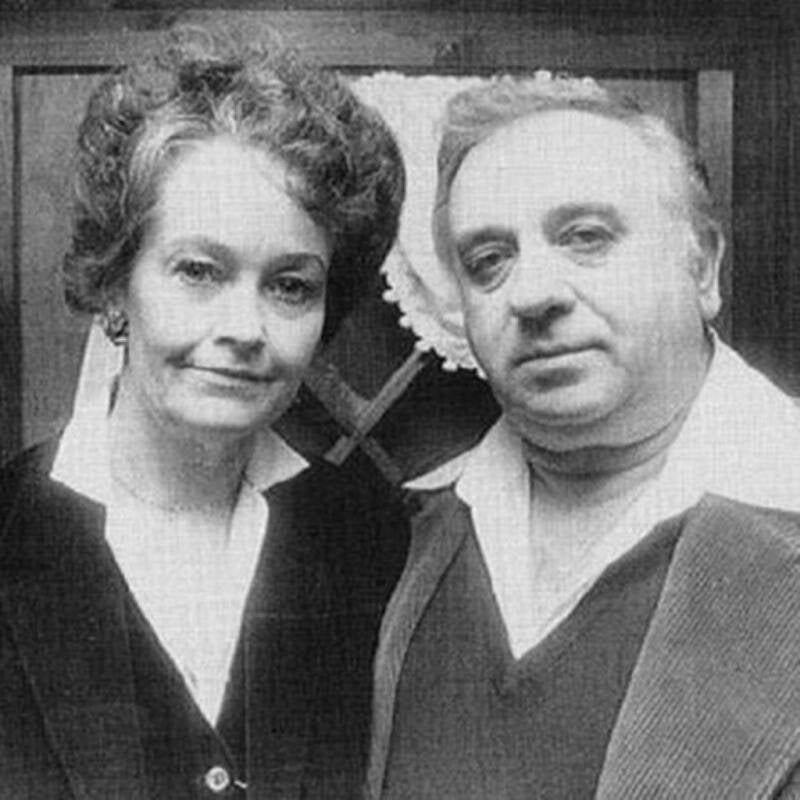
In 1986, Ed and Lorraine Warren became involved in the Smurl family’s case.
The Connecticut couple had already attracted attention for investigating alleged paranormal activity, including the infamous Amityville haunting.
Ed described himself as a demonologist, while Lorraine claimed to possess clairvoyant abilities.
After investigating the Smurl home, the Warrens concluded that multiple spirits were present, including a powerful demonic entity.
They believed the disturbances were not simply the work of an ordinary ghost.
According to their interpretation, the alleged activity suggested an intelligent and dangerous presence.
The Warrens reported recording unusual sounds and capturing what they believed were shadowy figures.
However, the evidence they described was never independently demonstrated to establish the existence of demons.
Their involvement also intensified public interest.
For believers, the Warrens’ conclusions appeared to validate the family’s fears. For skeptics, their involvement raised additional concerns about the investigation’s objectivity.
The Church Responds
The Smurls sought religious intervention, believing that an exorcism might end the disturbances.
By August 1986, Janet said two exorcisms had already failed to provide relief.
However, the Roman Catholic Diocese of Scranton clarified that those earlier rituals had been conducted without its authorization or knowledge.
The diocese approached the situation cautiously.
Church officials acknowledged the family’s concerns but emphasized that other explanations needed to be considered before determining whether demonic activity was involved.
The distinction mattered.
A religious ritual taking place inside a home does not establish that the home is haunted.
The family continued to seek spiritual assistance, and later accounts described additional prayers and religious intervention.
Eventually, the Smurls reported that the disturbances had subsided.
But the debate surrounding their experiences was far from over.
What Did the Skeptics Discover?
As the haunting attracted national publicity, investigators associated with the Committee for the Scientific Investigation of Claims of the Paranormal, or CSICOP, sought to examine the allegations.
Philosopher and skeptic Paul Kurtz investigated the case and published his findings in Skeptical Inquirer during the winter of 1986–1987.
Kurtz considered several possible non-supernatural explanations for the family’s experiences.
His report also described a significant obstacle: two skeptical investigators who arrived to examine the house were denied entry following a dispute involving Ed Warren and the family.
This limited their ability to conduct an independent examination of the property.
The skeptics argued that the available evidence did not justify concluding that supernatural forces were responsible.
Importantly, a lack of convincing paranormal evidence does not automatically establish that the family deliberately fabricated its story.
People can sincerely report unusual experiences while misunderstanding their causes.
Unexplained sounds, environmental conditions, stress, expectation, and ordinary household disturbances can all contribute to experiences that seem mysterious or frightening.
None of those possibilities, however, conclusively explains every allegation made by the Smurls.
The central issue remains that the family’s supernatural interpretation was never scientifically verified.
Are Skeptics More Likely to Be Haunted?
There is a recurring theme in paranormal storytelling: the person who refuses to believe in ghosts is often the first to encounter something terrifying.
A skeptic enters an allegedly haunted building, dismisses the warnings, and suddenly experiences something they cannot explain.
It makes for a compelling story.
But does disbelief actually attract spirits?
There is no reliable scientific evidence demonstrating that skeptics experience hauntings more frequently than believers.
In fact, people who believe in paranormal phenomena may be more inclined to recognize and report experiences as supernatural.
A skeptic might attribute unexplained footsteps to plumbing, an animal, or the structure of a building.
A believer might interpret the same sound as evidence of a spiritual presence.
Neither interpretation, without further investigation, proves what caused the sound.
Some paranormal traditions suggest that spirits deliberately challenge skeptics or respond to fear, attention, and emotional vulnerability.
These remain beliefs and theories rather than established facts.
The Smurl case presents the opposite side of that popular narrative: a religious family who believed their faith was being tested by something they could not understand.
Perhaps the more revealing question is not who becomes haunted, but how people decide that a haunting is taking place.
From a Family’s Nightmare to Hollywood
The Smurl family’s experiences eventually inspired The Haunted: One Family’s Nightmare, a book written by Robert Curran with the involvement of the family and the Warrens.
In 1991, the story was adapted into the television film The Haunted.
Decades later, the case returned to popular attention through the 2025 horror film The Conjuring: Last Rites.
Although the film draws inspiration from the Smurl case, its supernatural events and dramatic storytelling should not be mistaken for a documentary account.
Hollywood has long transformed alleged paranormal encounters into entertainment, often heightening the danger and inventing details.
For the families behind these stories, however, the public attention can have lasting consequences.
The Smurls became nationally associated with claims that many people found either terrifying or impossible to believe.
Their home became a destination for curious visitors, journalists, and paranormal enthusiasts.
The family eventually moved away in 1988.
The Mystery That Remains
Nearly four decades after the Smurl case became national news, the haunting continues to divide opinion.
Some believe the family encountered something genuinely supernatural.
Others believe the experiences had natural explanations, were exaggerated, or were influenced by the involvement of paranormal investigators.
What can be established is that the family publicly reported frightening experiences, the Warrens investigated, clergy became involved, and skeptics challenged the evidence.
What cannot be established is that a demon inhabited the property.
The case also reveals something about the complicated relationship between fear and belief.
A religious person may view an unexplained event through the lens of spiritual conflict. A skeptic may search for a physical explanation. Both may experience genuine fear when confronted with something unfamiliar.
And perhaps that is why stories like the Smurl haunting remain so enduring.
They confront us with the uncomfortable possibility that our homes, the places where we expect to feel safest, might suddenly become unfamiliar.
Was the Smurl family terrorized by an unseen presence, or did ordinary events become extraordinary through fear, belief, and public attention?
The evidence has never settled the question to everyone’s satisfaction.
And the house on Chase Street remains part of American paranormal folklore.
Sources and Further Reading
- United Press International, August 20, 1986 — Once Janet Smurl Would Have Dismissed Her Family’s Story.
- United Press International, August 21, 1986 — Haunted Family Overwhelmed by Attention.
- Paul Kurtz, A Case Study of the West Pittston ‘Haunted’ House, Skeptical Inquirer, Winter 1986–1987.
- The Times Leader, October 30, 1994 — Hoax or Haunting? We’ll Let You Decide.
- The Times Leader archives — Film’s ‘Ghost Hunters’ Also Probed Smurl Case in ’86.
- Robert Curran, The Haunted: One Family’s Nightmare, 1988.
Editorial Note: This article examines historical allegations of paranormal activity. Claims involving spirits, demonic entities, and supernatural assaults are presented as reported experiences and have not been independently verified. The Inkwell Times does not present paranormal interpretations as established scientific facts.
The Inkwell Times — Exploring the stories, mysteries, and histories that refuse to be forgotten.
Add comment
Comments