By Yasmin Chaudhary -- The Inkwell Times
Father’s Day is a celebration dedicated to recognizing fathers, father figures, and the important role they play in families and society. While today it is often associated with cards, cookouts, neckties, and family gatherings, the holiday has a surprisingly complex history rooted in grief, gratitude, religion, and social change.
Early Traditions of Honoring Fathers
The idea of honoring fathers is far older than the modern holiday. Ancient civilizations often celebrated fatherhood through religious ceremonies and family traditions.
In ancient Rome, fathers held immense authority within the family under a system known as patria potestas (“power of the father”), although there was no specific annual celebration dedicated to fathers.
In Catholic Europe, a tradition developed of honoring fathers on March 19, the feast day of Saint Joseph. As the husband of Mary and foster father of Jesus, Saint Joseph became a symbol of devoted fatherhood. Many countries, including Spain, Italy, and Portugal, still celebrate Father’s Day on this date.
The modern American holiday, however, emerged from a very different story.
The Tragedy That Inspired a Movement
The roots of Father’s Day can be traced to the late 19th and early 20th centuries, when industrial accidents frequently claimed the lives of working men.
One often-overlooked precursor occurred in 1908 in Fairmont. Following the devastating Monongah Mining Disaster, which killed more than 360 miners, many children were left without fathers.
On July 5, 1908, a memorial service was held at a Methodist church to honor the fathers who had died in the disaster. While this event did not become an annual tradition, historians often regard it as the first known observance resembling Father’s Day.
Sonora Smart Dodd: The Mother of Father’s Day
The person most responsible for establishing Father’s Day was a woman named Sonora Smart Dodd.
Born in 1882, Dodd was inspired after attending a Mother’s Day church service in 1909. She felt that fathers deserved recognition as well.
Her own father, William Jackson Smart, had raised six children alone after his wife died during childbirth. Dodd deeply admired his sacrifice and dedication.
She began campaigning for a holiday that would honor fathers nationwide.
Originally, she proposed June 5, her father’s birthday, but organizers needed more time to prepare. As a result, the first Father’s Day celebration in her city took place on June 19, 1910, in Spokane.
Churches held special services, fathers received flowers, and children honored their dads. The event was well received, but national recognition remained years away.
A Long Road to Recognition
Unlike Mother’s Day, which became a national holiday relatively quickly, Father’s Day faced resistance.
Many Americans viewed it as overly sentimental. Others believed it was simply a commercial attempt to sell gifts.
Some newspapers even mocked the idea. Critics argued that fathers would be embarrassed by such public displays of affection.
Despite the skepticism, support gradually grew.
Presidential Support
Several presidents endorsed the idea:
- Woodrow Wilson supported Father’s Day in 1916.
- Calvin Coolidge encouraged states to observe it in 1924.
- Lyndon B. Johnson issued the first presidential proclamation recognizing Father’s Day in 1966.
Yet it still lacked permanent federal status.
Becoming a National Holiday
After decades of advocacy, Father’s Day finally achieved official recognition.
In 1972, President Richard Nixon signed legislation making Father’s Day a permanent national observance in the United States.
The holiday would be celebrated annually on the third Sunday in June.
This occurred 58 years after Mother’s Day became an official holiday.

The Symbolism of Roses
Early Father’s Day celebrations often used flowers as symbols.
- A red rose honored a living father.
- A white rose honored a deceased father.
This tradition mirrored some early Mother’s Day customs and reflected the holiday’s original focus on gratitude and remembrance rather than gift-giving.
Commercialization of Father’s Day
As the holiday gained popularity, businesses embraced it.
By the mid-20th century, retailers promoted Father’s Day through advertisements encouraging families to buy:
- Neckties
- Pipes
- Wallets
- Tools
- Shaving kits
- Clothing
Many people criticized the commercialization, much as they had with Mother’s Day. Ironically, Father’s Day’s opponents often cited the same concern that its supporters once faced: that genuine appreciation was being replaced by consumer spending.
Today, Father’s Day generates billions of dollars in annual spending in the United States.
Father’s Day Around the World
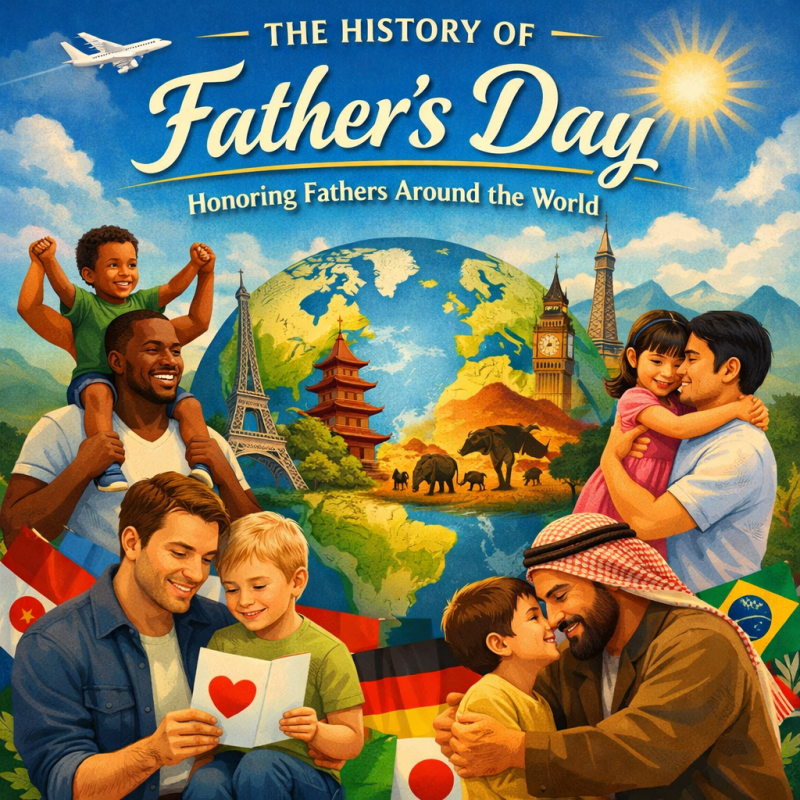
Although many countries celebrate Father’s Day, the dates vary considerably.
March 19
Countries including:
- Spain
- Italy
- Portugal
Celebrate on Saint Joseph’s Day.
Third Sunday in June
Observed in:
- United States
- Canada
- United Kingdom
- India
- Pakistan
- Many other nations
September
Australia and New Zealand celebrate Father’s Day on the first Sunday of September.
Other Dates
Many countries have developed unique traditions tied to local culture, religion, or historical events.
The Changing Meaning of Fatherhood
When Father’s Day began in 1910, the typical public image of a father was that of a breadwinner and household authority figure.
Over the decades, ideas about fatherhood have evolved significantly.
Today, Father’s Day honors:
- Biological fathers
- Adoptive fathers
- Stepfathers
- Grandfathers
- Single fathers
- Foster fathers
- Mentors and father figures
Modern celebrations increasingly recognize emotional support, caregiving, and active involvement in children’s lives as central aspects of fatherhood.
Legacy of the Holiday
What started as one daughter’s tribute to her widowed father grew into a worldwide celebration observed by millions.
Father’s Day serves as a reminder that fatherhood is not merely a biological relationship but often a commitment marked by sacrifice, guidance, protection, and love. More than a century after Sonora Smart Dodd first proposed the holiday, her vision continues each year as families gather to honor the men who helped shape their lives.
Whether celebrated with an elaborate meal, a simple phone call, or a quiet moment of remembrance, Father’s Day remains one of the most enduring tributes to family bonds in modern culture.
Add comment
Comments