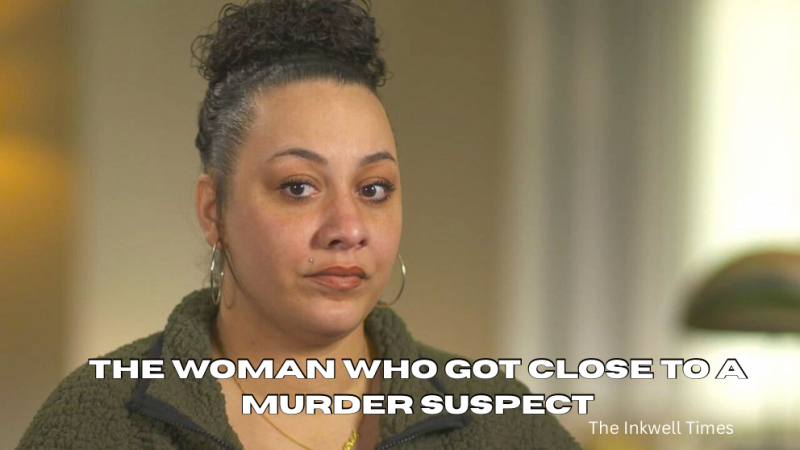
How Lauren Suhr Risked Everything in the Search for Justice for Kelsie Schelling
By Yasmin Chaudhary | The Inkwell Times
Some people become invested in a true crime story because it’s shocking.
Others watch from a distance, hoping the victim’s family eventually finds answers.
Then there are people like Lauren Suhr.
She wasn’t a detective. She wasn’t related to the victim. She wasn’t working for law enforcement or a private investigator.
She was simply a Colorado woman who saw the disappearance of 21-year-old Kelsie Schelling on the news and couldn’t shake the feeling that someone needed to do more.
What followed would become one of the most unusual civilian efforts connected to a modern murder investigation.
A Promising Future Interrupted
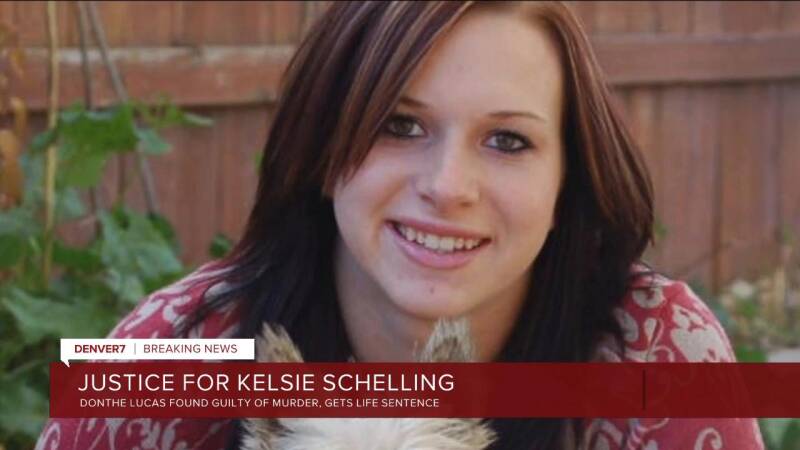
On February 4, 2013, Kelsie Schelling had every reason to believe her life was entering a new chapter.
Earlier that day, she had learned she was eight weeks pregnant.
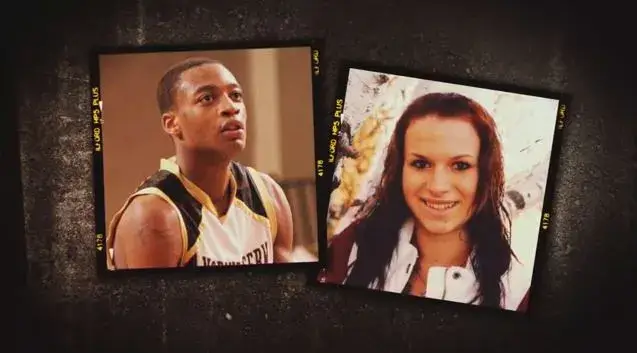
The baby’s father was her on-again, off-again boyfriend, Donthe Lucas.
That evening, after finishing work in the Denver area, Schelling drove nearly two hours south to Pueblo, Colorado, to meet Lucas. Text messages later recovered by investigators showed Lucas encouraging her to make the trip, promising her a surprise.
Security cameras captured Schelling arriving at a Walmart parking lot around 11:20 p.m., where she waited for more than an hour.
Her final known text message read:
“Where are you? I’ve been here over an hour just waiting.”
She was never seen again.
The Investigation Begins
Almost immediately, investigators encountered a frustrating reality.
There was no crime scene.
No eyewitness.
No body.
Only a growing collection of suspicious circumstances.
Surveillance footage later showed someone moving Schelling’s vehicle after her disappearance.
Investigators discovered that $400 had been withdrawn from her bank account using her debit card.
Cell phone data placed Schelling’s phone and Lucas’ phone traveling together after she disappeared.
Yet none of those pieces, standing alone, were enough to immediately secure a murder conviction.
For years, the investigation appeared stalled.
An Ordinary Citizen Makes an Extraordinary Decision
While many people followed the case from afar, Lauren Suhr decided she wanted to understand the man investigators believed knew more than he admitted.
She later explained that, as a mother herself, she could not stop thinking about what Kelsie’s family was enduring.
Without being asked by police, Suhr contacted Lucas through Facebook in 2016.
Her original intention was simple:
Become someone he trusted.
Perhaps he would eventually tell her something he hadn’t told investigators.
What she did not expect was how complicated the situation would become.
Over time, the two developed what appeared to outsiders to be a genuine romantic relationship.
Lucas introduced her to his family.
He confided in her.
Eventually, he even proposed marriage.
Suhr accepted the ring but later said she never intended to marry him.
Instead, she had reached a point where she realized she had gone as far as she safely could.
What Lucas Told Her
Popular retellings of this story often claim Lauren Suhr obtained a murder confession.
The evidence presented at trial tells a more nuanced story.
According to Suhr’s testimony, Lucas admitted something investigators had long suspected:
He acknowledged that he was the person captured on surveillance footage moving Schelling’s car.
He also admitted taking the vehicle to a hospital before abandoning it.
Just as importantly, Suhr testified that Lucas repeatedly changed his explanation of what had happened to Schelling.
His story shifted multiple times.
What never changed, however, was his denial that he killed her.
Even so, these admissions proved significant because they directly contradicted years of previous statements he had given investigators.
A Case Built Without a Body
The prosecution’s case ultimately relied on what is known as a “no-body homicide.”
These prosecutions are among the most difficult in American criminal law because prosecutors must prove a victim is dead—and that a specific defendant caused that death—without recovering remains.
Jurors heard evidence including:
- Surveillance footage documenting Lucas using Schelling’s vehicle.
- ATM footage showing Lucas withdrawing money from her account.
- Cell phone records placing their phones together after she disappeared.
- Testimony that Lucas lied repeatedly during interviews.
- Testimony from Lauren Suhr regarding his admissions about moving the vehicle.
- Testimony from a former jail inmate who claimed Lucas confessed while incarcerated.
- Evidence suggesting Lucas was unhappy about the pregnancy.
Individually, each fact might have raised questions.
Together, prosecutors argued, they formed one consistent picture.
Justice, Though Not Closure
In March 2021, after deliberating for only a few hours, the jury convicted Donthe Lucas of first-degree murder.
He received the mandatory sentence of life imprisonment without the possibility of parole.
In 2024, the Colorado Court of Appeals upheld the conviction.
Yet one heartbreaking truth remains unchanged.
Kelsie Schelling has never been found.
For her mother, Laura Saxton, the conviction represented justice—but not closure.
Without her daughter’s remains, there is still no grave to visit, no funeral that could truly mark the end of the family’s search.
The Ethical Questions
Lauren Suhr’s involvement continues to spark debate.
Should ordinary citizens ever insert themselves into active criminal investigations?
Could her actions have placed her in serious danger?
Did her deception cross ethical lines?
There are no easy answers.
Law enforcement did not direct Suhr to pursue Lucas.
She made the decision herself, believing that if there was even a small chance she could help a grieving family, it was worth trying.
Her testimony became one piece of a much larger evidentiary puzzle—not the sole reason for Lucas’ conviction, but a meaningful contribution to a case built almost entirely on circumstantial evidence.
Why This Story Still Matters
The disappearance of Kelsie Schelling reminds us that justice is not always immediate.
Sometimes it takes years.
Sometimes it depends on thousands of pages of records, surveillance footage, digital evidence, and relentless investigators.
And sometimes, unexpectedly, it also depends on an ordinary citizen unwilling to forget someone she had never met.
Lauren Suhr did not solve the case by herself.
She did not obtain a complete confession.
What she did was something perhaps equally remarkable: she earned the trust of the man at the center of the investigation long enough to expose key lies, strengthening a case that ultimately convinced a jury beyond a reasonable doubt.
More than a decade after Kelsie Schelling disappeared, one mystery still remains.
Where is Kelsie?
Until that question is answered, justice will always feel incomplete.
Add comment
Comments
I feel like although she got him to kind of confess she was idiotic because he could have killed her too.
That’s a fair point. She undoubtedly put herself in a potentially dangerous situation. At the same time, it’s worth remembering that her actions were her own decision, and many people have debated both the risks she took and the role her testimony ultimately played in the case. It’s one of the reasons the story continues to raise ethical questions alongside the pursuit of justice.
I had never heard of this case before. It’s heartbreaking that Kelsie still hasn’t been found.
Cases without a body always fascinate me. It shows how much investigators rely on digital evidence and circumstantial evidence.
Whether you agree with what Lauren did or not, it’s definitely a conversation starter.
I agree. It’s one of those cases where people can come away with very different perspectives. Some see Lauren’s actions as incredibly courageous, while others believe the risks outweighed the potential benefits. That’s part of what makes this case so compelling to discuss.
Very well written yasmin. I am not familiar with this case as I try not to watch negative news stories for my own mental health.
Great article. I’d love to see more investigative pieces like this on The Inkwell Times.