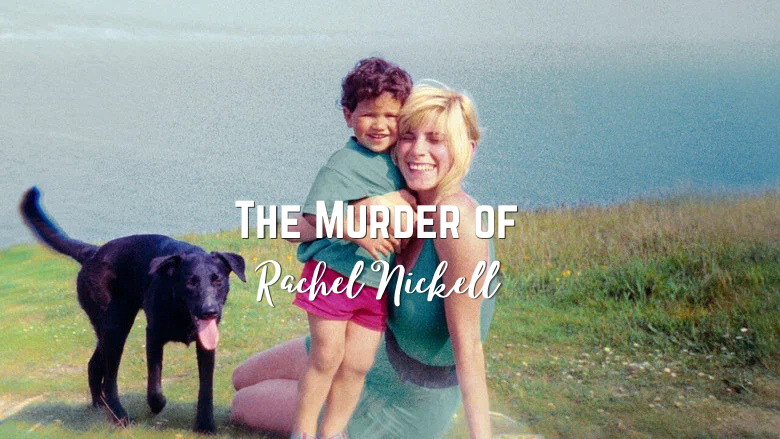
On a summer morning in 1992, 23-year-old Rachel Nickell took her two-year-old son and their dog for a walk across Wimbledon Common. She never came home. What followed was one of Britain’s most controversial murder investigations — one that wrongly targeted an innocent man, left a dangerous killer free, and forced Rachel’s family to live with the consequences for decades.
An Investigative Article by The Inkwell Times
On the morning of July 15, 1992, Rachel Nickell left home with her two-year-old son, Alex, and the family’s dog.
It was an ordinary outing.
A mother taking her young child outside.
A walk across Wimbledon Common.
A familiar routine.
Rachel was 23 years old.
She was a mother and partner, a former part-time model, and a young woman whose life was still unfolding.
She had no reason to believe that the walk would be the last time she would ever see her home.
She had no reason to believe that her two-year-old son would become the only known eyewitness to her murder.
And her family had no reason to imagine that the investigation into her death would eventually become almost as infamous as the crime itself.
Rachel Nickell was attacked on Wimbledon Common in broad daylight.
She was sexually assaulted and stabbed repeatedly.
The violence was so extreme that investigators later determined she had suffered 49 stab wounds.
Her killer left her body behind.
But he did not leave the scene alone.
Rachel’s son was still there.
Alex was two years old.
He had just watched his mother die.
Rachel Before the Headlines
The name Rachel Nickell became permanently associated with one of Britain’s most notorious unsolved murders.
But before July 15, 1992, she was not a headline.
She was a young woman living with her partner, André Hanscombe, and their son.
Those closest to Rachel remembered her for qualities that had nothing to do with the circumstances of her death.
At her funeral, her father, Andrew Nickell, described his daughter as someone who radiated love, warmth, good humour and generosity.
The funeral was deliberately framed as a celebration of her life.
That distinction matters.
Because Rachel’s life did not begin on Wimbledon Common.
And it should not be reduced to how it ended.
She was 23.
She was raising a young child.
She had relationships, hopes and an entire future ahead of her.
The crime took all of that away.
July 15, 1992
Rachel and Alex went walking on Wimbledon Common with their dog, Molly.
At some point along a wooded path, a stranger approached them.
The attack happened quickly and violently.
Rachel was sexually assaulted and stabbed 49 times.
The wounds were concentrated around her neck and upper body.
She attempted to defend herself.
Her son was present during the attack.
The killer eventually fled.
Rachel was dead.
Alex remained beside her.
A passerby later discovered the child near his mother’s body.
The image became one of the most haunting details of the case: a two-year-old boy beside the woman who had been his entire world, unable to understand why she would not get up.
He repeatedly tried to get her attention.
He wanted his mother to wake up.
She never would.
The Family’s World Ends
André Hanscombe was at work when Rachel was murdered.
He later recalled calling home to check on Rachel and Alex.
A police officer answered the phone.
In that moment, the ordinary world he had left that morning disappeared.
He had lost his partner.
His son had lost his mother.
And Alex had experienced something no two-year-old should ever have to experience.
The family was now facing two different kinds of trauma.
There was the murder itself.
And there was the knowledge that a killer was still free.
The Child Who Survived
Alex was only two years old.
He could not provide investigators with the kind of detailed eyewitness account that an adult might have offered.
But he had seen something.
And police repeatedly attempted to understand what he remembered.
His childhood became intertwined with the investigation.
Questions about the attack followed him.
So did the memory of losing his mother.
As Alex grew older, the murder did not simply become an event that happened before he could remember his childhood.
It became part of his identity.
He was Rachel Nickell’s son.
He was the child who survived the attack.
He was the little boy found beside his mother’s body.
And he had to grow up knowing that his earliest memories were connected to one of the most horrific moments of his family’s life.
The Search for Rachel’s Killer
The murder generated enormous public attention.
Thousands of people were interviewed.
Investigators examined possible suspects and searched for connections between the crime and other attacks against women.
The Metropolitan Police faced tremendous pressure to solve the case.
But pressure can produce tunnel vision.
And that is where the investigation began to go badly wrong.
Police became focused on Colin Stagg, a local man who regularly walked his dog on Wimbledon Common.
There was no forensic evidence establishing that Stagg had killed Rachel.
There was no confession.
But investigators believed he fit aspects of a psychological profile developed in connection with the murder.
That belief became increasingly important.
The investigation began moving toward proving that Stagg was the killer rather than objectively determining whether the evidence actually established that he was.
Operation Edzell
In an extraordinary attempt to obtain evidence against Stagg, police created an undercover operation.
A female police officer posed as a woman named “Lizzie James.”
She developed a relationship with Stagg.
The purpose was to encourage him to reveal information about the murder or confess to it.
The operation involved telephone conversations, meetings and letters.
The undercover officer was instructed to create an emotional and sexual connection with Stagg.
Investigators hoped that the relationship would eventually cause him to admit responsibility for Rachel’s murder.
It did not.
Stagg never confessed to killing Rachel.
But the operation became central to the prosecution’s case.
And ultimately, it became one of the reasons that case collapsed.
The Wrong Man
Stagg was arrested and charged with Rachel’s murder.
He spent more than a year in custody.
Meanwhile, the public had already been exposed to the police’s suspicions.
For many people, the distinction between suspect and killer disappeared.
Stagg had been named.
He had been arrested.
He was portrayed as someone investigators believed was responsible.
But believing someone committed a crime is not the same thing as proving it.
In September 1994, the prosecution case against Stagg collapsed.
The judge ruled that crucial evidence from the undercover operation was inadmissible.
The tactics used against Stagg were condemned as profoundly improper.
Stagg walked out of court.
He was not Rachel’s killer.
But his life had already been changed.
He had spent more than a year in custody.
His reputation had been destroyed.
And the real killer remained free.
The Man Police Had Missed
While investigators pursued Stagg, another man was moving through the same wider landscape.
His name was Robert Napper.
Napper had a history of sexual violence against women.
He was eventually linked to the murders of Samantha Bissett and her four-year-old daughter, Jazmine, in 1993.
He was arrested in 1994.
By then, Rachel had been dead for nearly two years.
Napper was subsequently detained indefinitely in Broadmoor Hospital after being convicted of manslaughter on the grounds of diminished responsibility.
But Rachel’s murder remained officially unsolved.
The significance of Napper’s history would become painfully clear years later.
There had been warning signs.
There had been opportunities.
And investigators had failed to connect them to Rachel’s murder.
The Case Goes Cold
For Rachel’s family, there was no real ending.
There was only an unanswered question.
Who killed her?
The case remained open.
Years passed.
Alex grew up.
André tried to build a life for his son away from the constant attention surrounding the case.
Eventually, father and son left Britain.
But leaving did not mean escaping what had happened.
Rachel was still dead.
Her killer had still not been properly held accountable.
And a family still had to live with the fact that someone had murdered the woman they loved and disappeared.
When Science Changed the Case
The breakthrough came not from a confession.
It came from forensic science.
By the early 2000s, advances in DNA analysis allowed investigators to revisit biological material recovered during the original investigation.
The Rachel Nickell case was formally reviewed.
Old evidence was examined again using techniques that had not been available in 1992.
A tiny biological sample recovered from Rachel’s clothing had survived.
It had been too limited for the technology of the time.
Now, it could potentially tell investigators something the original investigation could not.
Who had left it there?
The answer eventually pointed to Robert Napper.
In 2004, forensic testing established a DNA connection between Napper and evidence from Rachel’s murder.
The odds against the DNA coming from Napper were reported as approximately one in 1.4 million.
The investigation had finally moved from suspicion to forensic identification.
Rachel’s killer had a name.
And it was not Colin Stagg.
The Evidence Had Been There
The DNA breakthrough was only part of the story.
Investigators also reexamined other evidence.
A footprint found at the scene was eventually associated with footwear belonging to Napper.
Investigators also identified paint flakes recovered from Alex’s hair that were consistent with paint from Napper’s toolbox.
The significance of these pieces of evidence was enormous.
The original investigation had not simply failed to identify the killer.
It had failed to properly connect existing evidence to the right person.
The technology improved.
But so did the investigation.
Sixteen Years Later
In December 2007, Napper was formally charged with Rachel’s murder.
Sixteen years had passed since she died.
Alex was no longer the toddler who had stood beside his mother’s body.
He was a young man.
Rachel had been gone for most of his life.
On December 18, 2008, Napper pleaded guilty to manslaughter on the grounds of diminished responsibility.
The court accepted that he had killed Rachel.
He was detained indefinitely at Broadmoor Hospital.
The judge described him as an extremely dangerous man.
For the first time, Rachel’s family had a definitive answer.
Robert Napper had killed her.
But justice had arrived more than 16 years late.
The Cost of Getting It Wrong
The Rachel Nickell investigation is remembered not only because a killer was eventually identified.
It is remembered because the investigation went so badly wrong before it did.
An innocent man was prosecuted.
A real killer remained free.
A family waited years for answers.
And the Metropolitan Police eventually acknowledged serious failures.
In 2008, Assistant Commissioner John Yates publicly expressed regret over mistakes made in investigations that had failed to identify Napper sooner.
The errors mattered beyond Rachel.
Napper was not simply a man who had killed one person.
His history indicated a pattern of violence toward women.
The failure to identify him after Rachel’s murder meant that the opportunity to stop him had been missed.
And other people died.
That is one of the darkest questions surrounding Rachel’s case:
Could other lives have been saved if investigators had followed the evidence differently?
There is no way to rewrite the answer.
The Other Victim of a Broken Investigation
Colin Stagg was not responsible for Rachel’s murder.
That fact is important.
But his wrongful prosecution is also part of Rachel’s story because it demonstrates the danger of an investigation becoming attached to a theory.
Stagg received £706,000 in compensation in 2008 after bringing legal action over the damage caused by the prosecution and police conduct.
His life had been profoundly affected by being publicly associated with Rachel’s murder.
Two people suffered because of the investigative failure:
A family lost Rachel.
An innocent man lost years of his life to an accusation.
And the actual killer remained free.
There were no winners.
Rachel’s Son
Perhaps the deepest legacy of Rachel’s murder belongs to Alex.
He was not merely a witness.
He was a child who lost his mother.
He grew up without the woman who should have watched him become an adult.
She never saw his first day of school.
She never watched him become a teenager.
She never met the adult he became.
She never had the opportunity to know the person her little boy would grow into.
And Alex had to grow up with memories that most people never experience.
For years, he carried the knowledge that he had witnessed his mother’s murder.
That kind of trauma does not disappear simply because a court eventually identifies the person responsible.
Justice can establish responsibility.
It cannot return a mother.
A Family Forced to Leave
After Stagg’s prosecution collapsed and Rachel’s killer remained unidentified, André and Alex eventually moved abroad.
They first went to France and later settled in Spain.
The move was partly an attempt to escape the relentless attention surrounding the case and give Alex a chance at something resembling an ordinary childhood.
But there is no ordinary childhood after witnessing your mother’s murder.
There is only the life that comes afterward.
André became determined to preserve Rachel’s memory while also allowing his son to grow beyond the crime.
For both father and son, rebuilding did not mean forgetting.
It meant learning how to live with an absence that could never be filled.
Rachel Was More Than the Crime
The media frequently described Rachel as a “model.”
That description became one of the easiest ways to identify her in headlines.
But Rachel was more than a profession or appearance.
She was a mother.
A partner.
A daughter.
A friend.
A young woman who enjoyed ordinary life.
Her father remembered her for her warmth and generosity.
That is the Rachel worth remembering.
Not only the woman whose body was discovered on Wimbledon Common.
Not only the name attached to an infamous police investigation.
Not only the victim whose murder became a landmark case in forensic history.
But Rachel herself.
The Investigation That Became a Warning
The Rachel Nickell case eventually became a cautionary tale about investigative tunnel vision.
The lessons are uncomfortable.
A suspect can look right and still be wrong.
A psychological profile can appear persuasive while pointing investigators in the wrong direction.
A confession cannot be manufactured simply because investigators believe they know who committed the crime.
And evidence should lead an investigation.
An investigation should not reshape evidence to fit its preferred suspect.
In Rachel’s case, investigators became convinced that Colin Stagg was responsible.
They built an elaborate operation around that belief.
They pursued a prosecution.
And they were wrong.
Meanwhile, the man who actually killed Rachel remained free.
The Science That Finally Spoke for Rachel
Rachel died in 1992.
The technology capable of identifying her killer from the tiny DNA sample available at the time did not yet exist.
Sixteen years later, forensic science had changed.
Evidence that once appeared almost useless became decisive.
That is an important part of Rachel’s story.
The case did not disappear.
The evidence did not disappear.
It waited.
And when technology finally caught up, it provided something the original investigation had failed to deliver:
A connection between the crime scene and the man responsible.
DNA could not tell Rachel’s family who she had been.
They already knew.
It could tell them who had taken her away.
Justice, Eventually
Robert Napper’s guilty plea brought legal closure.
But “closure” is a complicated word.
Rachel’s family had spent more than 16 years waiting.
Alex had spent most of his childhood without his mother.
André had spent years raising their son while carrying the grief of losing his partner.
Rachel’s parents had buried their daughter.
No verdict could give them those years back.
No sentence could give Alex his childhood with his mother.
No scientific breakthrough could undo the morning of July 15, 1992.
Justice arrived.
But it arrived after the damage had already spread across generations.
Why Rachel Nickell Still Matters
Rachel’s murder remains relevant because it demonstrates something that true crime often forgets:
The consequences of a murder do not end when the victim dies.
They continue.
They continue in the family photographs.
In birthdays.
In unanswered questions.
In children who grow up without parents.
In partners who have to become single parents overnight.
In families who hear the victim’s name in the news decades later.
And sometimes, they continue in the failures of the institutions that were supposed to deliver justice.
Rachel’s case contains all of those things.
A young mother murdered in broad daylight.
A toddler left beside her body.
An innocent man wrongly accused.
A dangerous killer overlooked.
A forensic breakthrough.
A family waiting sixteen years for answers.
And a son who had to grow up carrying the memory of his mother.
Remember Rachel
It is easy to remember Rachel Nickell because of the horror of her death.
It is harder — and more important — to remember her because of her life.
Rachel was 23.
She had a two-year-old son.
She had a partner who loved her.
She had parents who adored her.
She had friends.
She had a future.
She went outside for a walk.
That was all.
There was nothing extraordinary about the decision.
That is what makes the tragedy so devastating.
A normal morning became the final morning of Rachel’s life.
Her son survived.
Her family survived.
But they survived without her.
More than three decades later, Rachel’s name still appears whenever the case is discussed.
New documentaries and dramatizations have brought the investigation back into public attention.
But the renewed interest should not make the same mistake that so much coverage made in the 1990s.
The most important person in this story is not the police officer who got it wrong.
It is not the innocent man who was accused.
It is not even the man who ultimately admitted killing her.
It is Rachel.
Because before she became a murder victim, she was a woman living a life.
And on July 15, 1992, that life was taken from her.
She should have come home.
Her son should have grown up knowing his mother.
Her partner should have grown old beside her.
Her parents should have watched their daughter become older.
None of those things happened.
And no matter how many years pass, that remains the greatest injustice of all.
Rachel Nickell was 23 years old when she went for a walk with her little boy.
She never came home.
Add comment
Comments
It's so tragic and I feel for the kid.