By Yasmin Chaudhary — The Inkwell Times
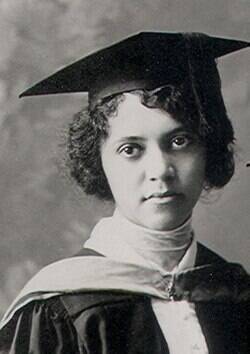
In the early twentieth century, as fear and stigma surrounded Hansen’s disease — historically known as leprosy — a young Black chemist developed a breakthrough that would change thousands of lives. Her name was Alice Augusta Ball. Yet for years after her death, her discovery was credited to a man who published her work under his own name. Today, historians continue to uncover the full truth of Ball’s scientific legacy, restoring recognition to a pioneer whose contributions were nearly erased.
A Young Scientist With Extraordinary Promise
Alice Augusta Ball was born on July 24, 1892, in Seattle, Washington, into a family that valued education and creativity. She excelled academically from an early age and went on to study chemistry at the University of Washington, where she earned degrees in pharmaceutical chemistry and pharmacy. At a time when higher education remained largely inaccessible to Black women, Ball’s academic achievements were groundbreaking.
In 1915, she moved to Hawaiʻi to pursue a master’s degree in chemistry at the College of Hawaiʻi (now the University of Hawaiʻi). There, she became the first woman — and the first Black American — to earn a master’s degree in chemistry from the institution. Her thesis focused on the chemical properties of kava, a plant used in Pacific Island traditions, demonstrating her growing expertise in natural compounds and medicinal chemistry.
The Crisis of Hansen’s Disease
During Ball’s time in Hawaiʻi, Hansen’s disease posed a devastating public health challenge. Patients were often isolated in forced quarantine colonies, particularly on the Kalaupapa Peninsula of Molokaʻi. Existing treatments were limited and unreliable. Chaulmoogra oil, extracted from the seeds of the chaulmoogra tree, had been used for centuries in Asia and India, but it was difficult for patients to tolerate. Taken orally, it caused severe nausea; injected directly, it formed thick lumps under the skin.
Dr. Harry Hollmann, a physician searching for a better treatment, asked Ball to apply her chemistry expertise to the problem. What she developed would become known as the “Ball Method,” though for many years the world would hear a different name attached to it.
The Ball Method: A Scientific Breakthrough
Alice Ball succeeded where many chemists had failed. She discovered how to chemically modify chaulmoogra oil into water-soluble ethyl esters, allowing it to be safely injected and absorbed into the bloodstream. This transformation turned a traditional remedy into a modern medical treatment.
The innovation was revolutionary. Patients who received the treatment began to improve significantly, and many were released from quarantine for the first time in years. The Ball Method became the most effective therapy for Hansen’s disease before the development of antibiotics decades later.
Her work represented a fusion of traditional medicine and modern chemistry — and it emerged from the mind of a scientist who was only in her early twenties.
A Life Cut Short
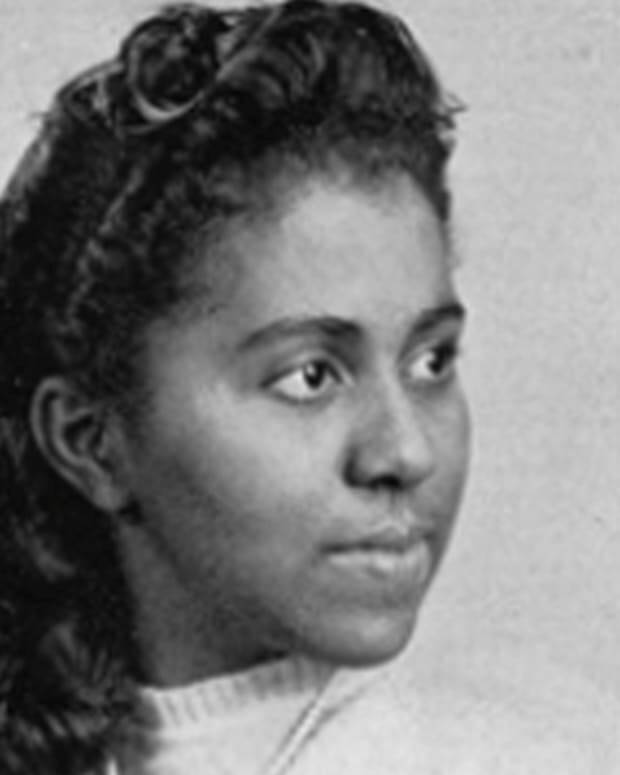
In 1916, at just 24 years old, Alice Ball became seriously ill and returned to Seattle. She died later that year. Historical accounts vary about the cause of her death, with some reports suggesting complications from laboratory exposure to chlorine gas, though definitive records remain limited.
Her passing meant she never saw the global impact of her discovery — nor the controversy that would follow.
The Erasure and the Renaming
After Ball’s death, Arthur L. Dean, the president of the College of Hawaiʻi, continued her research. Rather than crediting her, he began publishing and promoting the treatment under his own name, calling it the “Dean Method.” For years, medical literature referred to the therapy without acknowledging Ball’s original work.
It was Dr. Harry Hollmann who later challenged this narrative. In a 1922 publication, he publicly credited Alice Ball as the true developer of the injectable chaulmoogra treatment, stating that the method was entirely her innovation. His defense helped preserve a historical record that might otherwise have been lost.
The renaming of her discovery reflects a broader pattern seen throughout scientific history, where the contributions of women and people of color were minimized or reassigned to more socially accepted figures.
Restoring Alice Ball’s Legacy
For decades, Ball’s name faded into obscurity. It was not until the late twentieth and early twenty-first centuries that scholars began restoring her recognition. The University of Hawaiʻi has since honored her with a plaque, a scholarship, and an annual “Alice Ball Day” commemorating her contributions to science and medicine.
Today, historians describe the Ball Method as a turning point in Hansen’s disease treatment — one that saved countless lives and helped shift medical practice toward injectable therapies derived from natural compounds.
Her story resonates far beyond chemistry labs. It is a reminder of how innovation can emerge from marginalized voices — and how easily those voices can be silenced without vigilance and historical accountability.
More Than a Footnote in Medical History
Alice Augusta Ball’s work stands at the intersection of science, justice, and remembrance. She was a young Black woman operating in a field dominated by white men, yet her intellect reshaped medical treatment at a global level.
The effort to reclaim her name is not only about correcting the record. It is about recognizing the brilliance that existed despite systemic barriers — and ensuring that future generations know who truly made the discoveries that changed the world.
Her legacy endures not through the name once attached to her method, but through the lives saved by her science and the growing movement to tell her story fully and truthfully.
Add comment
Comments