
By Yasmin Chaudhary — The Inkwell Times
In Burundi, spirituality is not something distant or abstract. It lives in relationships — between families, elders, land, and memory. While many Burundians today identify as Christian or Muslim, ancestral belief continues to shape daily life through customs, language, and community ethics. Spirituality here is less about doctrine and more about continuity — carrying forward what has always held people together.
The Spiritual Foundations of Burundi
Burundi sits in the Great Lakes region of East Africa, where social life has long centered around extended families, cattle keeping, agriculture, and communal responsibility. Before colonial rule, Burundi functioned as a centralized kingdom guided by cultural values rather than rigid religious institutions.
Spiritual understanding was passed through elders, oral storytelling, and ritual practice. Instead of a formalized pantheon, belief systems focused on harmony — between the living and those who came before.
Ancestors as Community Guardians
In Burundian tradition, ancestors are not removed from the present. They are remembered as part of the community’s ongoing story.
Ancestors are believed to:
- Protect family lineages
- Guide moral decisions
- Maintain balance between individuals and the collective
Unlike worship, ancestral reverence is about respect and remembrance. Families may speak the names of elders during gatherings, maintain burial traditions, or consult respected community members when facing difficult decisions.
Even today, these practices continue quietly — woven into everyday gestures rather than formal ceremony.
The Role of Community in Spiritual Life
Spirituality in Burundi is deeply communal. Identity is tied to belonging — to clan, family, and village — rather than individual religious expression.
Community rituals often include:
- Shared meals marking life transitions
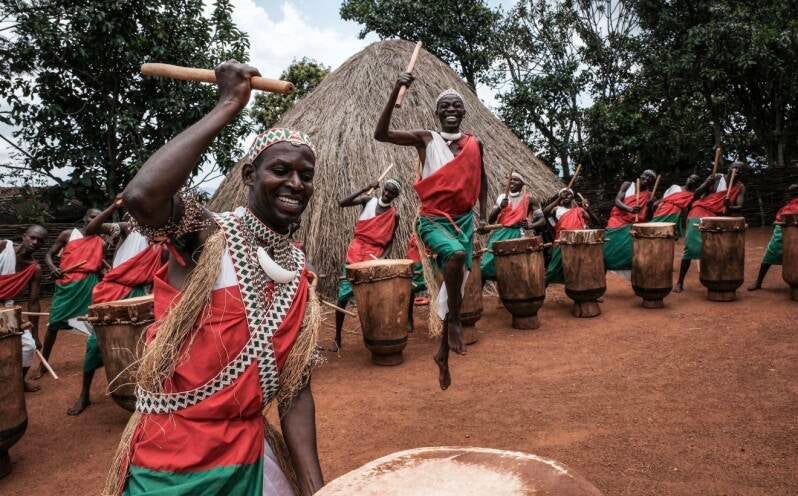
- Drumming and dance tied to cultural identity
- Collective conflict resolution led by elders
The famous royal drums of Burundi, preserved at the Gishora Drum Sanctuary, symbolize more than heritage; they represent continuity between past leadership and present cultural life.
Colonial Disruption and Adaptation
German and later Belgian colonial rule reshaped Burundi’s social structures, introducing Christianity and European administrative systems. Indigenous beliefs were often labeled primitive or discouraged outright.
Yet ancestral traditions did not disappear. Instead, they adapted:
- Christian prayer blended with ancestral remembrance
- Traditional ceremonies became cultural gatherings
- Spiritual ethics remained embedded in community values
This blending reflects resilience rather than loss — spirituality surviving through transformation.
Land, Memory, and Everyday Ritual
Land carries deep meaning in Burundian belief. Hills, fields, and family homesteads are not simply physical spaces; they hold memory.
Practices still seen today include:
- Respect for ancestral burial sites
- Ritual acknowledgment before major communal events
- Elders guiding younger generations through storytelling
Spiritual continuity is measured less by visible ritual and more by how people live — with patience, humility, and awareness of those who came before.
Why Burundi’s Spiritual Traditions Matter
Burundi challenges common assumptions about spirituality:
- That belief must be loud or centralized
- That tradition disappears with modernization
- That faith exists separately from community life
Instead, Burundi offers a quieter model — one where spirituality is carried through everyday relationships, ethical living, and shared memory.
Closing Reflection
In Burundi, spirit is not distant. It lives in the way people gather, remember, and endure.
Colonization tried to silence these traditions — and that is something I refuse to romanticize. What survives today is not because colonization helped, but because communities protected what mattered most.
Ancestors remain present. Continuity remains alive.
Add comment
Comments