
By Yasmin Chaudhary — The Inkwell Times
To understand Benin, you must look beyond borders and into the rhythms of daily life. Benin’s history is one of powerful kingdoms, global trade routes, spiritual depth, and cultural endurance. And like many African nations, its story lives not only in archives—but in the foods made by hand, sold in markets, and shared between generations.
One of those foods is kuli-kuli.
Benin: A Brief History of Kingdoms and Continuity
Benin sits in West Africa along the Gulf of Guinea. Long before European contact, the region was home to influential states such as the Kingdom of Dahomey, known for its centralized governance, artistry, and spiritual traditions.
From the 17th to the 19th centuries, Benin became deeply entangled in the transatlantic slave trade. Entire communities were uprooted, yet cultural knowledge—especially foodways—remained one of the few things that could not be confiscated.
After gaining independence from France in 1960, Benin reclaimed its name (formerly Dahomey) and continues to honor its Indigenous identity through language, religion, and everyday tradition.
The Origins of Kuli-Kuli
Kuli-kuli is a crunchy snack made from ground peanuts. It is simple, affordable, and deeply rooted in West African life—especially in Benin and neighboring regions.
Traditionally, peanuts are:
- Roasted
- Ground into a paste
- Pressed to extract oil
- The remaining solids are seasoned and fried
What remains becomes kuli-kuli.
This process reflects resourcefulness. Nothing is wasted. Oil is used for cooking or sale; the solids become food. Historically, this work was—and often still is—done by women, making kuli-kuli a product of both nourishment and labor.
Kuli-kuli is eaten:
- As a snack on its own
- With pap (corn porridge)
- Crumbled into soups or stews
- On the move, between work and home
It is everyday food—and that is exactly why it matters.
Why Kuli-Kuli Matters
Kuli-kuli tells the story of Benin through:
- Agricultural knowledge
- Women-led food production
- Adaptation during hardship
- Community-centered living
It is not ceremonial food.
It is survival food.
And survival, too, is history.
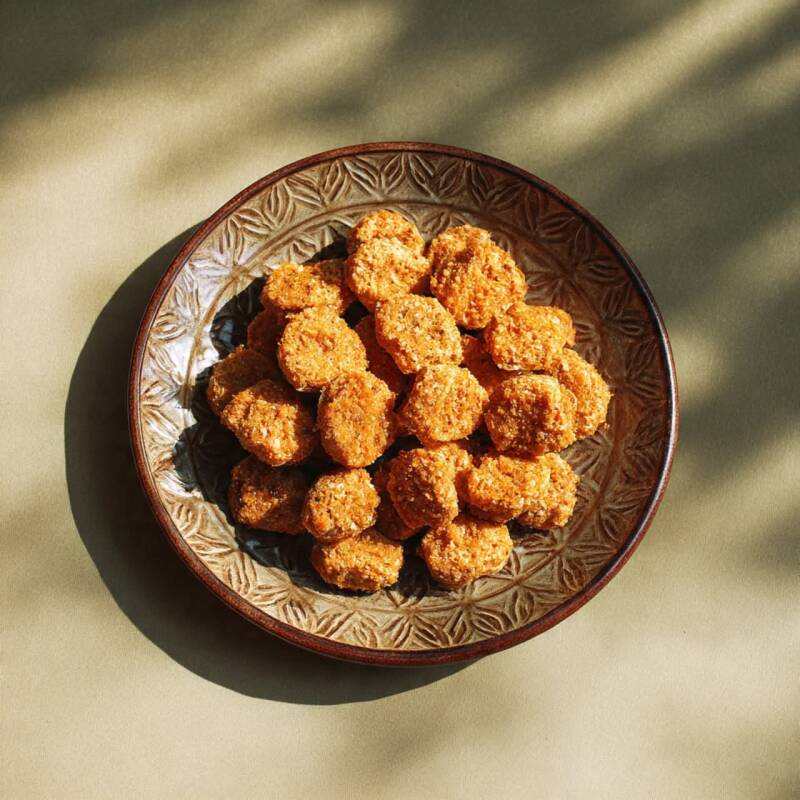
Easy Stovetop Kuli-Kuli (Home-Kitchen Friendly)
As a Pakistani woman, cooking has always been one of the ways I connect to the world. Exploring new dishes—especially those rooted in history and culture—is something I deeply love. For this series, I wanted to honor African countries through food that tells a story, using ingredients that are accessible while remaining respectful to the dish’s origins.
Ingredients
- 2 cups roasted peanuts (unsalted)
- ½ tsp salt (or to taste)
- ½ tsp chili powder or cayenne (optional)
- Neutral oil for frying
(Optional: a pinch of garlic powder for depth)
Instructions
- Grind the peanuts
Blend peanuts in a food processor until a thick paste forms. It should release oil naturally. - Extract excess oil
Press the paste through a clean cloth or sieve to remove some oil. (Save the oil if you want—it’s flavorful.) - Season
Mix the peanut solids with salt and chili powder. - Shape
Roll into thin sticks or small nuggets. - Fry
Heat oil in a pan and fry until golden and crisp. Drain on paper towels. - Cool and enjoy
Kuli-kuli crisps as it cools. Store in an airtight container.
A Food of Endurance
Kuli-kuli does not demand attention. It does not announce itself as history.
And yet—every crunch carries knowledge passed down by hands that endured colonialism, displacement, and survival.
In Benin, history lives in the ordinary. And sometimes, it tastes like peanuts and fire.
Add comment
Comments