
By Yasmin Chaudhary — The Inkwell Times
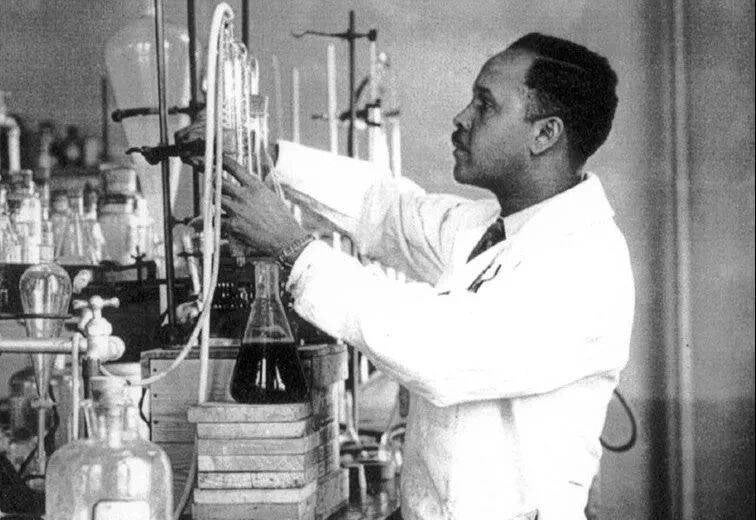
In the early twentieth century, when doors to laboratories and lecture halls were firmly closed to most Black Americans, one man quietly reshaped the future of chemistry education. Dr. St. Elmo Brady became the first African American to earn a PhD in chemistry in the United States — not only breaking a barrier, but building pathways that would influence generations of scientists long after him. His story is not just about academic achievement; it is about resilience, mentorship, and the determination to create opportunity where none existed.
A Scholar Rising in the Jim Crow Era
St. Elmo Brady was born on December 22, 1884, in Louisville, Kentucky, during a time when segregation defined nearly every aspect of American life. Despite these obstacles, Brady pursued education with unwavering focus. He attended Fisk University, one of the nation’s historically Black colleges, where he developed a deep passion for science and research.
After graduating from Fisk, Brady continued his studies at the University of Illinois at Urbana-Champaign. In 1916, he earned his doctorate in chemistry — a historic achievement that placed him among the earliest Black scholars to break into advanced scientific research in the United States. His dissertation examined the acidity of carboxylic acids, contributing to ongoing debates in organic chemistry about molecular structure and behavior.
At a time when African American intellectual achievement was frequently dismissed or minimized, Brady’s success stood as undeniable proof of Black excellence in scientific scholarship.
Scientific Contribution and Academic Vision
Brady’s research focused primarily on organic chemistry, yet his greatest influence would emerge through education. Rather than remaining solely in research institutions that often excluded him, he dedicated his career to teaching at historically Black colleges and universities (HBCUs), including Tuskegee Institute, Howard University, and Fisk University.
He believed that building strong science programs within Black institutions was essential to challenging inequality in education. Through his leadership, Brady helped modernize chemistry curricula, establish laboratory standards, and advocate for rigorous scientific training. His work ensured that Black students could receive an education comparable to that offered at predominantly white universities.
Brady’s approach reflected a broader philosophy: knowledge should not be confined to elite spaces. By nurturing young scientists, he multiplied his impact far beyond his own research.
Facing Barriers in a Divided Nation
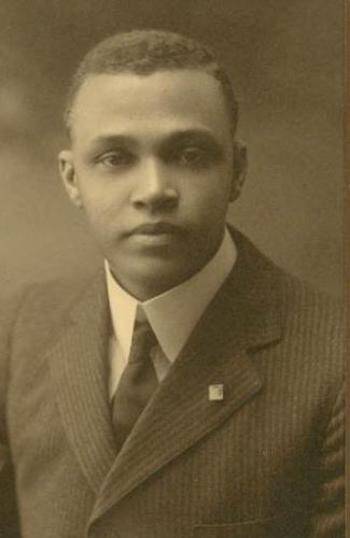
The early twentieth century was marked by systemic discrimination that limited access to funding, publishing opportunities, and academic appointments for Black scholars. Even with a doctorate, Brady navigated a professional world that often refused to recognize African American expertise.
Rather than retreating, he chose to build. At Fisk University, he developed one of the strongest chemistry departments among HBCUs at the time. He mentored countless students, many of whom went on to become educators, researchers, and medical professionals themselves.
His work highlights a truth often overlooked in mainstream scientific history: innovation does not happen only in prestigious laboratories. Sometimes it happens in classrooms where educators refuse to accept the boundaries placed upon their communities.
A Legacy of Education and Empowerment
St. Elmo Brady’s influence extended well beyond his lifetime. By shaping chemistry education at multiple institutions, he helped create a foundation that allowed Black scientists to enter fields that had long excluded them.
He retired from teaching in 1952, leaving behind a legacy measured not only in academic papers but in the lives of students he inspired. Today, many historians recognize Brady as a pioneer whose contributions helped transform science education in the United States.
His story reminds us that progress is often built quietly — through mentorship, persistence, and the courage to challenge systems designed to exclude.
Remembering the Builders of Science
The history of American science cannot be told without acknowledging the African American men and women who advanced medicine, technology, and research while confronting inequality at every turn. Their labor, intellect, and resilience helped shape institutions, industries, and communities — even as the nation itself struggled to recognize their contributions.
As we reflect on the life of St. Elmo Brady, we also give thanks to the countless Black innovators who strengthened scientific and medical fields and helped build this nation through their knowledge and perseverance. Their stories are not side notes to history; they are essential chapters in the ongoing pursuit of discovery, justice, and progress.
Dr. St. Elmo Brady’s journey stands as a testament to what can be achieved when brilliance refuses to be silenced — and when education becomes an act of transformation for generations yet to come.

Add comment
Comments