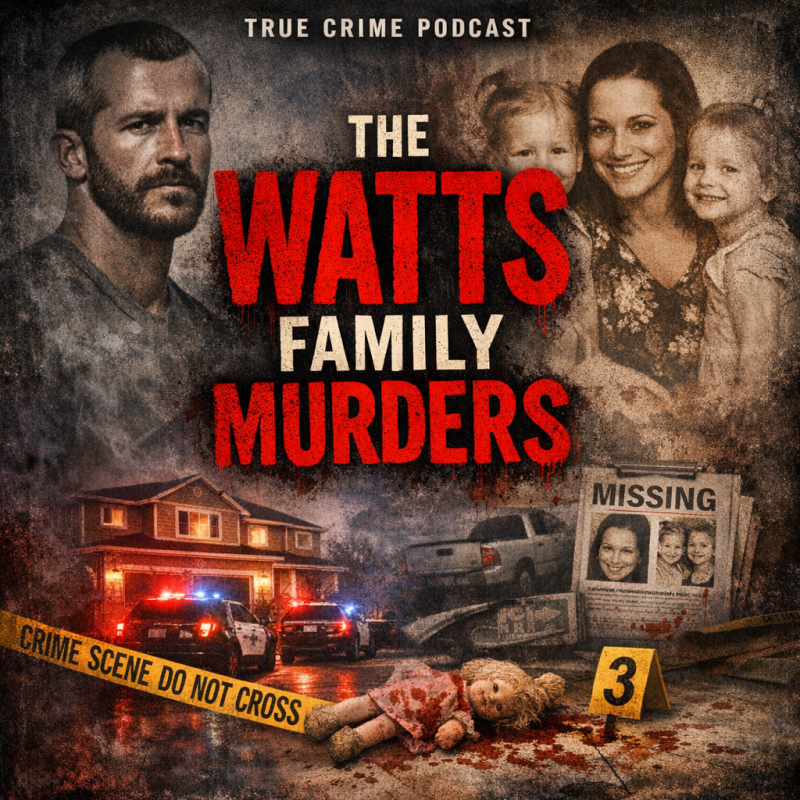
By Yasmin Chaudhary — The Inkwell Times
Podcast Case: The Inkwell Files, File 001
There are some stories that begin quietly.
No warning. No clear sign that anything is wrong.
Just an ordinary morning that slowly turns into something much darker.
On August 13th, 2018, a call was made in Frederick, Colorado. A husband reported that his pregnant wife and two young daughters were missing. At first, it seemed like a tragic and confusing disappearance—one that would quickly draw attention from family, friends, and the public.
But as the hours passed, small details began to surface.
And those details didn’t quite fit.
When a Disappearance Doesn’t Add Up
Cases like this often begin with urgency. A missing person report sets everything in motion—searches, interviews, and a growing sense of fear. In the Watts case, that fear spread quickly. A mother and her children were gone, and no one seemed to know why.
Chris Watts, the husband and father, spoke publicly. He appeared concerned. He asked for help. He stood in front of cameras and asked for his family to come home.
But behind the scenes, investigators were already beginning to notice something else.
His story wasn’t staying the same.
Small inconsistencies began to form. Nothing dramatic at first—just subtle changes in how events were described. But in cases like this, even the smallest detail can matter.
And in this case, those details would lead investigators down a very different path.
The Shift from Missing to Murder
What began as a disappearance quickly turned into something far more devastating.
As evidence was gathered and timelines were reviewed, the truth started to come into focus. Phone records, conversations, and behavior all painted a picture that no one wanted to believe.
Eventually, Chris Watts confessed.
He admitted to killing his wife, Shanann Watts, who was pregnant at the time. He also confessed to the deaths of his two daughters, Bella and Celia.
The search that began with hope ended in heartbreak.
Why This Case Still Stays With People
The Watts family case is one that continues to be discussed, analyzed, and revisited. Not just because of what happened—but because of how it happened.
From the outside, the family appeared normal. Their life, as shared publicly, looked happy. There were no clear signs to those watching from a distance that something so tragic was about to unfold.
That contrast is what makes this case so difficult to process.
It raises questions that don’t have easy answers:
How much of what we see is real?
What signs do we miss in everyday life?
And how do we understand something that feels impossible?
Even though the case is closed legally, it remains open in the minds of many.
Closing Thoughts
Some cases end with answers.
This one ends with questions.
What looks normal on the outside is not always the truth. In the Watts family case, the story didn’t begin with violence—it began with silence, small changes, and moments that didn’t seem important at the time.
And that’s what makes it stay with people.
Because it forces us to ask how something like this can happen without anyone truly seeing it coming.
This is only the beginning of The Inkwell Files.
Some stories are told.
Others are uncovered.
And some… never fully leave.
The First File of The Inkwell Files
This case marks the beginning of The Inkwell Files—a podcast built on storytelling, reflection, and the exploration of real cases and mysteries.
Each “file” is meant to go beyond just retelling events. It is about looking closely at what happened, how it happened, and what it leaves behind.
Because some stories don’t end when the case is closed.
They stay with us.
Listen to File 001
You can listen to the full first episode here:
https://open.spotify.com/episode/7xaCMHJ0hV1DwZXB5XkyP6?si=Ymu2YALsRLCVuNli2YX8Gw
Add comment
Comments