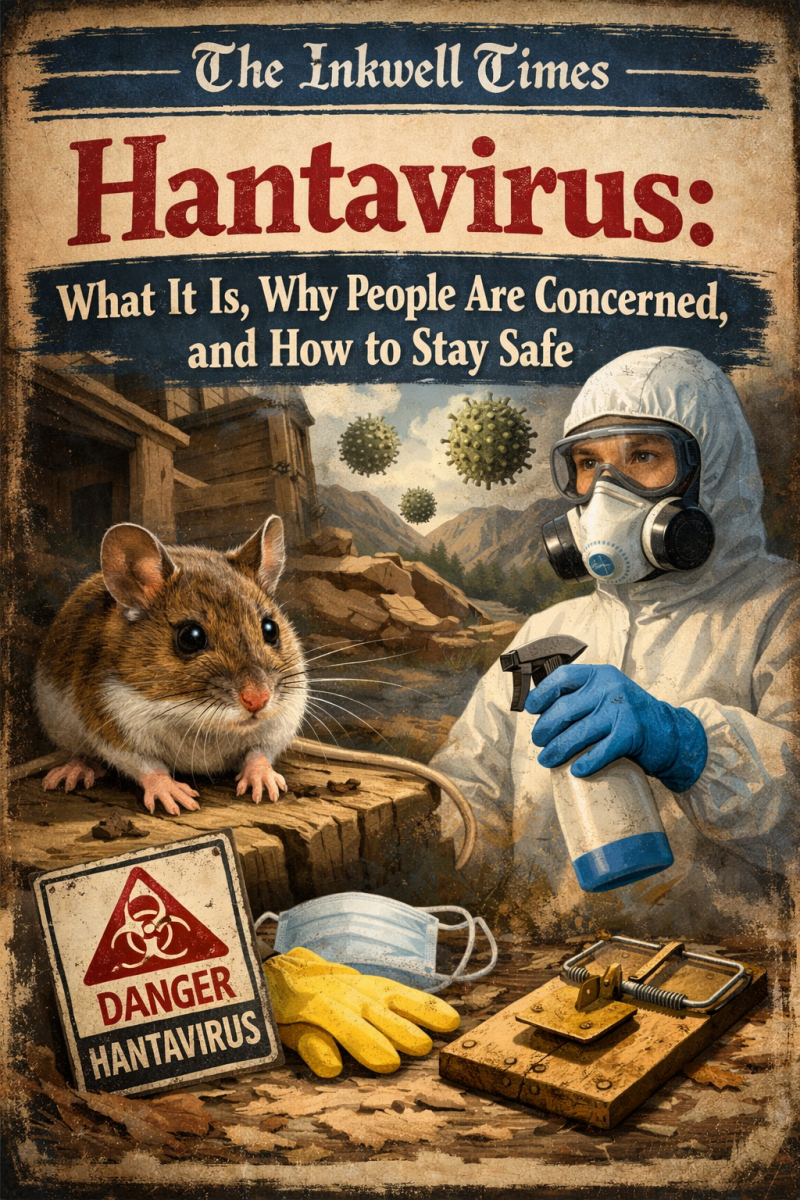
By Yasmin Chaudhary — The Inkwell Times
Recent news reports about the Virginia Department of Health monitoring potential hantavirus exposure after a cruise passenger returned to the Commonwealth have sparked concern online. Understandably, many people become anxious whenever they hear about infectious diseases tied to deaths or possible outbreaks — especially after living through the COVID-19 pandemic.
While hantavirus is not considered highly contagious from person to person like COVID-19, it is still a serious illness that deserves public awareness and careful monitoring.
So what exactly is hantavirus, how common is it, and what should people know about symptoms, treatment, and prevention?
What Is Hantavirus?
Hantavirus refers to a group of viruses primarily spread by rodents, particularly through:
- Rodent urine
- Droppings
- Saliva
People can become infected when tiny virus particles become airborne and are inhaled. This most commonly happens while cleaning areas contaminated by mice or rats, such as:
- Cabins
- Sheds
- Garages
- Basements
- Attics
- Storage buildings
In the United States, the most concerning form is Hantavirus Pulmonary Syndrome (HPS), a rare but potentially deadly respiratory illness.
Is Hantavirus Contagious Between People?
One of the biggest misconceptions online is that hantavirus spreads easily from person to person like COVID-19 or the flu.
According to the CDC, the strain most commonly found in the United States is not believed to spread person-to-person under normal circumstances.
Most infections come directly from contact with infected rodents or contaminated environments.
However, because hantavirus can be severe and sometimes fatal, health officials still monitor possible exposures carefully.
How Many Cases Happen Each Year?
Hantavirus is considered rare in the United States.
Since surveillance began in 1993, the CDC has confirmed a little over 850 cases of Hantavirus Pulmonary Syndrome in the U.S.
Most years, the country sees approximately:
- 20 to 50 reported cases annually
Cases are more common in western states, particularly rural areas where deer mice are prevalent.
Although rare, hantavirus has a high mortality rate. Approximately one-third of people diagnosed with HPS die from complications.
Symptoms of Hantavirus
Symptoms usually appear 1 to 8 weeks after exposure.
Early Symptoms
Early signs can resemble the flu and may include:
- Fever
- Fatigue
- Muscle aches
- Headaches
- Chills
- Dizziness
- Nausea
- Vomiting
- Abdominal pain
Severe Symptoms
As the illness progresses, patients may develop:
- Shortness of breath
- Coughing
- Fluid buildup in the lungs
- Difficulty breathing
At this stage, the illness can rapidly become life-threatening.
Is There a Treatment?
Currently, there is:
- No specific cure
- No antiviral treatment approved specifically for hantavirus
- No widely available vaccine in the U.S.
Treatment focuses on supportive medical care, especially:
- Oxygen therapy
- Intensive care monitoring
- Breathing assistance if necessary
Early medical attention significantly improves survival chances.
Anyone experiencing severe flu-like symptoms after possible rodent exposure should seek medical care immediately.
How to Prevent Hantavirus
Prevention centers around reducing exposure to rodents and contaminated spaces.
Safety Tips
Health experts recommend:
- Sealing holes where rodents can enter homes
- Storing food securely
- Using gloves when cleaning rodent droppings
- Avoiding sweeping or vacuuming dry droppings directly
Instead:
- Spray contaminated areas with disinfectant
- Let it soak
- Wipe with paper towels while wearing gloves
This helps prevent virus particles from becoming airborne.
Why Public Awareness Matters
While hantavirus is rare, stories involving severe illness or deaths naturally alarm people — especially after years of global concern over infectious diseases.
The recent Virginia monitoring case is a reminder that public health agencies continue tracking potential exposures carefully. At the same time, experts emphasize that hantavirus does not spread the way COVID-19 did.
Accurate information matters during moments like these. Awareness, prevention, and calm public health communication help people stay informed without unnecessary panic.
As health officials continue monitoring the situation, understanding the facts about hantavirus can help communities respond with caution, not fear.
Add comment
Comments
As an ER nurse with over 20 years in healthcare, I’ve only encountered a suspected hantavirus case once — that’s how rare it is. But rare does not mean harmless. One of the biggest challenges is that early symptoms can look almost identical to the flu, which makes diagnosis difficult until breathing problems begin. I really appreciate this article explaining the difference between common U.S. strains and the Andes strain people are discussing online right now. Accurate public education matters during situations like this because panic helps nobody, but awareness absolutely does.
I saw your post on Threads. I was just fired from my job at Target, where I have been working at for 3 years because I noticed mice droppings and food looked like it had been contaminated. I am based in Daytona Beach.