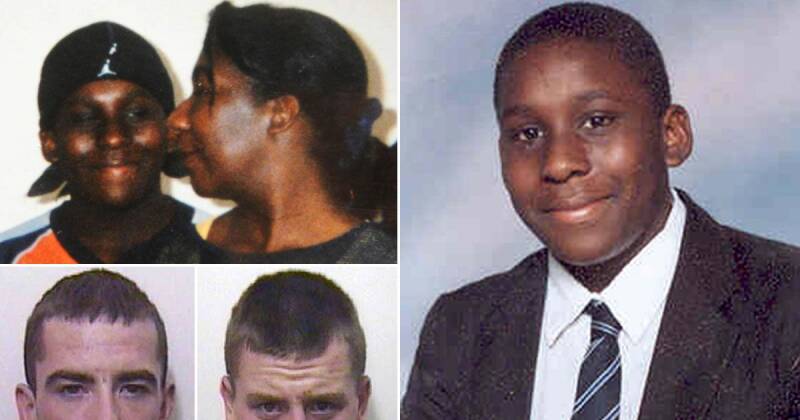
Photo: The Mirror
by Yasmin Chaudhary — The Inkwell Times
On the evening of July 29, 2005, 18-year-old Anthony Walker was walking through McGoldrick Park in Huyton, Merseyside, with his girlfriend and cousin.
Anthony was young. He was a student. He was a son, a brother, a grandson, a friend, and a young man beginning to imagine what his future might look like.
He never got to see that future.
Anthony was murdered in a racially motivated attack that shocked Liverpool and reverberated across the United Kingdom. What began as a seemingly ordinary evening ended with an act of violence so brutal that it would forever change the Walker family.
But Anthony’s story should not end with the circumstances of his death.
Because behind the headlines was an 18-year-old whose life mattered long before his name became associated with a murder case.
A Young Man With a Future
Anthony Walker was born in Liverpool and was raised by his mother, Gee Walker.
He was studying at college and was described by those who knew him as a kind and promising young man. He was interested in becoming a solicitor and had ambitions for his future.
On July 29, Anthony was with his girlfriend, Louise Thompson, and his cousin, Mark Jobe. The three were walking through McGoldrick Park when they encountered a group of young men.
The encounter would turn deadly.
According to the evidence presented at trial, racial abuse was directed toward Anthony. He and his companions attempted to leave, but the confrontation escalated.
Anthony was attacked with an ice axe.
He suffered catastrophic injuries and died shortly afterward.
He was only 18.
A Murder Driven by Racism
The murder was not treated simply as a random act of violence.
The prosecution argued that Anthony had been targeted because he was Black, and the court ultimately accepted that racial hostility played a central role in the attack.
Michael Barton, who was 17 at the time, and his cousin Paul Taylor, 20, were charged with Anthony’s murder.
Taylor eventually admitted his involvement.
Barton denied being responsible for the killing, but the evidence presented at trial linked him to the attack.
Both men were convicted of murder at Preston Crown Court in 2005.
Barton received a life sentence with a minimum term of 17 years. Taylor was also sentenced to life imprisonment, with a minimum term of 23 years.
The sentences could never restore what had been taken.
Anthony’s family had lost a son and brother.
A community had lost a young man who should have been allowed to grow old.
The Shadow of the Barton Name
The case received considerable media attention, partly because Michael Barton was the brother of professional footballer Joey Barton.
That connection became a significant part of the public discussion surrounding the case.
But it is important not to allow that detail to overshadow Anthony himself.
Anthony was not a footnote in somebody else’s story.
He was the victim.
He was the person whose life was ended.
And for his family, Anthony was not a headline. He was Anthony.
A son who came home.
A brother who made his family laugh.
A young man with plans that would never become reality.
Gee Walker Refused to Let Hate Have the Last Word
Perhaps the most extraordinary part of Anthony’s story is what happened after his death.
His mother, Gee Walker, was faced with an unimaginable loss. Yet rather than allowing her grief to become consumed by hatred, she began speaking publicly about forgiveness, reconciliation, racism and the need to build stronger communities.
Her response became one of the most powerful parts of Anthony’s legacy.
Gee Walker has repeatedly spoken about the importance of forgiveness—not as an excuse for what happened to Anthony, but as a way of refusing to allow hatred to destroy another part of her life.
Her message was not that Anthony’s murder should be forgotten.
It was the opposite.
Remember him.
Talk about racism.
Educate children.
Challenge prejudice.
Build relationships between communities.
Make sure another family does not have to experience what hers experienced.
The Anthony Walker Foundation
In the aftermath of Anthony’s murder, Gee Walker established the Anthony Walker Foundation.
The foundation was created to carry Anthony’s memory forward by working against racism and promoting equality, respect and community cohesion.
Its work has included education and awareness initiatives aimed particularly at young people.
That focus is significant.
Anthony was only 18 when he was killed.
He was not responsible for fixing the prejudices of the society around him. He should never have had to become a symbol of the consequences of racism.
Yet his family chose to use his memory to help educate the next generation.
Anthony’s sister Dominique has also spoken about the importance of teaching children about different cultures and encouraging respect from an early age.
The underlying message is simple:
People who grow up understanding one another are less likely to fear one another.
And people who learn to challenge prejudice are less likely to pass it on.
A Family Turned Grief Into Action
The Walker family’s response to Anthony’s murder has become an important part of his legacy.
They could have understandably withdrawn from public life.
Instead, they chose to speak.
They chose education.
They chose reconciliation.
They chose to tell Anthony’s story.
The family has participated in initiatives designed to recognize young people who promote respect and make positive contributions to their communities. Awards and educational programs have also carried Anthony’s name.
In this way, his family has tried to make sure that the circumstances of Anthony’s death do not become the only thing remembered about him.
The Question We Should Still Ask
More than two decades later, Anthony Walker’s murder remains a painful reminder that racism is not merely an abstract social problem.
It can have devastating, physical consequences.
Racism can begin with words, stereotypes and assumptions. It can create an environment in which another person’s humanity is diminished.
And when hatred is allowed to grow unchecked, the consequences can become horrifying.
Anthony’s murder forced Britain to confront that reality.
But remembering cases like Anthony’s should not mean reducing victims to statistics.
Anthony was one person.
One young man.
One family member.
One student.
One future.
There should have been birthdays after 18.
There should have been graduations, relationships, arguments, celebrations, mistakes, accomplishments and ordinary days.
There should have been a life.
Instead, his family received the devastating news that their son had been murdered.
Anthony’s Legacy
It would be easy to tell Anthony’s story only through the violence that ended his life.
But perhaps the more meaningful way to remember him is through the life his family continues to build in his name.
The Anthony Walker Foundation exists because Anthony existed.
The conversations about racism exist because his family refused to remain silent.
The educational work exists because his mother believed that something constructive could emerge from unbearable pain.
And every young person encouraged to treat another human being with dignity becomes part of that legacy.
Anthony should never have had to become an inspiration.
He should have been allowed to simply live.
Yet his family has worked tirelessly to ensure that the hatred that took him from them does not become the final chapter of his story.
Anthony Walker was 18 years old when he was murdered.
He deserved a future.
He deserved to grow old.
He deserved to be remembered for far more than the weapon that killed him or the men who took his life.
And perhaps that is the most important thing to remember about Anthony:
Before he became the victim of a racist murder, he was a young man with a life ahead of him.
His family has spent the years since his death making sure that life—and the person he was—is not forgotten.
Add comment
Comments
This is so sad. I just read your article on Thioni & clicked on this. This boy was killed because of racist assholes. And they only got 17-20 years?????
Poor guy! I don't see why people get mad at people for their skin complexion?! God made us all EQUAL! Just different flavors.