By Yasmin Chaudhary — The Inkwell Times
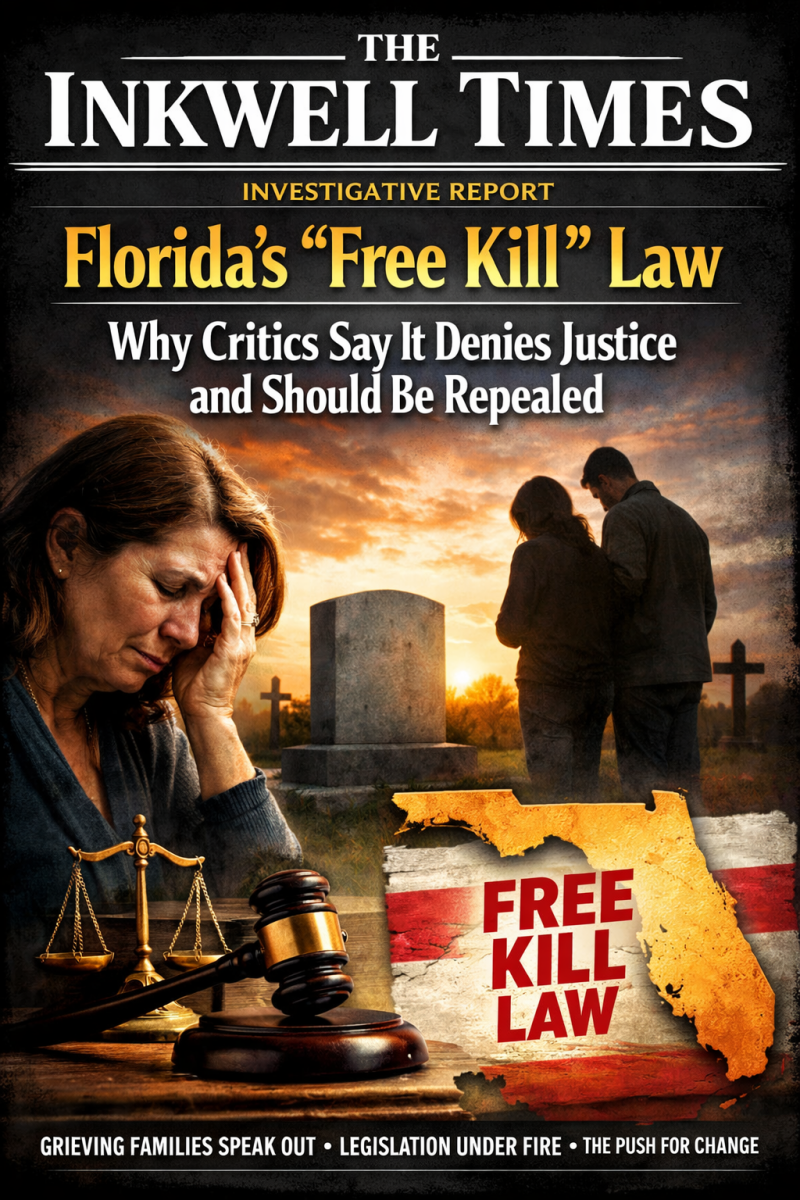
Few laws in America have generated as much outrage among patient advocates, grieving families, and legal experts as Florida’s so-called “Free Kill” law. Critics argue that the law effectively places a lower value on certain lives and shields negligent healthcare providers from accountability when their mistakes result in death.
While supporters have historically claimed the law helps control medical malpractice costs, opponents contend that it creates a dangerous loophole that denies justice to thousands of Florida families.
What Is the “Free Kill” Law?
The nickname “Free Kill” law refers to a provision within Florida’s wrongful death statute, specifically Florida Statute §768.21(8). The law limits who can recover non-economic damages—such as pain and suffering, mental anguish, and loss of companionship—when a loved one dies as a result of medical negligence.
In practical terms, the law prevents many adult children from seeking non-economic damages when a parent dies due to medical malpractice. Likewise, parents often cannot recover those damages when an adult child over the age of 25 dies because of a medical error.
As a result, if an unmarried adult with no minor children dies because of a doctor’s mistake, hospital negligence, or a preventable medical error, there may be little financial incentive for attorneys to pursue the case, even when negligence appears clear. This reality is what led critics to label the statute the “Free Kill” law.
How Did This Law Come About?
Florida enacted the controversial provision in 1990 during concerns about medical malpractice insurance costs and physician shortages. Supporters argued that limiting certain lawsuits would help prevent doctors from leaving the state and keep healthcare costs under control.
More than three decades later, critics question whether those goals were ever achieved. They argue that the law has instead created a system where some families are treated differently based solely on age, marital status, or whether the deceased had children.
Why Critics Call It Unjust
It Creates Different Classes of Victims
One of the strongest criticisms is that the law treats victims differently depending on their family situation.
Consider two patients who die from the exact same medical mistake:
- One is married with minor children.
- The other is unmarried and childless.
Under Florida law, the surviving family members may have dramatically different legal rights despite the negligence being identical. Critics argue that accountability should not depend on whether someone was married or had children.
It May Reduce Accountability
Wrongful death lawsuits often serve two purposes:
- Compensating families.
- Holding negligent providers accountable.
Opponents argue that when healthcare providers know certain deaths are unlikely to result in substantial civil liability, an important layer of accountability disappears. Families and patient advocates have long argued that this weakens incentives to improve patient safety.
Elderly Patients Are Often Affected
Many of the people most impacted by the law are senior citizens.
If an elderly widow or widower dies because of medical negligence, adult children over age 25 frequently face significant barriers to recovering non-economic damages. Critics say this effectively devalues the lives of older adults and sends the message that the deaths of retirees matter less than those of younger patients.
It Disproportionately Affects Childless Adults
The law can also affect adults who never married or never had children.
Whether someone chose not to marry, struggled with infertility, was widowed, or simply lived independently, critics argue their life should not be worth less under the law. Yet families in these situations often face the greatest obstacles when seeking justice after medical negligence.
Florida Stands Alone
One reason the law receives national attention is because Florida is widely reported to be the only state with this specific limitation on medical malpractice wrongful death claims. Critics argue that if every other state can function without such restrictions, Florida can as well.
Attempts to Repeal the Law
Efforts to repeal the law have gained bipartisan support in recent years.
In 2025, the Florida House overwhelmingly approved legislation that would have repealed the controversial provision. Similar legislation advanced in the Senate, and lawmakers from both parties argued that families deserved equal access to justice regardless of age or family status.
However, the repeal effort ultimately faced significant opposition. Critics of repeal warned that expanding liability could increase malpractice insurance costs and healthcare expenses. The debate remains ongoing, with repeal legislation continuing to reappear in subsequent legislative sessions.
The Human Cost
Behind every legal debate are real families.
Many relatives of patients who died from preventable medical mistakes describe a second tragedy after their loss: discovering that the law may prevent them from fully pursuing accountability in court. Families have testified before lawmakers, sharing stories of parents, children, veterans, and grandparents whose deaths they believe resulted from negligence yet whose cases faced extraordinary legal barriers because of the statute.
For these families, the issue is not merely financial. They argue that the law communicates that some lives are worth less than others and that some families deserve fewer legal protections than others.
Opponents of Florida’s “Free Kill” law generally make a simple argument:
If medical negligence causes a death, every family should have equal access to justice regardless of the victim’s age, marital status, or whether they had children.
They contend that accountability improves patient safety, encourages transparency, and honors the principle that all lives have equal value under the law. They believe Florida should join the rest of the nation in removing a statute that many see as outdated, unfair, and harmful.
Whether viewed through a legal, ethical, or human lens, the controversy surrounding Florida’s “Free Kill” law raises a difficult question: Should the right to seek justice after a preventable death depend on the family someone leaves behind?
For many advocates, the answer is a clear and emphatic no.
Add comment
Comments