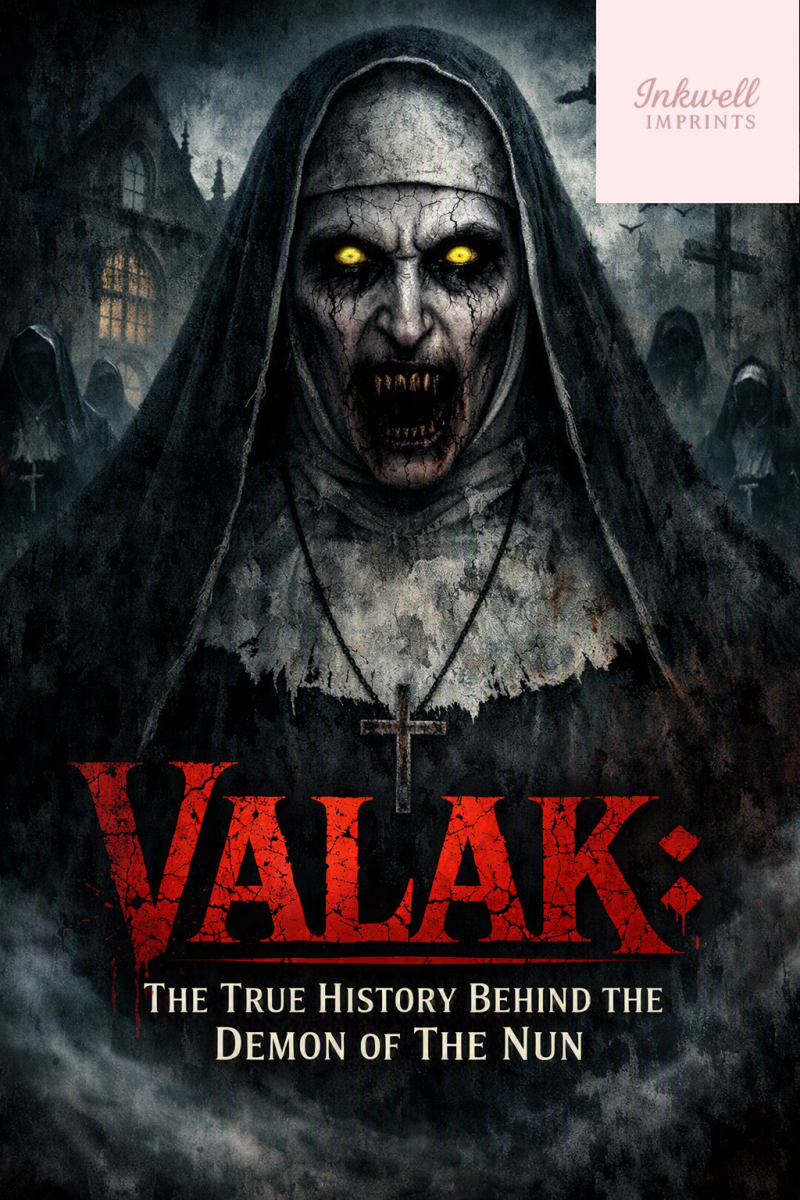
by Yasmin Chaudhary — The Inkwell Times
She wears the habit of a nun. She appears in dark corridors, churches, and forgotten catacombs. Her face is unnaturally pale, her eyes frighteningly inhuman, and her presence in The Nun films has made Valak one of modern horror’s most recognizable demons.
But there is a problem with calling the movie’s Valak “historical.”
The demonological figure known as Valac or Volac does exist in historical occult literature—but Valac was never originally described as a demonic nun.
The terrifying nun is Hollywood’s creation.
The name, however, has a much older history.
From Volac to Valak
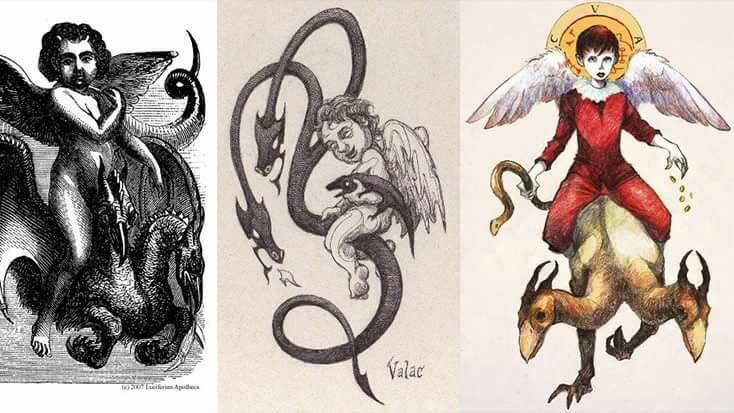
One of the earliest important sources for the figure is Johann Weyer’s Pseudomonarchia Daemonum, a sixteenth-century catalog of demons associated with his larger work on demonology. Weyer included a spirit called Volac, describing him as a great president.
In Weyer’s account, Volac appeared as a child with angelic wings riding upon a two-headed dragon. The spirit was associated with hidden treasure and with revealing where serpents could be found. Weyer attributed thirty legions of spirits to him.
That is a far cry from the towering demonic nun portrayed on screen.
The name appears again in the tradition that eventually produced the Ars Goetia, the first section of the seventeenth-century grimoire commonly known as The Lesser Key of Solomon. In the familiar ordering of that text, Valac—also appearing under variants such as Ualac, Volac, or Valu—is listed as the 62nd spirit.
The basic description remains remarkably strange:
A winged child riding a two-headed dragon.
His attributed office concerns hidden treasures and serpents.
There is no convent.
There is no demonic nun.
There is no Abbey of St. Carta.
And there is no historical story about Valac battling priests or possessing nuns.
Those elements belong to fiction.
What About the Dictionnaire Infernal?
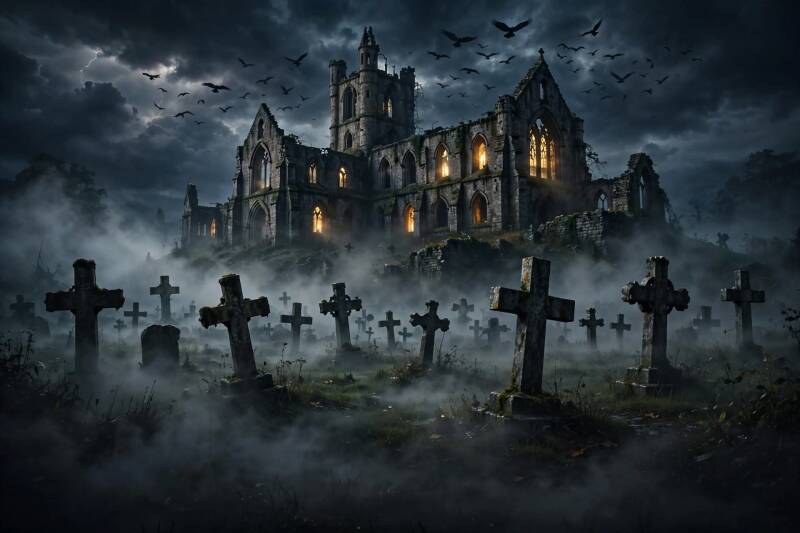
Another important work in the history of Western demonology is Jacques Collin de Plancy’s Dictionnaire Infernal, first published in 1818. Later editions, particularly the famous 1863 edition, included elaborate illustrations of demons by Louis Le Breton. Those illustrations became some of the most recognizable visual representations of figures from European demonological literature.
Valac became part of this broader visual tradition.
But even here, the historical figure bears little resemblance to the character played by Bonnie Aarons in The Conjuring films.
The distinction is important because modern websites and social media posts sometimes repeat movie mythology as though it were ancient demonology.
It isn’t.
Valak Was Not a Nun
This may be the single most important fact about the history of Valak.
The historical sources do not describe Valac as a nun.
The childlike figure riding a two-headed dragon belongs to the older demonological tradition. The nun was created for the Conjuring film universe. Sources examining the history of the character likewise distinguish the old grimoire figure from the cinematic creation.
The filmmakers took an existing demonic name and transformed it into an entirely new horror character.
And it worked.
The image of a demonic nun is arguably much more unsettling to modern audiences than a winged child riding a dragon.
There is something particularly disturbing about taking an image associated with holiness, humility, and religious devotion and turning it into the face of evil.
That is horror symbolism—not historical demonology.
The Real History Is Stranger Than the Movie
It is tempting to think of grimoires such as the Pseudomonarchia Daemonum and Ars Goetia as ancient books documenting supernatural beings.
Historically, that is too simple.
These texts belong to a complicated European tradition of demonology, Christian theology, ceremonial magic, folklore, and occult literature. The Pseudomonarchia Daemonum was published in the sixteenth century, while the Lemegeton tradition that contains the Ars Goetia belongs primarily to the seventeenth century. The Ars Goetia drew heavily upon earlier material, including Weyer’s catalog.
In other words, these books tell us something very real about what people wrote, feared, believed, practiced, and imagined.
They do not provide historical proof that the demons described in their pages objectively exist.
That distinction matters.
A historian can say:
“Valac appears in historical demonological texts.”
A historian cannot honestly turn that into:
“Therefore, Valac is proven to be a literal supernatural being.”
Those are two entirely different claims.
So Why Do People Call Him “Valak”?
The spelling Valak became especially familiar through popular culture, while historical texts contain several variations of the name, including Valac and Volac.
Names changed as manuscripts were copied, translated, edited, and transmitted through different languages and occult traditions.
Hollywood’s Valak therefore sits at the end of a very long chain:
Volac → Valac → Valak → The Conjuring Universe
But the final character is not simply the historical demon brought to life.
She is a fictional reinvention.
What Did The Nun Actually Invent?
Quite a lot.
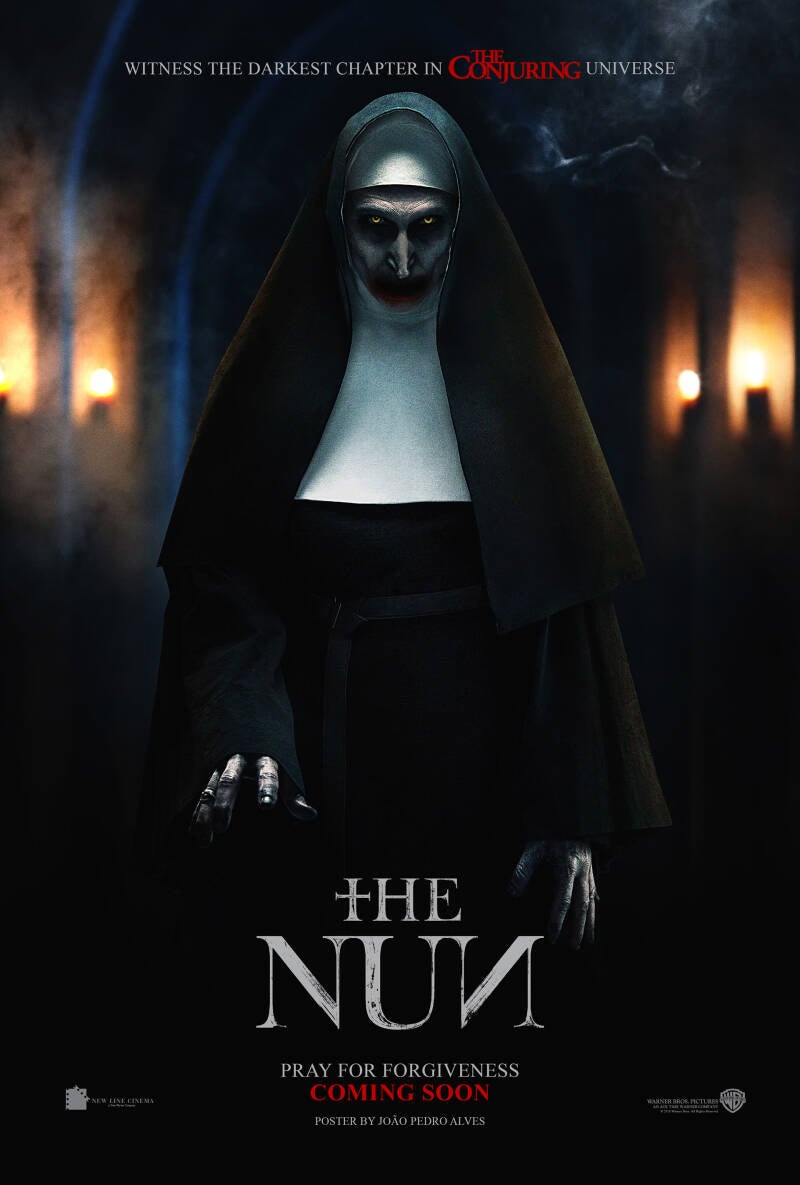
The films created an elaborate mythology surrounding Valak, including:
- The demonic nun appearance
- The fictional Romanian abbey
- The connection to a medieval occultist
- The supernatural history surrounding the convent
- The connection to the Warrens
- The cinematic manifestations and powers
- The particular relationship between Valak and the characters
These are elements of the fictional Conjuring universe rather than established historical accounts of Valac.
That doesn’t make the movies less fun.
Quite the opposite.
Knowing the history makes them more interesting because we can see exactly where historical occult imagery ends and modern horror begins.
Why You Shouldn’t Call Upon Demons
This is where entertainment and spiritual practice need to be separated.
Someone can watch The Nun, read demonology, study grimoires, or be fascinated by occult history without attempting to summon anything.
Those are very different activities.
Studying something is not the same as inviting it into your life.
For people who believe demons are literal spiritual beings, attempting to summon or communicate with them can conflict profoundly with their religious or spiritual beliefs. Many religious traditions specifically warn against seeking power, knowledge, or assistance from hostile or forbidden spiritual entities.
From an Islamic perspective, for example, the Qur’an describes people seeking refuge with jinn and says that this increased them in burden or wrongdoing rather than providing genuine protection. The broader Islamic tradition also warns against seeking occult knowledge or supernatural assistance through forbidden means.
There is another reason to exercise caution that doesn’t require accepting the supernatural explanation at all.
The Psychological Risk
Rituals can be powerful psychologically.
If someone becomes convinced that they have contacted a demon, ordinary experiences can suddenly acquire frightening explanations.
A noise in another room becomes a response.
A nightmare becomes an attack.
A shadow becomes an apparition.
A coincidence becomes a message.
Fear can then reinforce the interpretation, creating a cycle in which the person becomes increasingly hypervigilant and frightened.
That does not mean someone’s experience is meaningless or that every paranormal experience has an easy explanation.
It means that deliberately frightening yourself can have very real consequences even when the supernatural explanation remains uncertain.
And once fear takes hold, it can be surprisingly difficult to switch it off.
Curiosity Is Not Consent
There is an important distinction between curiosity and participation.
You can study demonology.
You can read old grimoires as historical documents.
You can learn about European folklore.
You can watch The Nun at midnight with all the lights off if you’re determined to make questionable life choices.
But there is no good reason to deliberately invite something frightening into your life simply because you’re curious about what might happen.
Especially when you don’t know whether the experience will affect you psychologically, spiritually, or emotionally.
You don’t have to knock on every door just because you’re curious about what is behind it.
The Safest Way to Approach Demonology
If demons fascinate you, approach the subject as history, folklore, theology, anthropology, or comparative religion rather than treating every old grimoire as an instruction manual.
Ask questions such as:
- Where did this name originate?
- Which texts mention it?
- How did the description change over time?
- What did the writers believe?
- What cultural fears influenced the story?
- How did later artists portray the entity?
- How did modern movies transform the mythology?
Those questions can lead to fascinating places without requiring you to personally participate in the practices described.
And Valac is a perfect example.
The historical record gives us a bizarre figure: a winged child riding a two-headed dragon, associated with hidden treasures and serpents.
Hollywood gave us a demonic nun.
Both stories are fascinating.
But they are not the same story.
The Demon Behind the Nun
Valak’s history is therefore less straightforward—and arguably more fascinating—than The Nun would have us believe.
There was no ancient demonic nun wandering a Romanian monastery waiting for Hollywood to discover her.
There was, however, a long tradition of European demonological literature in which names such as Volac and Valac appeared among catalogs of spirits.
Centuries later, filmmakers borrowed that name and created something entirely new.
So the next time you watch The Nun, remember:
The nun isn’t the historical Valac.
She’s Hollywood’s Valak.
The strange winged child on the two-headed dragon is much closer to what the old texts actually describe.
And perhaps the most interesting lesson isn’t whether Valac is “real.”
It’s that stories evolve.
A name written in a sixteenth-century demonological catalog can eventually become the face of one of modern horror’s most recognizable monsters.
That journey—from manuscript to movie screen—is the real history of Valak.
Add comment
Comments