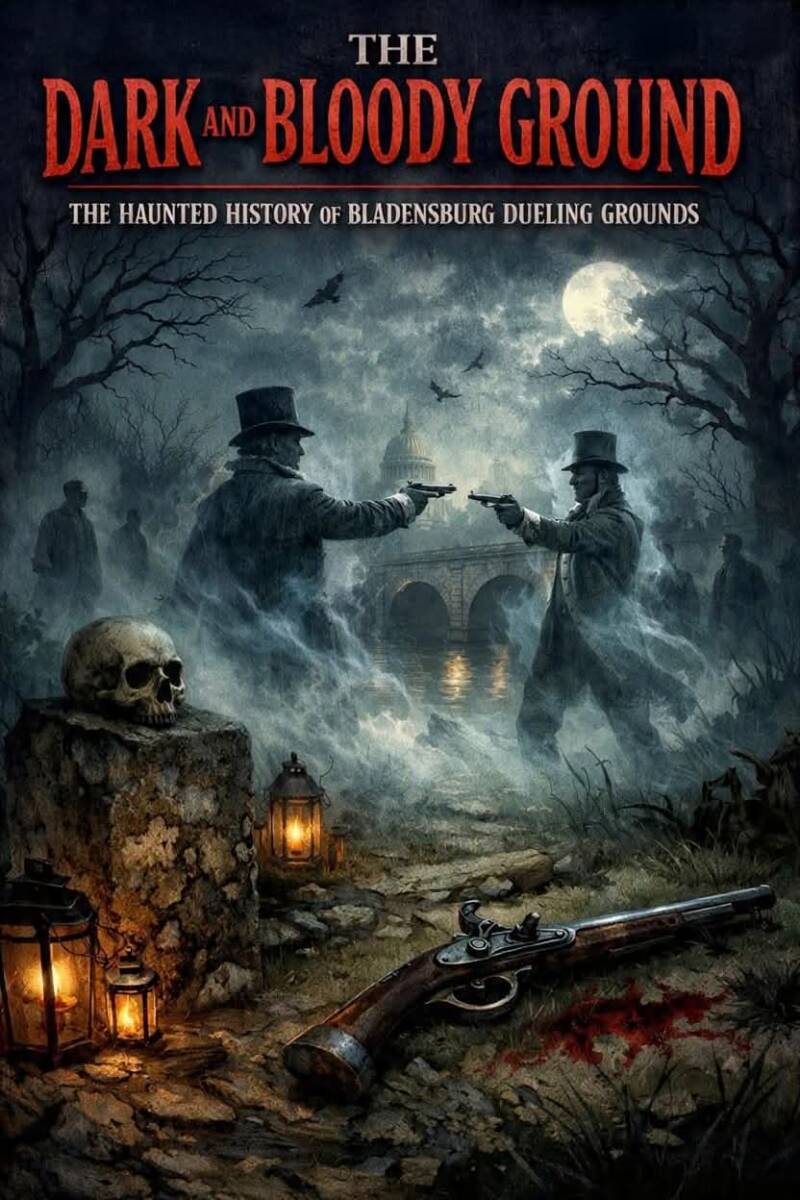
by Yasmin Chaudhary — The Inkwell Times
There are places where history feels distant.
You read about something that happened two hundred years ago, turn the page, and continue with your day.
Then there are places where the past seems to cling to the landscape.
The Bladensburg Dueling Grounds, just outside Washington, D.C., is one of those places.
Today, the site is a small historic area along Dueling Creek in Colmar Manor, Maryland, near Fort Lincoln Cemetery. It doesn’t look particularly dramatic. There are no ruined castles, abandoned mansions, or crumbling prisons.
But beneath the ordinary landscape is a remarkably violent chapter of American history.
For much of the nineteenth century, men came here to settle matters of honor with pistols and other weapons.
Some walked away.
Some did not.
The site became known as “The Dark and Bloody Ground.”
And, eventually, stories of ghosts began to follow.
A Convenient Place for an Affair of Honor
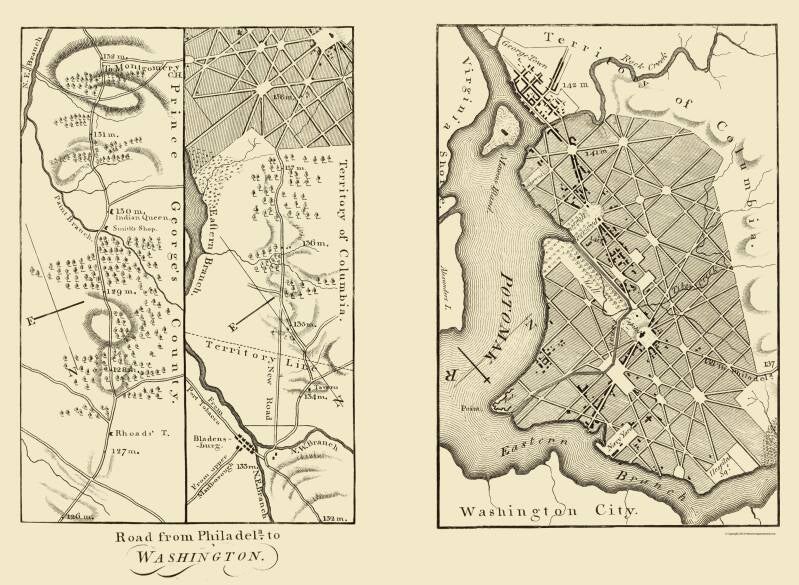
The first documented duel at Bladensburg dates to 1808, and the grounds eventually became one of the best-known dueling locations in the Washington region.
The reason was simple: location.
Washington, D.C., was close enough to reach easily, but the Dueling Grounds were across the boundary in Maryland. Dueling was prohibited in the District, making the secluded ravine along Dueling Creek an attractive place for men who wanted to settle disputes outside the capital’s jurisdiction.
According to the University of Maryland’s historical exhibition on Bladensburg, approximately 50 duels took place in the area between 1808 and 1850, although the exact number is difficult to establish. At least 26 are documented in surviving records.
The men who came here were not necessarily criminals hiding from society.
They were often politicians, military officers, government officials, and other members of the social elite.
They were following an older and deeply ingrained concept of honor.
An insult could become a challenge.
A challenge could become a duel.
And a duel could become a funeral.
The Code of the Duel
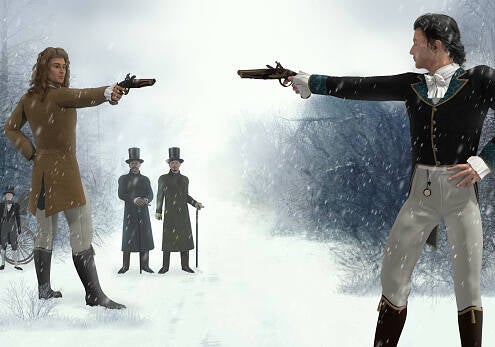
A duel was not simply two angry men meeting somewhere and shooting at each other.
There were rules.
The code duello, or code of the duel, established expectations for how an “affair of honor” was supposed to be conducted. Seconds—friends or representatives of the participants—helped arrange the confrontation, including the location, weapons, and other details.
The rituals could make the violence seem civilized.
But the outcome was anything but.
The Library of Congress notes that Bladensburg became particularly attractive because it lay outside Washington’s jurisdiction, where Congress had prohibited dueling. Among the people who met there were naval hero Stephen Decatur, Congressman Jonathan Cilley, and Daniel Key, the son of Francis Scott Key.
The language of honor could disguise what was happening.
Men were still firing weapons at one another.
Stephen Decatur’s Final Duel
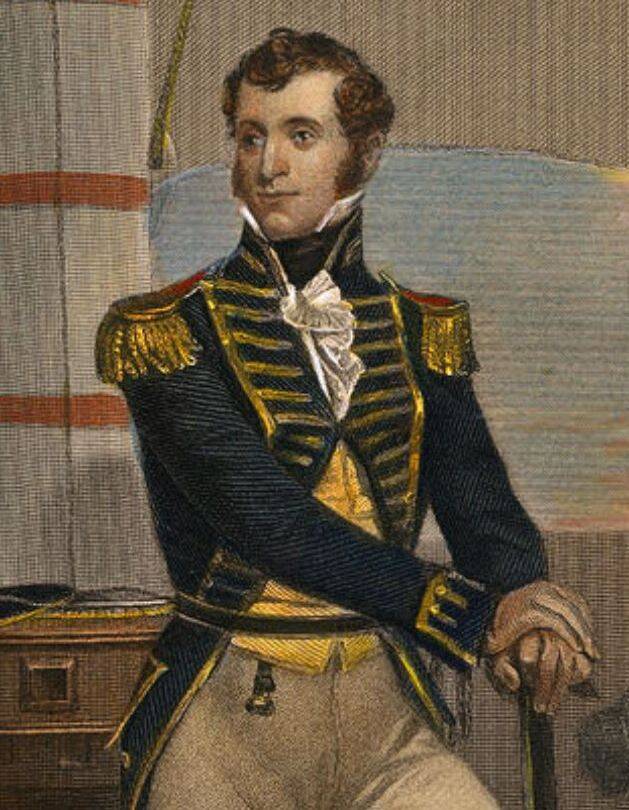
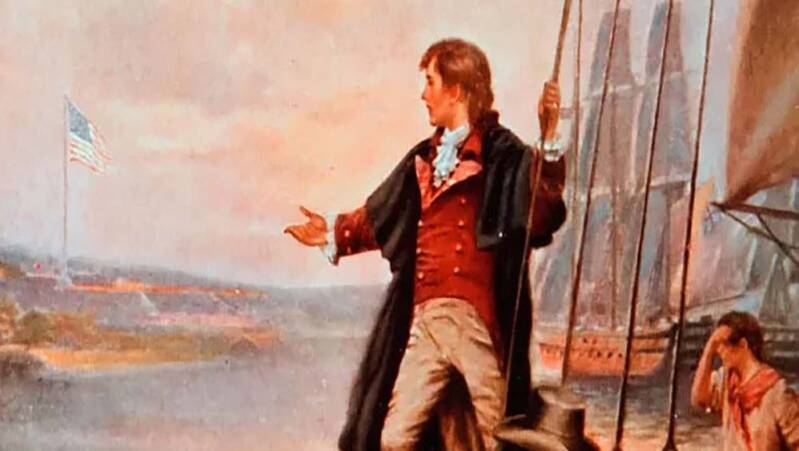
Perhaps the most famous—and tragic—duel associated with Bladensburg involved Commodore Stephen Decatur and Commodore James Barron.
Decatur was already a celebrated naval hero. Barron had been court-martialed in 1807, and the two men had been involved in a bitter dispute for years.
On March 22, 1820, they met at Bladensburg.
Both men were wounded.
Decatur’s wounds were fatal.
He died the following day.
The Town of Bladensburg identifies the Decatur-Barron confrontation as one of the site’s most famous disputes, while the University of Maryland describes the duel as a defining event in the site’s history.
The story would become part of American history.
But Decatur was far from the only person to die here.

Jonathan Cilley
In 1838, Congressman Jonathan Cilley of Maine came to Bladensburg to participate in a duel with William J. Graves of Kentucky.
Cilley had become involved in a dispute involving newspaper editor James Watson Webb.
Cilley was reluctant to participate, according to historical accounts, but the confrontation proceeded.
Graves used a rifle.
Cilley was struck in the leg and suffered a severed artery.
He died within minutes.
His death shocked the country and contributed to renewed efforts to prohibit dueling. Congress subsequently passed legislation in 1839 prohibiting members and other federal officials from giving or accepting challenges to duels within the District of Columbia.
But laws didn’t immediately erase the culture surrounding dueling.
The practice continued.
The Son of Francis Scott Key
Another tragic story belongs to Daniel Key, the son of Francis Scott Key, the author of the lyrics that became the U.S. national anthem.
In 1836, Daniel Key, a young Naval Academy midshipman, fought John Sherbourne over a disagreement involving the speed of a steamboat.
Key was killed.
The fact that the young man was the son of one of America’s most recognizable historical figures added another layer to the site’s growing reputation.
The Dueling Grounds had become a place where political disagreements, personal insults, military disputes, and questions of honor could end with someone dead.

It is easy to understand how a place like this developed a reputation.
The creek itself was sometimes called Dueling Creek and, according to historical accounts, “Blood Run.”
The surrounding area was secluded, with the landscape helping shield the duels from passing travelers.
The University of Maryland describes Bladensburg’s dueling ground as a place that became notorious for its association with violence and scandal. Writers and guidebooks later turned the location into something of a morbid attraction for visitors.
By the late nineteenth and early twentieth centuries, people weren’t simply remembering the duels.
They were telling stories about them.
And eventually, those stories acquired something new.
Ghosts.
The Ghost of the Dueling Grounds
Here’s where the history becomes folklore.
Unlike some famously haunted locations, the Bladensburg Dueling Grounds do not have a huge body of documented paranormal reports.
In fact, a 2004 investigation by CNS Maryland found that local historian Susan Pearl knew of no established ghost tradition associated with the site.
But there is at least one published ghost story.
In John Alexander’s 1975 book Washington’s Most Famous Ghost Stories, a boy reportedly encountered a strange figure at the Dueling Grounds.
The apparition was described as an old man dressed in black, his head bowed.
And then he disappeared.
The story is brief.
There is no definitive identification of the figure.
No historical record proving that the apparition belonged to a particular duelist.
No scientific evidence demonstrating that the encounter was supernatural.
But it is precisely the kind of story that tends to survive.
A solitary figure.
An old battlefield-like landscape.
A place where men died violently.
And a stranger who appears only to vanish.
Why Would a Place Like This Be Haunted?
For believers in ghosts, the explanation is obvious.
If violent death can leave an imprint on a location, the Bladensburg Dueling Grounds would seem like an ideal candidate.
Dozens of men came here prepared to fight.
Some were wounded.
Some died.
And the ground witnessed an extraordinary amount of fear, anger, grief, and violence.
But there is another way to understand the haunting.
Perhaps the ghosts are partly created by memory.
The landscape itself is quiet now.
The men who once stood there are long gone.
Their weapons have been placed in museums.
Their names have become footnotes in history books.
Yet their stories remain.
Maybe that is what makes the Dueling Grounds unsettling.
Not necessarily the possibility that someone is still walking through the trees.
But the knowledge that people really did.
And some of them never walked away.
A Landscape Layered With Death
The dueling history is only one chapter in this area’s past.
The surrounding landscape also played a role in the War of 1812. The Battle of Bladensburg took place nearby in 1814, and British forces used the area during the campaign that ultimately led to the burning of Washington.
Later, during the Civil War, the former dueling grounds became part of a Union Army camp and were reportedly used as a shooting range. The National Park Service notes that the historic grounds were active as a dueling site until 1868 and were located near Fort Lincoln.
That means this small piece of Maryland landscape has connections to multiple periods of American military history.
War of 1812.
Nineteenth-century dueling culture.
Civil War defenses.
And the nearby Fort Lincoln property itself carries its own military history.
The landscape is layered.
One generation’s battlefield can become another generation’s cemetery.
A place where soldiers trained can become a place where families bury their dead.
And a place where men once settled disputes with pistols can become a quiet patch of green beside a modern road.
The Dueling Grounds Today
Today, the Bladensburg Dueling Grounds are a much smaller remnant of the historic landscape.
The original grounds have been altered by development over the years, and the site now exists as a historic location within the Colmar Manor area along Dueling Creek. Historical markers tell visitors what happened there.
The surviving landscape may look surprisingly ordinary.
That can be deceptive.
There is nothing particularly dramatic about a grassy area and a historical marker.
But stand there knowing what happened on that ground, and the landscape changes.
The silence becomes part of the story.
The trees become witnesses.
The creek becomes more than water.
And the empty space where the duelists once stood becomes an invitation to imagine a world that seems almost impossible from the perspective of the twenty-first century.
Haunted—or Simply Remembered?
So, is the Bladensburg Dueling Grounds haunted?
There isn’t enough evidence to say.
The famous ghost story of the man in black exists in published folklore, but historians have not established a long-standing or well-documented haunting tradition at the site.
And perhaps that’s okay.
Not every paranormal mystery needs to end with a declaration that something was definitely a ghost.
Sometimes the more interesting question is simply:
Why did the story survive?
Maybe someone really saw something they couldn’t explain.
Maybe the old man in black was a trick of light, a passerby, or a story that changed with every retelling.
Maybe the legend grew because the location already felt like the kind of place where ghosts should appear.
Or maybe, as generations of paranormal believers would argue, some places hold onto what happened there.
There is no easy answer.
And that uncertainty is part of what makes the Bladensburg Dueling Grounds worth remembering.
The Dark and Bloody Ground
The men who came here believed they were defending their honor.
Today, we look back at dueling differently.
We see the tragedy.
The arrogance.
The pressure of reputation.
The absurdity of risking a human life over an insult.
But the ground remembers none of our judgments.
It simply remains.
The dueling pistols are silent.
The arguments are over.
The men who stood across from one another have been dead for generations.
And yet, according to one old ghost story, an old man in black still occasionally appears among the trees.
Perhaps he is a ghost.
Perhaps he isn’t.
But there is something haunting about the place regardless.
Because sometimes the most persistent ghosts aren’t the ones we can see.
Sometimes they are the stories we refuse to let die.
A Note from The Inkwell Times
The paranormal account discussed in this article is presented as folklore and reported legend, not as scientifically established evidence of a haunting. The historical events described are based on surviving records and historical research. Visitors should respect the site, surrounding private property, cemetery grounds, and posted rules.
Add comment
Comments