by Yasmin Chaudhary — The Inkwell Times
Cemeteries are strange places.
They are simultaneously historical archives, sacred spaces, gardens, monuments, and reminders of the people who came before us. For some people, they are peaceful places to remember the dead. For others, they are places where the boundary between the living and the dead seems a little thinner.
Across the United States, certain cemeteries have developed reputations for being haunted. Visitors, residents, paranormal investigators, and storytellers have reported apparitions, unexplained lights, voices, strange photographs, phantom figures, and other experiences.
Some stories are centuries old. Others emerged only within the last few decades.
And, as with most paranormal folklore, separating documented history from legend isn’t always easy.
That doesn’t necessarily make the stories less fascinating.
For The Inkwell Times, we’re visiting seven cemeteries whose names have become intertwined with America’s ghost lore.
I. Union Cemetery
Easton, Connecticut
The Lady in White
There are haunted places, and then there are places where one particular apparition becomes so famous that the ghost almost becomes synonymous with the location.
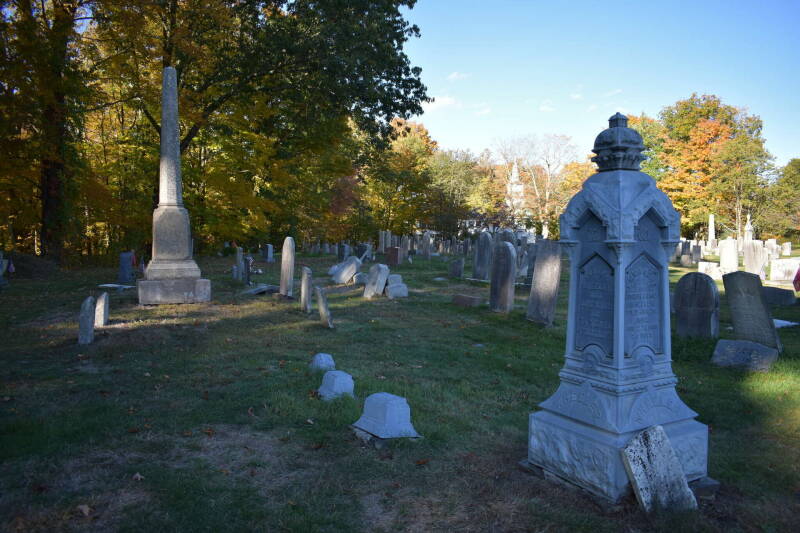
Union Cemetery in Easton, Connecticut, is one of those places.
The cemetery is one of Easton’s oldest burial grounds, with stones dating to the eighteenth century. Revolutionary War soldiers are among those reportedly buried there, giving the cemetery a documented historical significance long before stories of ghosts became part of its identity.
But Union Cemetery’s most famous resident isn’t someone whose name appears clearly on a gravestone.
She is known simply as the White Lady.
A woman in white
According to longstanding local legend, the White Lady appears as a pale or translucent woman dressed in white. Descriptions vary: some witnesses have described something resembling a nightgown, while others have interpreted the clothing as a wedding dress.
Her identity remains uncertain.
And that’s one of the most interesting parts of the story.
Over the years, different explanations have been attached to the apparition. Some versions claim she was murdered. Others say she died while searching for a child. Still others provide entirely different histories.
There is no reliable historical evidence establishing one of these stories as the White Lady’s definitive biography. Modern paranormal accounts have essentially created several competing origin stories for the same ghost.
The Warrens and the White Lady
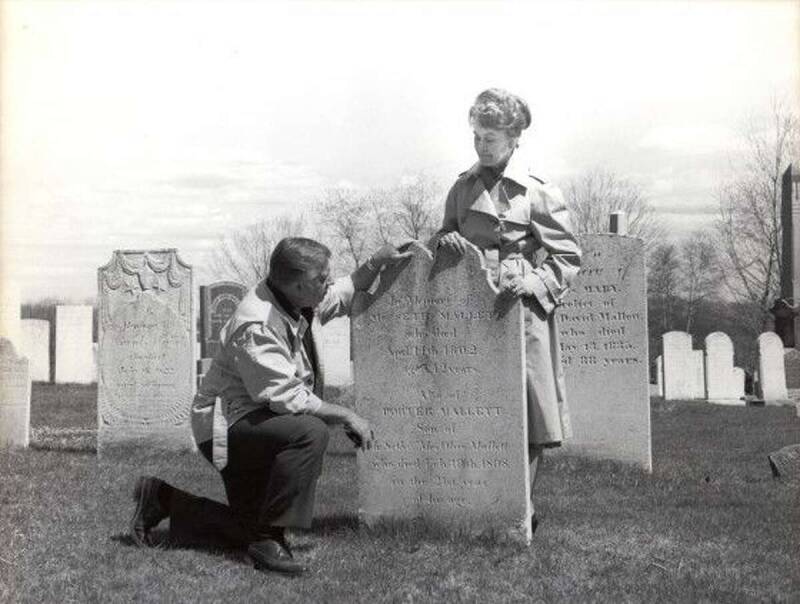
Union Cemetery became even more prominent in paranormal circles through the work of Ed and Lorraine Warren, who claimed to have investigated the apparition.
Ed Warren reportedly said he had encountered the White Lady and possessed footage of her. The Warrens’ involvement helped transform what had largely been local folklore into a nationally recognized haunting.
Other reported phenomena associated with the cemetery include a figure sometimes called Red Eyes and stories of a hitchhiking apparition appearing along nearby roads.
Whether these are manifestations of spirits, misidentifications, folklore, or something we don’t understand remains unanswered.
And perhaps that’s exactly why the White Lady continues to endure.
II. St. Louis Cemetery No. 1
New Orleans, Louisiana
The City of the Dead
Few American cemeteries possess the atmosphere of St. Louis Cemetery No. 1.
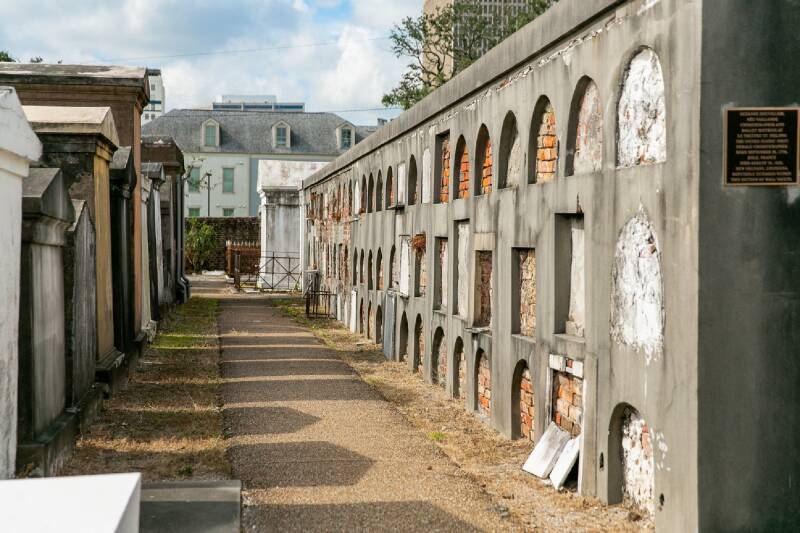
Located in New Orleans, the cemetery was established in 1789, making it the city’s oldest surviving cemetery. It was created after disease and fires overwhelmed an earlier burial ground, and the cemetery was originally located outside the fortified city.
Today, its tightly packed above-ground tombs create the distinctive landscape commonly associated with New Orleans’ “Cities of the Dead.”
But the cemetery’s supernatural reputation is inseparable from one name:
Marie Laveau.
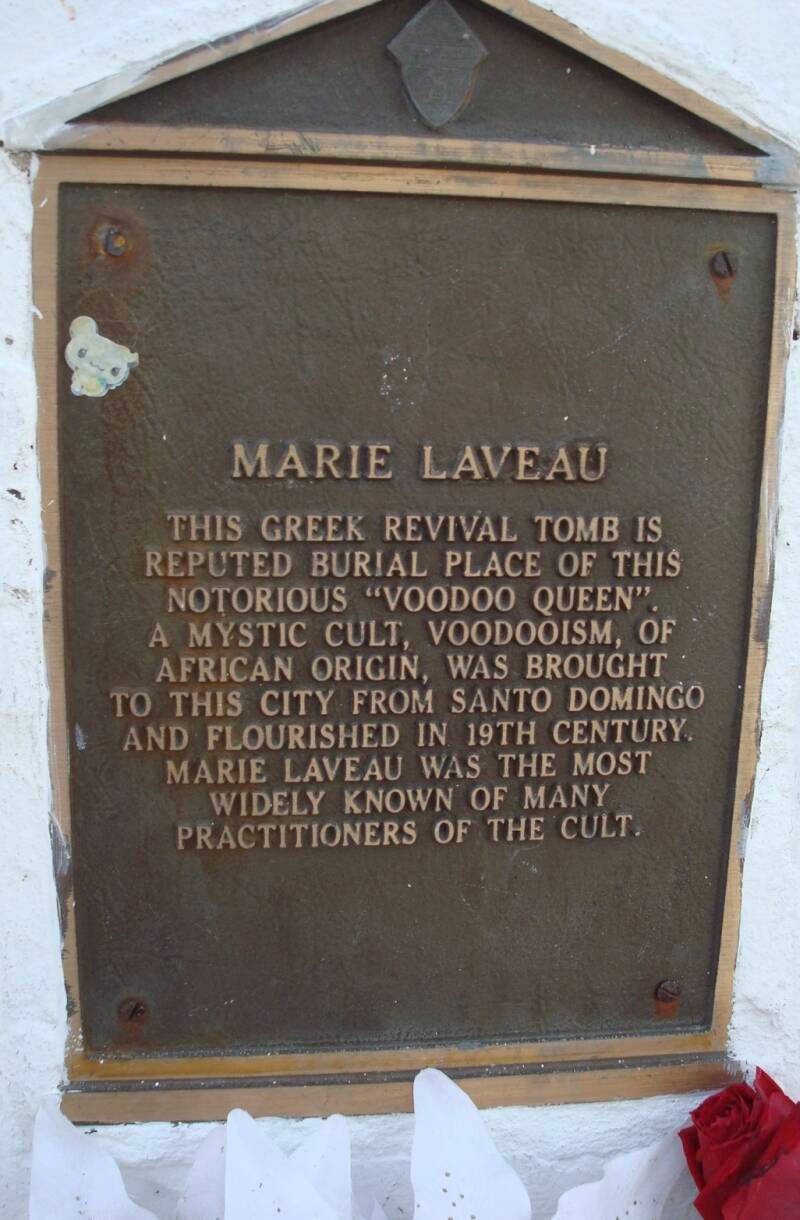
Marie Laveau
Marie Laveau remains one of the most fascinating and complicated figures in New Orleans history.
Known as a practitioner of Louisiana Voodoo and a prominent spiritual figure in nineteenth-century New Orleans, Laveau became legendary during her lifetime. She died in 1881 and is traditionally identified as being buried in the Glapion family tomb at St. Louis Cemetery No. 1.
Her tomb eventually became a destination for people seeking her spiritual assistance.
The famous practice of marking the tomb with three Xs became associated with making wishes or requesting favors from Laveau. However, this practice should not automatically be treated as an authentic Voodoo tradition simply because it has become associated with her grave. Researchers have questioned its origins, and the practice has contributed to significant damage to the tomb.
The ghost of the Voodoo Queen
Naturally, a cemetery containing the tomb of one of America’s most legendary spiritual figures has accumulated supernatural stories.
Visitors have reported seeing a woman resembling Laveau, sometimes dressed in clothing associated with the period in which she lived. Other stories describe unexplained touches, voices, sudden sensations, or the appearance and disappearance of figures.
But there is another haunting here that is perhaps more powerful than any ghost story:
the weight of history itself.
The cemetery contains the remains of thousands of people whose lives intersected with New Orleans’ complicated history.
Today, St. Louis Cemetery No. 1 is protected by the Archdiocese of New Orleans, and ordinary visitors cannot simply wander through the grounds. Access is restricted, with tours and family access governed by the cemetery authorities.
Perhaps that’s fitting.
Some places aren’t meant to be treated like haunted attractions.
They are places where the dead deserve to remain undisturbed.
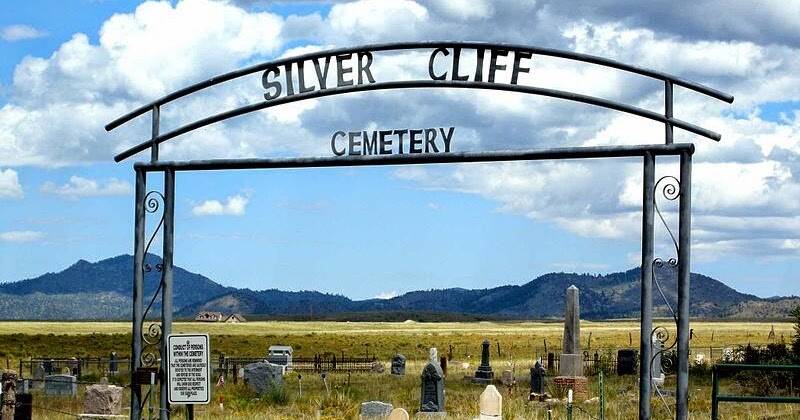
III. Silver Cliff Cemetery
Silver Cliff, Colorado
The Ghost Lights
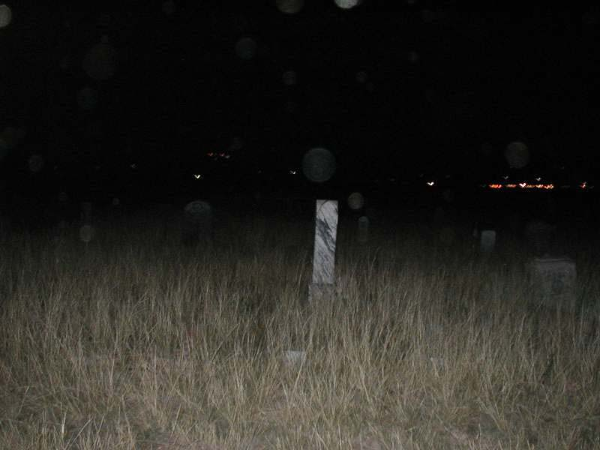
Not every haunting has a face.
Sometimes it is a light.
In the small Colorado community of Silver Cliff, one of the strangest legends associated with a cemetery involves mysterious lights that reportedly appear among the graves.
The stories date back to the late nineteenth century, when Silver Cliff was a booming mining community. The cemetery itself was established in the early 1880s and contains separate Catholic and Protestant sections.
And then there are the lights.
Dancing among the graves
Witnesses have described pale blue, white, or bluish-white lights appearing around the cemetery.
Some accounts describe them as floating above the ground. Others say they seem to move among the gravestones or even bounce from one headstone to another.
The phenomenon became known as the Silver Cliff ghost lights.
One of the earliest versions of the story involves miners who supposedly saw strange lights near the cemetery during a rainy night in the 1880s or 1890s. The details vary depending upon the retelling, but the basic story has remained remarkably consistent: mysterious lights appeared where there should have been none.
Ghosts—or something else?
This is where Silver Cliff becomes particularly interesting.
There are several possible natural explanations for mysterious lights, including distant vehicle lights, atmospheric conditions, reflections, and other optical phenomena.
That hasn’t stopped generations of people from wondering whether the lights could somehow be connected to the dead.
The phenomenon has even attracted scientific and journalistic attention. National Geographic featured the cemetery’s mysterious lights in 1969, helping cement the legend’s place in American paranormal folklore.
Whether the lights are spirits, atmospheric phenomena, distant sources of illumination, or something else entirely remains unresolved.
But there is something undeniably eerie about the idea of watching tiny lights wander through a cemetery in the darkness.
No apparition.
No voice.
Just a glow moving between the graves.
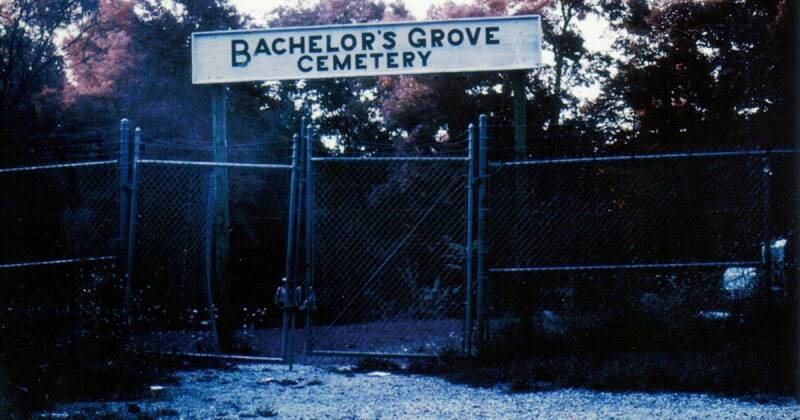
IV. Bachelor’s Grove Cemetery
Midlothian, Illinois
Chicago’s Cemetery of Ghost Stories
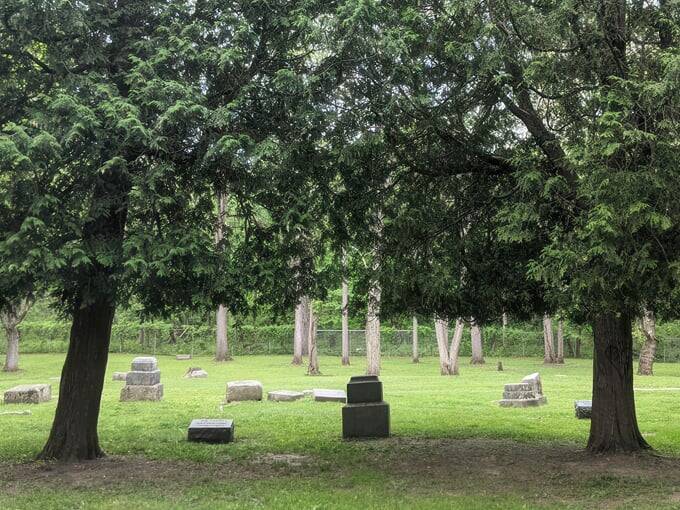
A mysterious farmhouse.
A woman in white.
And one particularly famous photograph.
The haunted cemetery
Reports of paranormal activity at Bachelor’s Grove have circulated since at least the 1950s, with stories becoming especially widespread during the second half of the twentieth century.
The cemetery’s isolated location undoubtedly contributed to its reputation.
At various points in its history, Bachelor’s Grove became neglected and suffered vandalism. Local teenagers and other visitors began telling increasingly elaborate stories about what supposedly happened there.
Some stories involved Satanism or occult activity, although researchers have found little evidence supporting those claims.
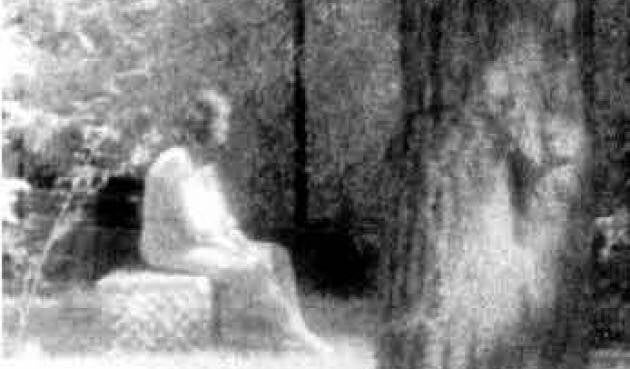
The woman in white
Perhaps the most famous modern story involves a mysterious woman photographed sitting near a gravestone.
The image became known among paranormal enthusiasts as the Seated Woman or Woman in White photograph.
Paranormal investigators have interpreted the image as evidence of an apparition, while skeptics have suggested more ordinary explanations involving the cemetery’s physical surroundings and photographic conditions.
Then there are the other reports.
Visitors have claimed to see ghostly figures, strange lights, floating orbs, phantom cars, and even buildings that appear and disappear.
WBEZ’s investigation into Bachelor’s Grove noted that paranormal investigator Dale Kaczmarek photographed images that he interpreted as ghostly phenomena, including an image from 1991 that he identified as a woman in white.
The research center devoted to Bachelor’s Grove itself acknowledges that many of the stories belong more properly to local folklore than to verifiable history.
And that’s important.
Bachelor’s Grove doesn’t need every story to be true to be fascinating.
The sheer volume of folklore surrounding this tiny cemetery is itself a piece of American cultural history.
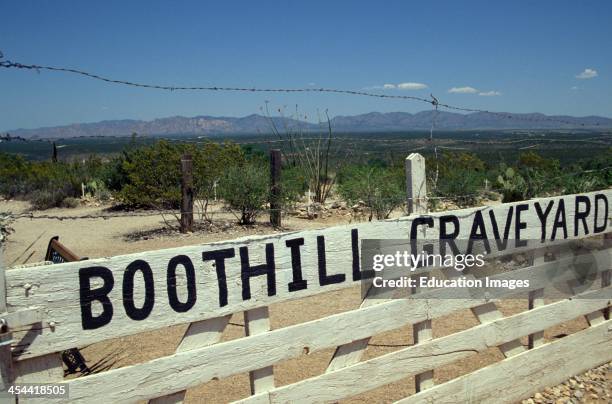
V. Boothill Graveyard
Tombstone, Arizona
Where the Old West Never Quite Died
Some cemeteries don’t need ghosts to feel haunted.
Boothill Graveyard in Tombstone, Arizona, is one of them.
Established during Tombstone’s boom years, Boothill became the final resting place for people who died in the violent and unforgiving world of the nineteenth-century American frontier.
Its nickname tells you plenty.
Boothill.
The name refers to the idea that some of those buried there “died with their boots on.”
Tombstone’s violent history
Tombstone grew rapidly during Arizona’s silver boom, and the cemetery became the city’s first municipal burial ground. The historic site dates to 1878.
Among those buried there are people connected to some of the most famous episodes of Tombstone’s history, including individuals associated with the O.K. Corral era.
The cemetery also reflects the multicultural character of the frontier town, with Chinese and Jewish burial sections documented as part of its history.
The spirits of the frontier
Boothill’s ghost stories aren’t as singular as the White Lady of Union Cemetery or the ghost lights of Silver Cliff.
Instead, its supernatural reputation grows naturally from its history.
Visitors have reported apparitions and unexplained lights. Paranormal databases catalog reported phenomena including apparitions and orbs.
And perhaps there’s something psychologically powerful about standing among the graves of people who lived through gunfights, epidemics, mining disasters, lawlessness, and the relentless uncertainty of frontier life.
The Old West has become romanticized in American culture.
Boothill reminds us that the real thing was considerably less glamorous.
People died young.
Sometimes violently.
And sometimes far from home.
If ghosts exist, a cemetery like Boothill would seem like an obvious place to look for them.
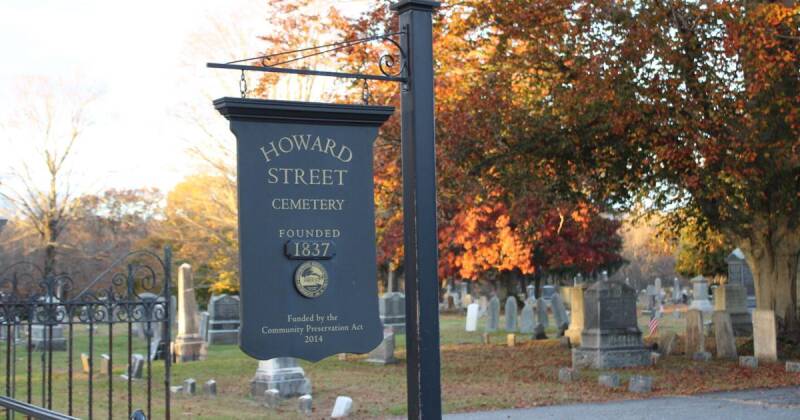
VI. Howard Street Cemetery
Salem, Massachusetts
The Curse of Giles Corey
Few American cities carry as much supernatural baggage as Salem.
The name alone conjures images of witches, trials, accusations, spirits, and the darkest chapters of colonial New England.
Howard Street Cemetery is deeply connected to that history—although, interestingly, the cemetery itself was established after the 1692 Salem Witch Trials.
Its connection comes through one of Salem’s most tragic figures:
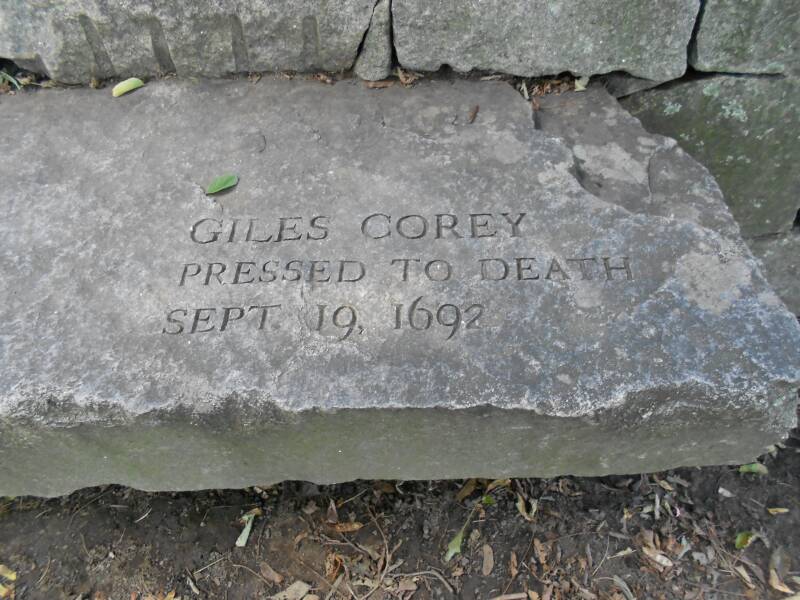
Giles Corey.
Giles Corey refused to plead
During the Salem Witch Trials, Giles Corey was accused of witchcraft.
Unlike many of the other accused, Corey refused to enter a plea.
Under English common law, refusing to plead could lead to a particularly horrific form of punishment known as peine forte et dure, or pressing.
Corey was subjected to the punishment and died beneath the weight placed upon him.
According to Salem historical sources, Howard Street Cemetery is traditionally associated with the place where Corey was taken after his execution and where he was buried.
The curse
Legend says that Giles Corey didn’t go quietly.
According to the story, before his death, Corey placed a curse upon Salem and specifically upon the sheriff involved in his execution.
The tale became even more dramatic after Sheriff George Corwin died suddenly at the age of thirty.
Later deaths and illnesses among Salem sheriffs were interpreted by some as evidence that Corey’s curse remained active.
Skeptically speaking, there are obvious problems with turning a series of historical deaths into proof of a supernatural curse.
But folklore isn’t really about laboratory proof.
It’s about the stories communities tell to make sense of difficult history.
The ghost of Giles Corey
Modern ghost lore surrounding Howard Street Cemetery sometimes includes reports of a male apparition identified as Giles Corey.
Some paranormal accounts claim that his spirit appears around times of tragedy or misfortune in Salem.
Whether Corey truly walks the cemetery is impossible to establish.
But there is something chilling about remembering what happened to him.
The ghost story isn’t what makes Giles Corey’s story frightening.
The historical record does.
VII. Bonaventure Cemetery
Savannah, Georgia
Little Gracie and the Ghosts Beneath the Oaks
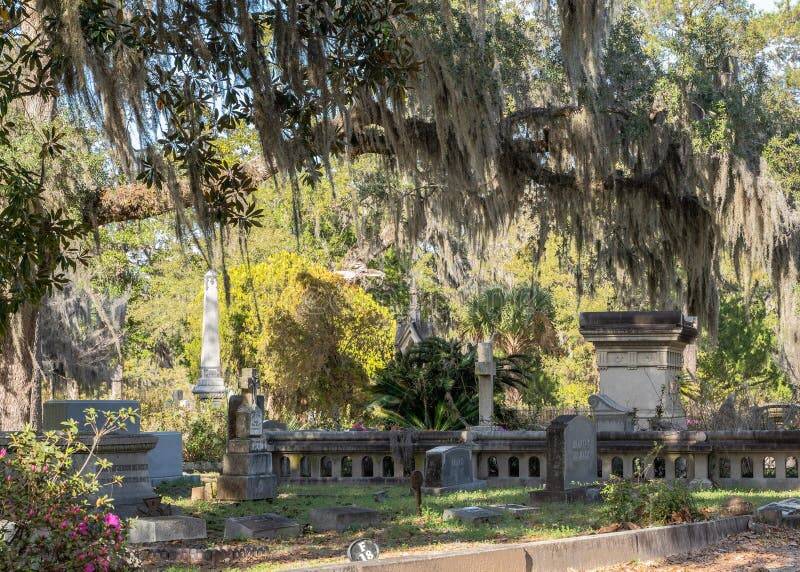
There are few cemeteries in America as visually haunting as Bonaventure.
Live oaks stretch over winding paths. Spanish moss hangs from the branches. Marble statues stand among the graves.
And beneath all that beauty are stories of ghosts, grief, tragedy, and folklore.
Bonaventure was established as a private cemetery in 1846 on land that had once been part of Bonaventure Plantation. The City of Savannah acquired it in 1907, and the cemetery eventually expanded to more than 100 acres.
But one grave has become particularly famous.
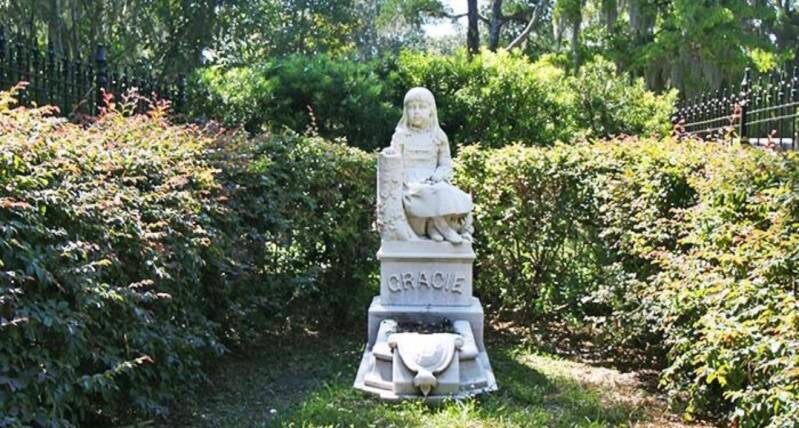
Little Gracie Watson
Gracie Watson was the daughter of the manager of Savannah’s Pulaski House Hotel.
She died of pneumonia in 1889 at only six years old.
Her parents commissioned sculptor John Walz to create a remarkably lifelike marble monument based on a photograph of Gracie. The result is one of Bonaventure’s most recognizable memorials.
Over time, Gracie’s grave became the center of a remarkable collection of ghost stories.
Visitors began leaving toys and gifts for her.
And then came the legends.
Some people claimed the statue could cry.
Others said Gracie’s ghost appeared as a little girl wandering Savannah’s streets or playing near Johnson Square, where the Pulaski House once stood.
Still others claimed the statue cried bloody tears when her toys were removed.
There is no credible evidence that the marble statue literally cries blood. But the tradition of leaving gifts at her grave is very real, and the cemetery’s historical society notes that presents continue to be left for Gracie today.
The Garden of Good and Evil
Bonaventure’s reputation became even more famous after John Berendt’s 1994 book Midnight in the Garden of Good and Evil brought Savannah’s eccentric history and atmosphere to a massive international audience.
But here’s a fascinating little wrinkle:
The cemetery is often assumed to be the literal “Garden of Good and Evil” from the book.
It isn’t quite that simple.
Researchers have pointed out that some of the book’s cemetery scenes take place elsewhere, while later retellings gradually blurred the distinction.
That’s a perfect example of how paranormal folklore evolves.
A real cemetery.
A real child.
A real statue.
A real book.
And then, over decades, the stories grow around them.
The Dead Don’t Always Need to Speak
From Connecticut’s White Lady to Colorado’s wandering lights, from the spirits of Bachelor’s Grove to the Old West graves of Tombstone, these seven cemeteries demonstrate something fascinating about American folklore.
We don’t simply bury our dead.
We tell stories about them.
Sometimes those stories come from documented history. Sometimes they come from eyewitness accounts. Sometimes they grow from a photograph, a rumor, a tragedy, or a single unexplained experience.
And sometimes, decades later, nobody can remember exactly where the story began.
That doesn’t necessarily make it meaningless.
Folklore tells us something about the living as much as it tells us about the dead.
It reveals what we fear.
What we remember.
Who we refuse to forget.
And perhaps, sometimes, what we hope might still remain after the final breath.
Because whether you believe cemeteries are places where spirits linger or simply places where history rests, there is one thing that cannot really be disputed:
The dead have stories.
And America has been telling them for centuries.
A note from The Inkwell Times
The paranormal experiences and hauntings discussed in this series are presented as reported encounters, folklore, and local legends, not as scientifically established supernatural phenomena. Historical details have been separated from later paranormal traditions wherever possible. Cemeteries are active sacred or historic sites, and visitors should follow posted rules, respect graves and monuments, and never trespass after hours.
Add comment
Comments
I live near Fort Lincoln Cemetery in Washington, DC, and I recently started looking into its history and any haunting stories connected to the area. Interestingly, the strongest ghost lore seems to come from the nearby Bladensburg Dueling Grounds, where more than 50 duels reportedly took place in the 1800s. The area also has Civil War-era fortifications, so there’s a LOT of history around there.
What’s especially interesting to me is that I’ve personally seen a man in military fatigues in the area before. I obviously can’t say what I saw was paranormal, but learning about the history definitely made me wonder if there are more local stories or experiences that I haven’t heard about. 👻