Photo By: Three Moon Mystic
by Yasmin Chaudhary — The Inkwell Times
From residual hauntings and restless spirits to guardians, shadow people, elementals, and mimics, the paranormal world contains far more categories than simply “ghost.”
When people talk about ghosts, it is easy to imagine a single definition: someone dies, their spirit remains, and the living encounter them.
But folklore has never been quite that simple.
Across religions, cultures, occult traditions, legends, and modern paranormal communities, people have developed countless ways of describing encounters with the unseen. Some traditions speak of ancestors and spirits of the dead. Others describe spirits belonging to particular places, nature, elements, or supernatural realms. Modern paranormal terminology has added categories based on reported experiences, including residual hauntings, shadow people, and mimics.
The nine categories explored here do not belong to one universal system. Some have deep historical and religious roots, while others are modern paranormal classifications. Their meanings can also change dramatically from one tradition to another.
For Three Moon Mystic, I want to explore these ideas through the folklore itself: where the concepts come from, how different traditions have understood them, what people traditionally associate with them, and—where applicable—my own experiences.
This is a look at the stories and traditions surrounding the supernatural, rather than a claim that every culture has understood these phenomena in exactly the same way.
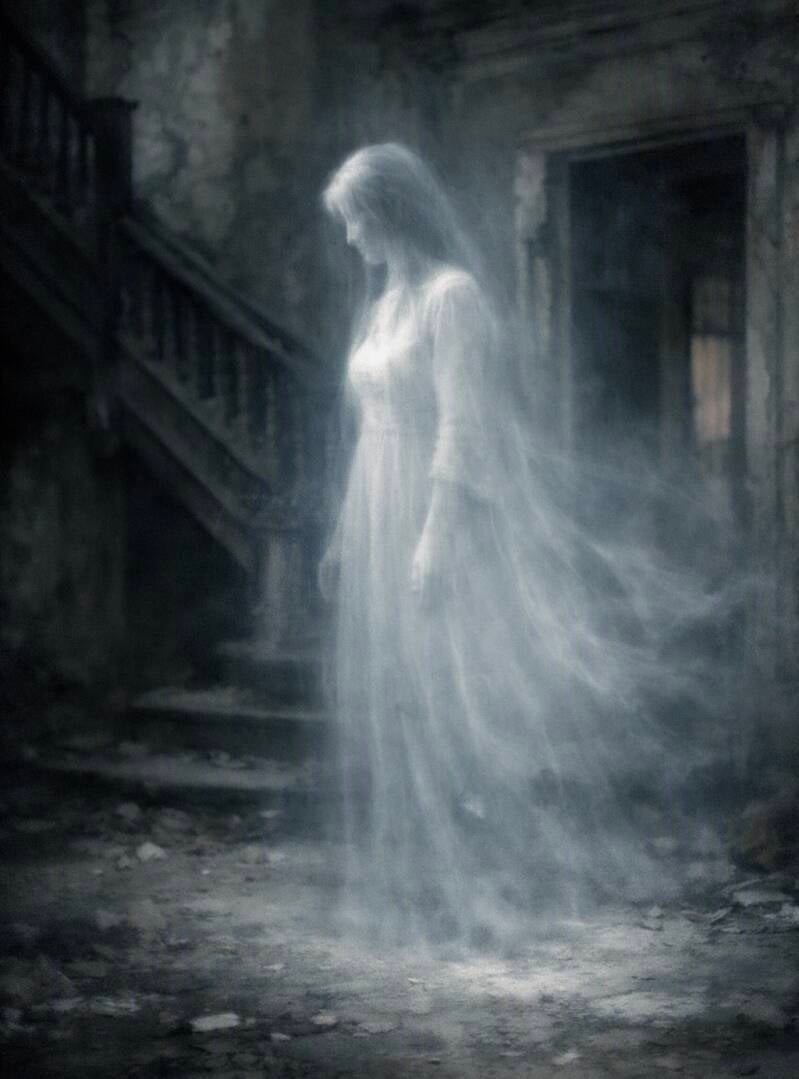
Residual Spirits
A residual spirit, more accurately called a residual haunting in much modern paranormal terminology, is one of the more unusual ideas on this list because it isn’t necessarily considered a conscious spirit at all.
The basic idea is that something from the past has somehow become imprinted onto a location and continues to replay.
A person might reportedly see the same figure walking down a hallway over and over. Footsteps may occur at the same time every night. A door might appear to open and close according to the same pattern. Someone may hear a conversation, music, crying, machinery, or another sound associated with something that supposedly happened there long ago.
The important characteristic is repetition without interaction.
In the modern paranormal distinction between residual and intelligent hauntings, a residual haunting behaves almost like a recording. It doesn’t notice the people watching it. It doesn’t answer questions. It doesn’t seem to make decisions based on its surroundings.
The figure walks the same path.
The sound happens again.
The scene repeats.
And then it happens again.
Some paranormal theories describe this as an emotional or energetic imprint left behind by an especially intense event. Other versions of the idea became associated with the so-called Stone Tape theory, the notion that buildings or materials might somehow retain impressions of past events.
There is no single historical tradition responsible for the concept as it is commonly discussed today. It is largely a modern paranormal framework for explaining recurring hauntings.
That distinction matters because older ghost folklore doesn’t necessarily divide spirits into “residual” and “intelligent.” Those categories are primarily useful within contemporary paranormal discussion.
Have I experienced one?
No. Residual spirits are not among the types I’ve personally encountered.
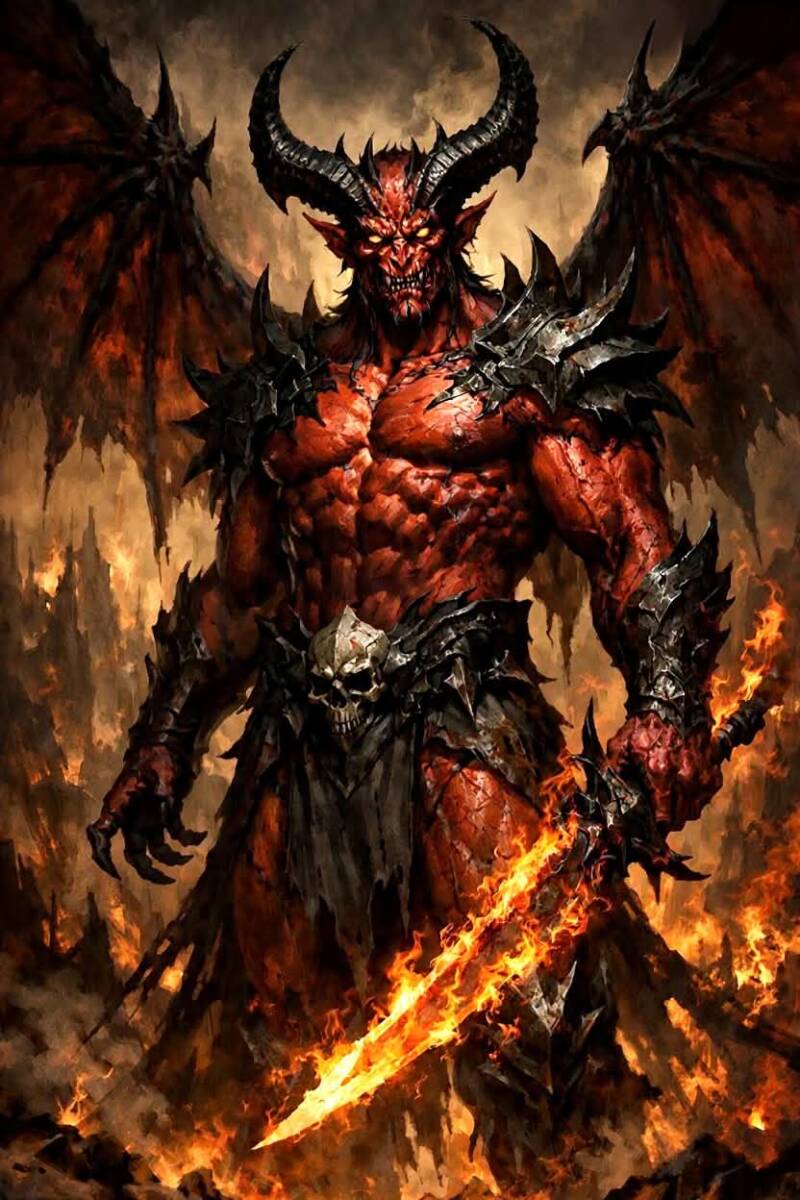
Demons
Few supernatural categories are as complicated—or as culturally loaded—as the demon.
The modern idea of a demon as an inherently evil supernatural being comes largely through particular religious traditions, but the broader history of supernatural beings described as dangerous, hostile, or spiritually harmful is far more complicated.
Different cultures have described beings that might loosely be translated into English as demons, but that doesn’t mean those beings are interchangeable.
In some traditions, supernatural beings can be benevolent, malicious, or somewhere in between. In Islamic traditions, for example, jinn are not inherently synonymous with demons or evil; they are understood as a category of beings with their own characteristics and moral possibilities. Other traditions contain spirits that can protect, punish, deceive, or harm.
Even within Christian demonology, demons have been associated with temptation, possession, oppression, deception, and spiritual corruption.
Jewish folklore contains its own traditions concerning dangerous spirits and entities, while Hindu traditions include beings such as rakshasas, vetalas, and pishachas, each with their own histories and characteristics.
So when someone says “demon,” the first question should really be:
According to which tradition?
The word has become a giant umbrella term.
Modern paranormal accounts commonly associate demonic encounters with feelings of oppression, frightening apparitions, disturbing voices, unusual activity, or a sense that an entity is deliberately hostile. Those descriptions belong to contemporary reports and belief systems, rather than representing one universal definition.
My experience
I have personally experienced what I understood to be a demonic attachment.
During one of the times I fled my abusive ex, I was staying in a hospital in Illinois. I experienced an entity that I understood to have attached itself to me during that period.
My friend RJ helped me get rid of it.
That experience is part of why I don’t treat the word “demon” casually. Whatever terminology someone chooses for an experience like that, there is a very real difference between reading about something in folklore and believing you have encountered it yourself.
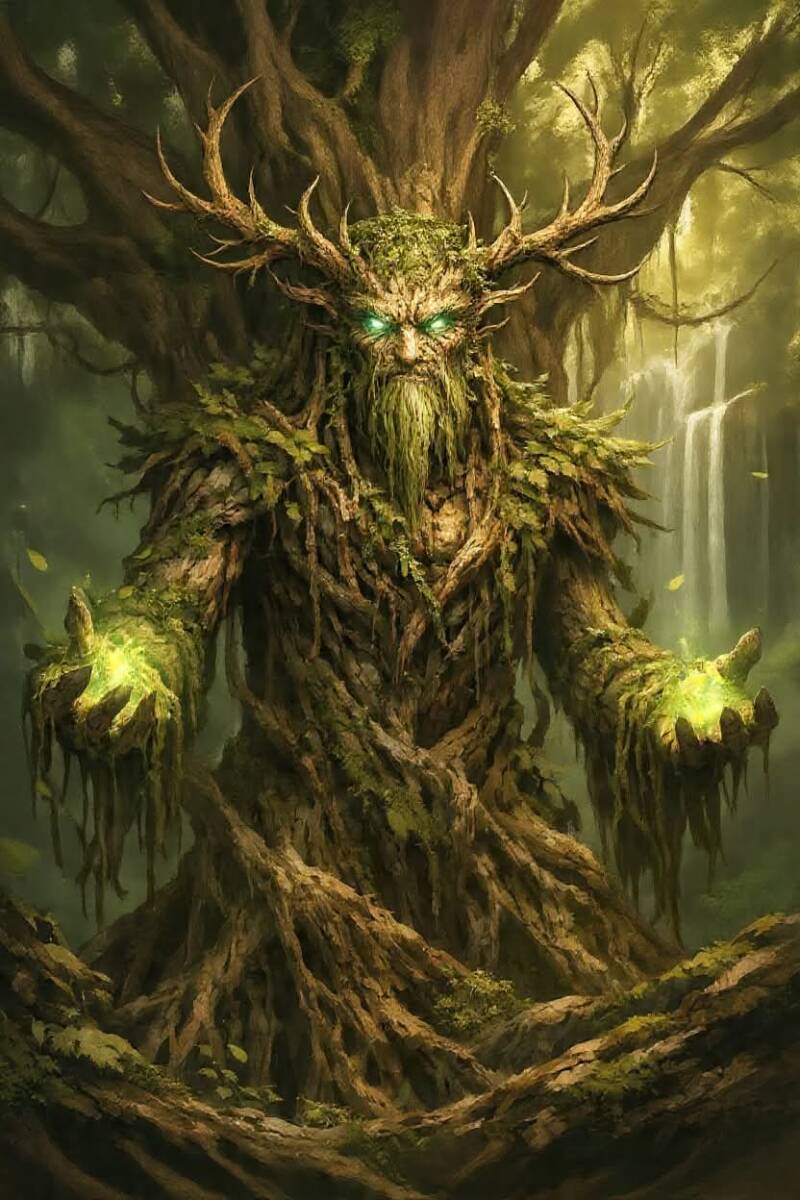
Guardians
The concept of a guardian spirit is considerably older and broader than modern paranormal culture.
Human cultures around the world have stories of supernatural beings connected with protecting individuals, families, communities, sacred locations, natural features, or entire peoples.
The Roman concept of the genius loci, for example, referred to the spirit or divine presence associated with a particular place. The phrase literally means the “spirit” or “genius of the place.”
Other cultures have traditions involving guardian beings connected to individuals, animals, forests, rivers, mountains, homes, villages, or sacred sites.
Some Indigenous North American traditions have their own distinct concepts of guardian spirits, including beings associated with individuals and spiritual power. These traditions are highly diverse and should not be collapsed into one generic idea of a “Native American guardian spirit.”
Other cultures have guardian deities, ancestral protectors, household spirits, tutelary beings, and spirits of particular natural locations.
This is where the idea of a Guardian of the land becomes particularly interesting.
In many spiritual traditions, nature isn’t viewed as spiritually empty. A forest, river, mountain, spring, or particular piece of land can possess its own spiritual significance or supernatural inhabitants.
That doesn’t mean every culture calls those beings “Guardians.” That’s a modern umbrella term that can encompass several different traditions.
My experience
I have experienced what I personally identify as Guardians.
There is a wooded area near the creek where I am in Newington, Virginia, that I associate with a set of Guardians.
My soul sister and I also had a connection to woods in Burke, Virginia, where I associate Guardians with the land as well.
For me, these experiences belong much more to the category of spirits connected to place than the stereotypical idea of a ghost haunting a house.
And that distinction is important.
A Guardian isn’t necessarily a dead human being.
It may be understood as a spirit belonging to, protecting, watching over, or otherwise being associated with a particular place.
Poltergeists
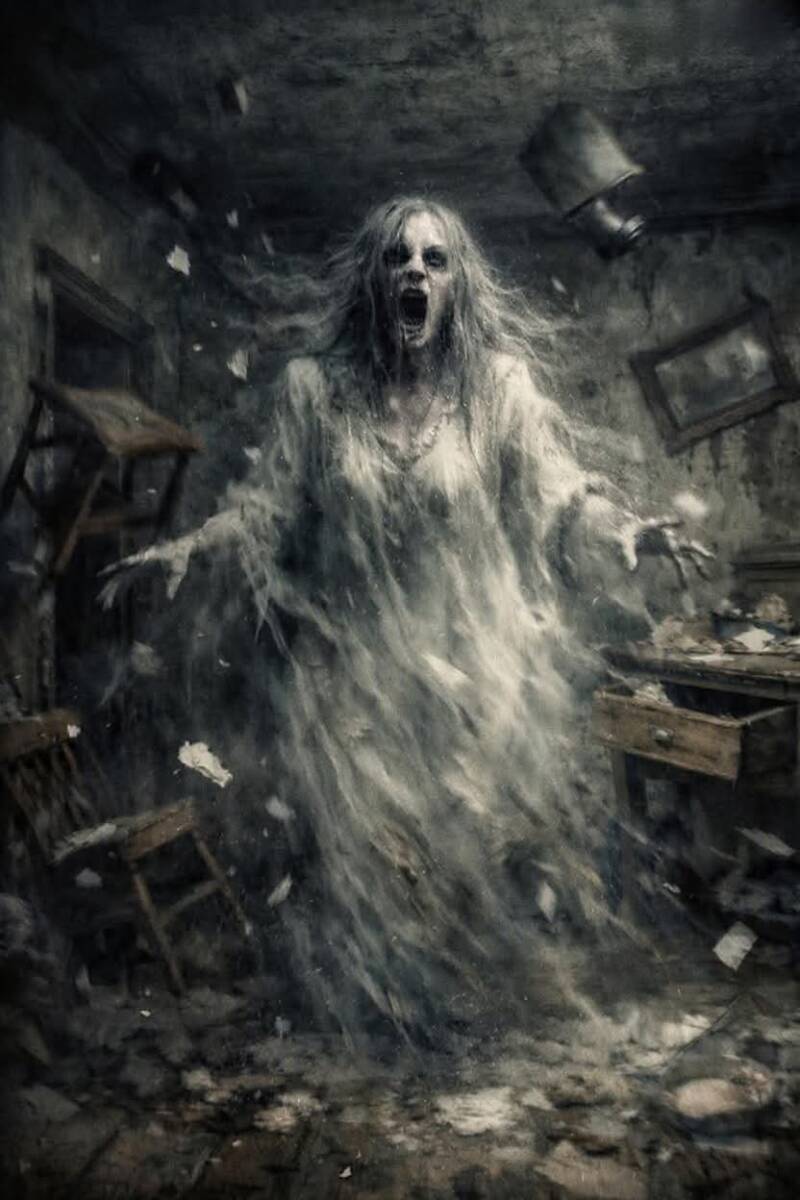
The word poltergeist comes from German: poltern, meaning to knock or make noise, and Geist, meaning spirit.
Literally, it is essentially a noisy spirit.
Poltergeist stories are particularly associated with physical disturbances.
Reported activity can include:
- Knocking and banging
- Objects moving or being thrown
- Doors opening or closing
- Footsteps
- Scratching sounds
- Objects disappearing and reappearing
- Furniture moving
- Other unexplained disturbances
This makes poltergeist folklore somewhat different from the traditional image of an apparition quietly appearing in a hallway.
The emphasis is often on activity rather than appearance.
There is another interesting aspect to poltergeist folklore: historically, some accounts have been particularly associated with young people or households experiencing emotional turmoil. This has led to numerous competing interpretations over the centuries, ranging from supernatural explanations to psychological and environmental ones.
In modern paranormal culture, poltergeists are often treated as a distinct category of haunting.
But even here, there is disagreement about whether a poltergeist is actually a spirit or whether the term describes a type of phenomenon regardless of its supposed source.
Have I experienced one?
No.
I have experienced other forms of paranormal activity, but I don’t personally classify any of those experiences as a poltergeist encounter.
Shadow People
Few modern paranormal phenomena have become as recognizable as the shadow person.
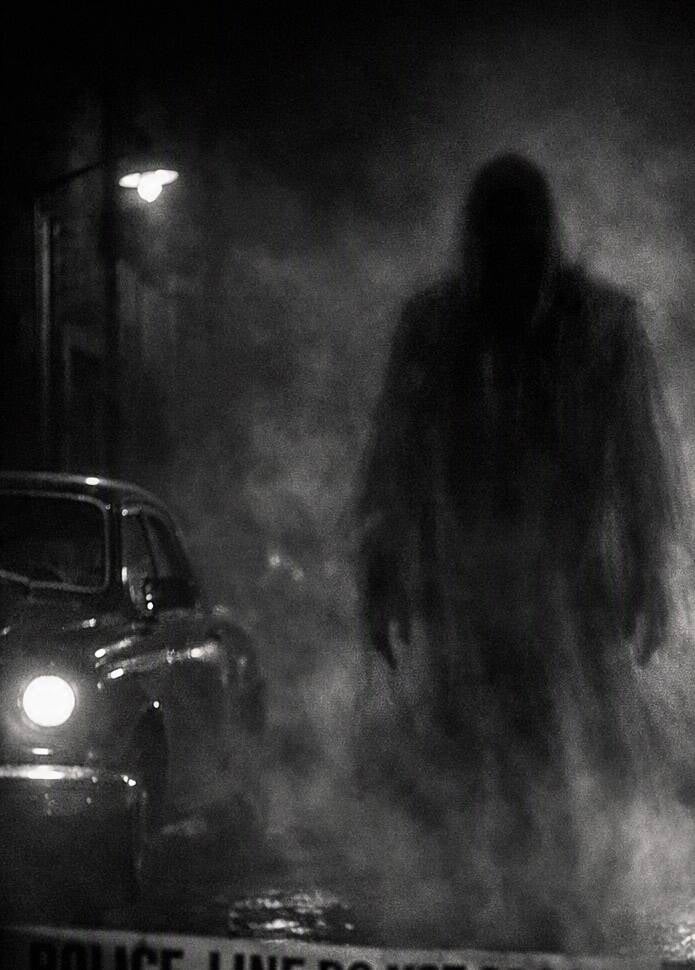
Shadow people are generally described as dark, human-shaped figures. People commonly report seeing them briefly in peripheral vision, standing in doorways, crossing hallways, standing beside beds, or simply watching from a distance.
Descriptions vary.
Some witnesses describe completely featureless silhouettes.
Others describe figures wearing what appears to be a hood or long clothing.
Some appear extremely tall.
Others appear to be ordinary human height.
And some witnesses report seeing only a fleeting movement before the figure disappears.
The modern “shadow people” phenomenon is particularly interesting because the terminology and imagery became heavily popularized through late-20th- and early-21st-century paranormal culture and media. At the same time, stories of dark supernatural figures are much older than the phrase “shadow people.” Various cultures have their own traditions concerning shadowy beings, shades, spirits, night entities, and supernatural doubles.
That means we shouldn’t assume that every historical account of a dark figure was describing what modern paranormal communities mean by “shadow people.”
The modern category is a collection of reported experiences, layered on top of much older folklore about mysterious humanoid apparitions.
My experience
I’ve seen shadow people several times.
And, quite frankly, this is the category that scares me the most.
There’s something about seeing a human-shaped figure that shouldn’t be there that triggers a very different kind of fear.
Of all the experiences I’ve had, shadow people are not something I particularly enjoy encountering.
Intelligent Spirits
An intelligent spirit is essentially the opposite of a residual haunting.
The distinction is simple:
Residual = repetition.
Intelligent = interaction.
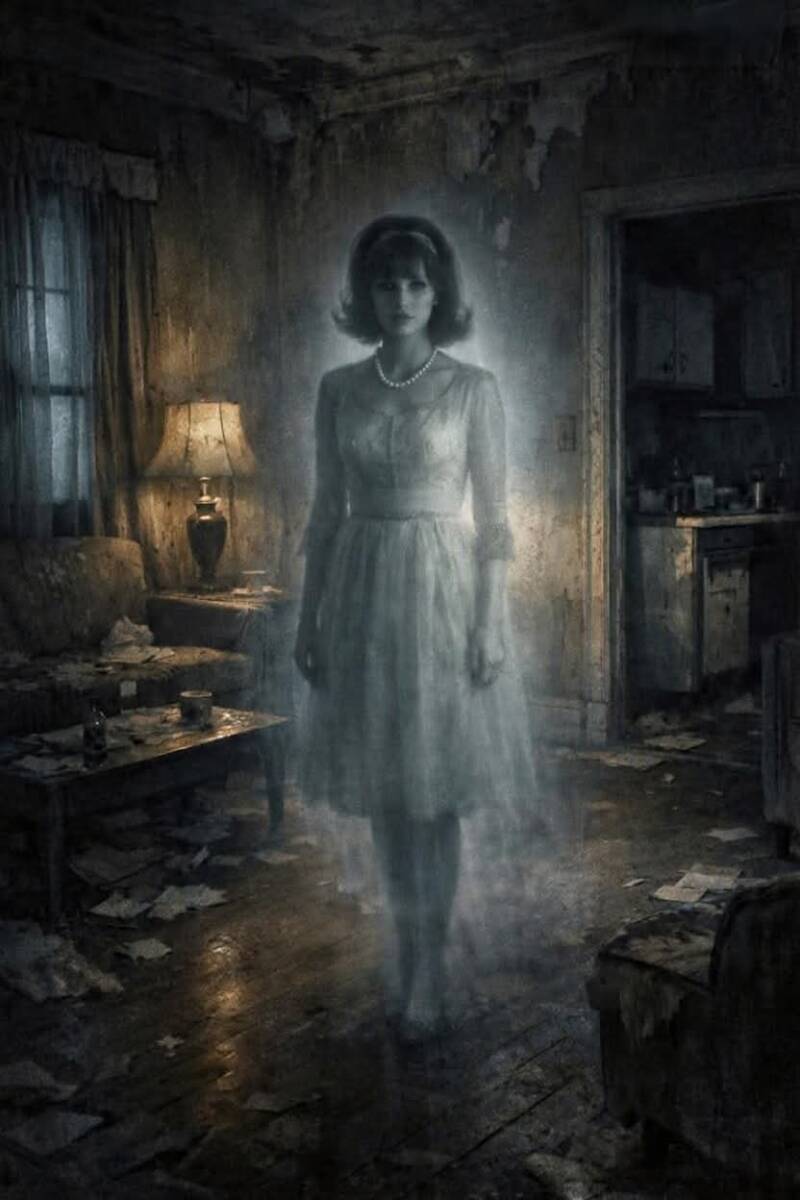
In modern paranormal terminology, an intelligent haunting is believed to involve a conscious presence capable of noticing the living and responding to them.
Reports can include a spirit:
- Answering questions
- Responding to its name
- Appearing differently depending on the circumstances
- Moving objects deliberately
- Making sounds in response to people
- Appearing repeatedly to particular individuals
- Communicating through dreams or other experiences
- Demonstrating what witnesses interpret as memory or personality
The idea has much older roots than modern ghost hunting.
Traditional ghost stories frequently involve the dead appearing because they have unfinished business, need something from the living, are seeking justice, want to deliver a message, or simply remain attached to a particular place or person.
Japanese ghost traditions, for example, contain extensive stories concerning spirits whose circumstances after death are connected to unresolved matters. Ghost lore throughout the world has repeatedly explored the idea that death doesn’t necessarily erase personality, memory, relationships, or unfinished obligations.
Modern paranormal investigators simply gave one part of that broader ghost tradition a name: intelligent haunting.
Have I experienced one?
I don’t currently classify any of my experiences specifically as an intelligent spirit encounter.
That doesn’t mean I’ve never encountered something that communicated or behaved in a way I found unusual; it simply means I don’t want to force an experience into a category when I’m not certain that the classification fits.
And that is an important part of studying paranormal folklore:
Not every unexplained experience needs to be immediately assigned a label.
Egregores
Now we get into something very different.
An egregore isn’t traditionally a ghost.
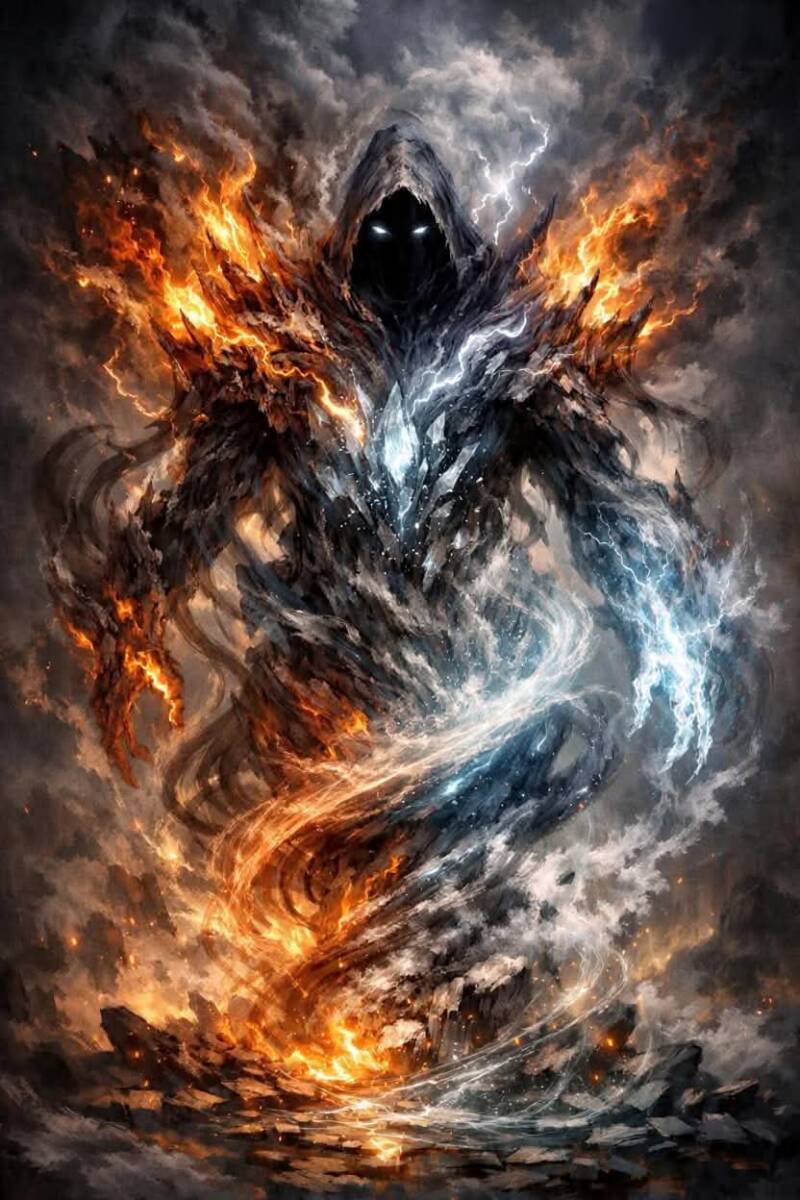
The modern occult concept of an egregore generally refers to a collective thought-form or entity associated with the shared thoughts, emotions, beliefs, symbolism, rituals, and attention of a group.
In other words, instead of beginning with a dead person, an egregore is associated with the idea that collective human attention can create or sustain something that takes on a life of its own.
The history of the word is complicated.
The Greek term egrēgoroi is associated with “watchers” in the Book of Enoch, but that ancient usage does not mean exactly what modern occultists mean by “egregore.” The modern occult meaning developed much later, particularly within Western esotericism and nineteenth- and twentieth-century occult thought.
That evolution is important because you’ll sometimes see claims that the modern definition is directly identical to the ancient Watchers.
It isn’t that simple.
The word has an older history, while the collective thought-form concept is a later occult development.
Modern occult definitions can describe an egregore as an energetic, astral, psychic, or spiritual form created or sustained by collective belief and attention.
Some interpretations describe it as something that remains dependent upon its creators.
Others describe it as becoming increasingly independent.
That raises some fascinating questions about the relationship between belief and spiritual reality.
Can a symbol become more powerful because millions of people believe in it?
Can a fictional character become culturally “alive” through collective attention?
Can a magical tradition develop something that practitioners understand as an independent spiritual presence?
Those are questions that belong to occult philosophy rather than conventional ghost lore.
Have I experienced one?
No.
And honestly?
I hope I never do.
Elementals
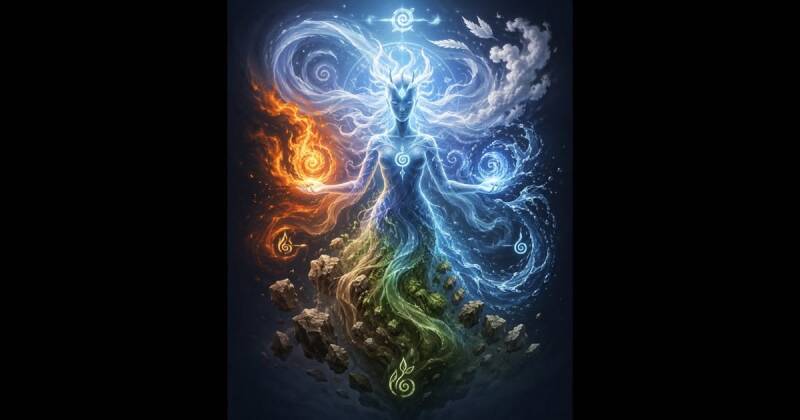
Elementals belong to a very different branch of supernatural folklore.
Rather than being spirits of the dead, elementals are traditionally associated with nature and the classical elements.
The Western occult system most commonly recognized today was heavily shaped by the sixteenth-century physician and occult philosopher Paracelsus.
His writings associated different types of beings with the four elements:
Earth — Gnomes
Water — Undines
Air — Sylphs
Fire — Salamanders
These weren’t simply the garden-gnomes and mermaids of modern fantasy.
Within the occult worldview, they were conceived as beings associated with their respective elements.
Paracelsus’ system became enormously influential in later Western esotericism, eventually influencing ceremonial magic and later magical traditions.
But the broader idea of nature spirits is much older than Paracelsus.
Across cultures, folklore contains spirits associated with rivers, forests, mountains, storms, springs, fire, animals, plants, and other aspects of the natural world.
The important distinction is that not every nature spirit is an “elemental.”
A river spirit from one cultural tradition shouldn’t automatically be relabeled an Undine simply because both are associated with water.
The four-element system is specifically part of a particular Western occult lineage.
Have I experienced one?
No.
I have experienced what I personally identify as Guardians associated with wooded areas, but I don’t classify those experiences as encounters with elementals.
That distinction matters to me because a spirit associated with a place isn’t automatically an elemental.
Mimics
And finally, we get to one of the strangest categories:
Mimics.
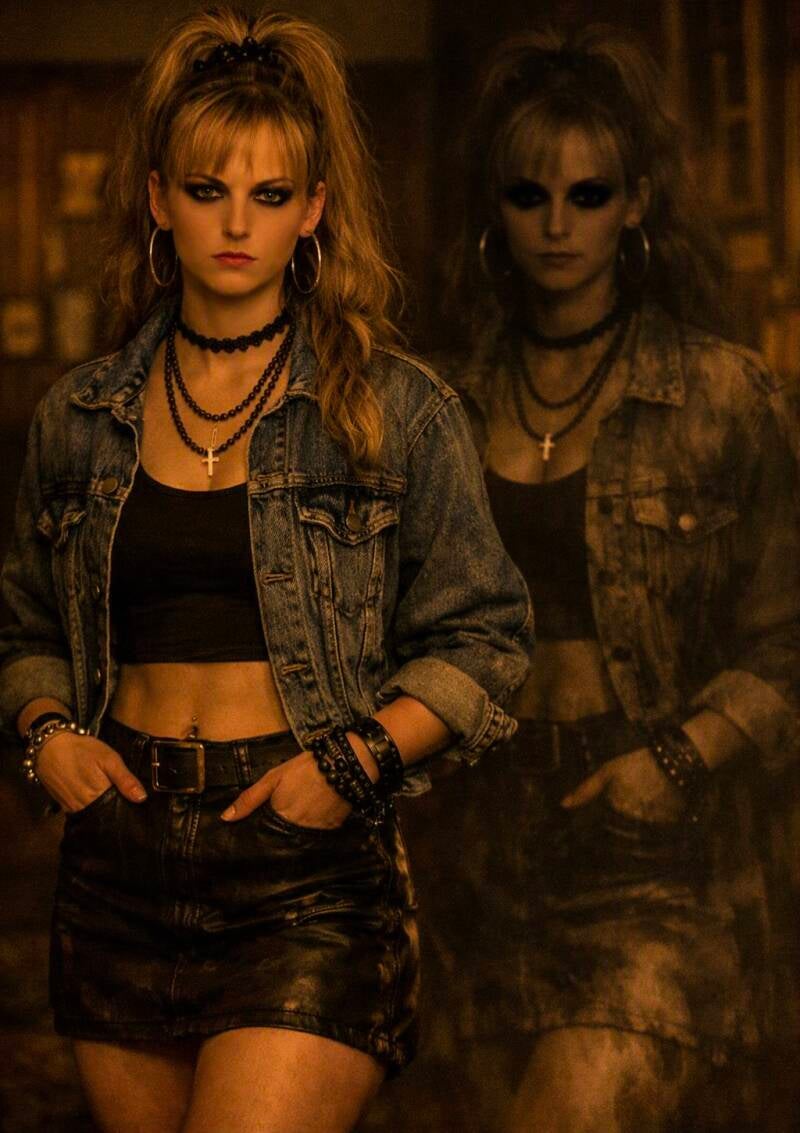
In contemporary paranormal folklore, a mimic is generally described as an entity capable of imitating something familiar.
That may be:
- A person’s voice
- Footsteps
- Someone calling your name
- A familiar sound
- A loved one’s appearance
- A person’s mannerisms
- Or, in some accounts, the person’s entire physical form
The defining characteristic is imitation.
The entity isn’t necessarily presenting itself as something obviously supernatural.
Instead, it appears familiar.
And that’s what makes the stories so disturbing.
Someone hears their mother calling them from another room.
They answer.
But their mother isn’t home.
Someone hears a loved one’s footsteps approaching.
But nobody is there.
Or, in some reports, a person actually sees someone they recognize—only to realize that something about the person isn’t quite right.
The concept overlaps with much older folklore surrounding doubles, supernatural impostors, shapeshifters, trickster beings, and doppelgängers, although these aren’t all the same thing.
A doppelgänger, for example, traditionally refers to a double or counterpart of a living person. A mimic, as the term is used in modern paranormal communities, is specifically emphasizing imitation.
Again, these categories shouldn’t automatically be treated as interchangeable.
My experience
This is one of the experiences I’ve had personally.
There is what I believe to be a mimic associated with my husband’s apartment that has taken the appearance of his mother.
Both my husband and I have heard what we believe was her voice there.
I’ve also personally seen it.
One night, in the middle of the night, I saw what appeared to be my husband’s mother sitting on the sofa.
But something was wrong.
It looked like her.
It was sitting where she could have been sitting.
But it wasn’t quite her.
There was something about it that felt distinctly off.
I was scared, but I told it:
“Get the fuck out.”
And then it disappeared.
That experience is one of the reasons the idea of mimics fascinates me.
The fear isn’t necessarily that you see something monstrous.
The fear is that you see something familiar that shouldn’t be there.
Not Every Spirit Is a Ghost
One of the biggest things I want people to take away from exploring paranormal folklore is that “spirit” and “ghost” aren’t necessarily interchangeable words.
A ghost is generally understood in modern Western culture as the spirit or apparition of a deceased person.
But many spiritual traditions contain beings that were never human at all.
There are spirits of places.
Nature spirits.
Ancestors.
Protective beings.
Malevolent beings.
Tricksters.
Elemental beings.
Collective thought-forms.
Supernatural doubles.
And countless entities that don’t fit neatly into any modern category.
Even the nine categories discussed here aren’t universal.
A being described as a demon in one tradition might be understood as a completely different kind of spirit in another. A guardian spirit in one culture might not resemble the modern Western idea of a guardian at all. A nature spirit doesn’t automatically qualify as an elemental. A dark apparition isn’t automatically a “shadow person.”
Context matters.
Culture matters.
Tradition matters.
And sometimes, the person who experienced something matters most of all.
The Four I’ve Personally Encountered
Of these nine categories, four are part of my own experiences:
Shadow People
Multiple encounters with dark, human-shaped figures—experiences that remain among the most frightening paranormal encounters I’ve had.
Mimics
An experience involving what I believe was an entity imitating my husband’s mother, including an encounter where I saw it sitting on the sofa in the middle of the night.
The other five—residual spirits, poltergeists, intelligent spirits, egregores, and elementals—are not experiences I personally claim to have had.
And I’m perfectly comfortable leaving some doors unopened.
A Final Thought
Paranormal folklore is much bigger than the stereotypical haunted-house story.
For thousands of years, people have tried to understand experiences that seemed to exist somewhere between the ordinary and the mysterious. They gave those experiences names. They built stories around them. They created rituals, warnings, traditions, protections, and entire spiritual systems.
Some of those ideas survived for centuries.
Others changed.
Some disappeared and were later rediscovered.
And some are distinctly modern, shaped by paranormal television, books, internet communities, occult revival movements, and personal testimony.
That doesn’t make the modern stories uninteresting.
Quite the opposite.
It gives us the opportunity to ask where these ideas came from, how they’ve changed, and why certain supernatural archetypes continue to appear in human storytelling.
Because whether we’re talking about a spirit walking the same hallway every night, a guardian watching over a forest, a shadow standing at the edge of someone’s vision, an elemental belonging to the natural world, or something wearing a familiar face—
the folklore surrounding these beings tells us a great deal about how human beings have understood the unknown.
And there are still plenty of stories left to explore.
Welcome to Three Moon Mystic.
A Note on Terminology
The categories in this article are presented as paranormal and occult folklore, not as a single standardized classification system. “Residual haunting,” “intelligent spirit,” “shadow person,” and “mimic” are particularly associated with modern paranormal terminology, while concepts such as demons, guardian spirits, nature spirits, and elemental beings have much older and culturally diverse histories.
When discussing traditions from specific cultures or religions, it is important not to assume that modern paranormal terminology perfectly represents those traditions. A modern label can be useful for comparison, but it should not erase the original cultural context.
Add comment
Comments
Wow somebody's been doing their homework on spirits
And familiars and guide spirits are missing but you do touch up on natural elements and natural spirits of the environment plus Guardians so that does cover familiars and guide Spirits in a way.
I might have to snag a copy of this somehow to have for my files
This is beautiful you've been studying for a while I'm impressed me I've been off tune lately because well after I lost my folks I've kind of been just lingering in a rut of work and home and rest and my familiars are restless and well there was the deal where I took down the prior of Mystics because he went under the control Free Will and Magic and I said no me and my guardian familiar said no magic is not to be Tamed or people's magic of their Free Will should not be tamed so me and my guardian familiar spent some time in the Oasis where we had to learn solace of Peace understanding and I also needed that time to reflect due to the loss of my parents but also me and my guardian familiar got to rest and had to learn to stay out of other people's problems but there will not be another prior of Mystics because the prior disrespected the divine goddesses and disrespected the Sacred Arts which I stood forth to protect including everyone's free will.
And by the way I had nothing to do with the watchtowers I was in the Oasis.
Under the supervision of the goddess who has already judging me because of my outlash at the prior within the realms.
You can ask the mystics in the realms you'll understand the truth about the prior, he was no good at all. kalimaza wanted his head after what that young Seer Mystic was trying to do.
Goddess Corona of Law and justice spoke through the Realms I'm not sure if you heard her
As for me and my familiar now that we're out of the Oasis we're keeping quiet and staying out of people's problems
Wow, somebody’s been doing their homework on spirits! 😂
Familiars and guide spirits are missing, although you do touch on natural elements, natural spirits of the environment, and Guardians, which can cover some of that territory.
I might have to snag a copy of this for my files. This is beautiful. You’ve clearly been studying this for a while, and I’m impressed.
I’ve been off tune lately because after losing my folks, I’ve mostly just been lingering in a rut of work, home, and rest. My familiars are restless. After everything that happened with the Prior of Mystics and my standing up for free will and the Sacred Arts, my guardian familiar and I spent time in the Oasis learning peace, solace, understanding, and how to stay out of other people’s problems.
Now that we’re out of the Oasis, we’re keeping quiet and keeping to ourselves—me and my big black dragon.
The Oasis isn’t really a prison. It’s more like a paradise, almost like one of the goddesses’ gardens. It’s filled with vibrant flowers, tropical trees, birds, wildlife, and a giant lake with a small island in the middle. My dragon and I sat there for the longest time and simply waited.
The night sky there is absolutely beautiful.
And for the record, I had nothing to do with the Watchtowers. I was in the Oasis. 🌙
Aww RJ, thank you. ❤️ I really appreciate you reading it and giving me your thoughts. I’ve definitely been studying and researching this stuff for a while, and I wanted to approach the article from the folklore, occult, and historical side while also including my own experiences.
And you’re absolutely right about familiars and guide spirits being missing. I intentionally kept this one to the nine categories I originally came across, but I think familiars, guides, and the different kinds of protective spirits deserve their own deep dive. Especially because they aren’t necessarily the same thing as Guardians or natural spirits, even though there can definitely be overlap depending on the tradition.
I’m also glad you brought up your experiences because this is exactly the kind of discussion I wanted the article to inspire. Your perspective adds another layer to the subject, especially your thoughts about free will, magic, familiars, and the Oasis. I’m sorry you’ve been in such a rut since losing your folks, though. I can understand why having that period of solitude and reflection with your familiar would have been important.
And the image you described of you and your big black dragon sitting on that little island in the middle of the lake, surrounded by all those vibrant flowers, tropical trees, birds, and wildlife honestly sounds beautiful. That sounds like the kind of place where you could just breathe and be still for a while.
Also, YES, please snag a copy for your files! 😂