Winter has a way of amplifying everything. The quiet feels louder. The nights feel longer. The thoughts you’ve been holding at arm’s length all year suddenly pull up a chair and sit right beside you. For those of us who live with anxiety, grief, or a mind that never quite rests, the darker months can feel heavy in ways that are hard to explain.
The holidays don’t always help. There’s pressure to be cheerful, grateful, festive—sometimes when all you really want is stillness. Or silence. Or just one moment where your chest doesn’t feel tight for no clear reason.
Over the years, I’ve learned that “getting through winter” isn’t about forcing joy or pretending everything is fine. It’s about finding small, gentle ways to ground myself. Ways to soften the edges of the season instead of fighting it. These are some of the practices that help me find peace when the months feel especially dark.

1. Journaling: Letting the Thoughts Out Instead of Carrying Them
When anxiety lives in your head, it multiplies in silence. Journaling has become one of my safest places to unload everything I don’t know how to say out loud. There are days when I write full pages, and days when I scribble one sentence that just says, “Today is heavy.” Both count.
I don’t journal to be poetic or productive. I journal to survive my own thoughts. Sometimes it’s a brain dump. Sometimes it’s a letter I’ll never send. Sometimes it’s a list of things I’m afraid of, followed by a list of things that are still true despite that fear.
In winter, I journal more slowly. I light a candle. I write by lamplight. I let the page hold what my chest can’t. There’s something grounding about seeing your worries in ink instead of letting them swirl endlessly in your mind.
2. Aromatherapy: Comfort You Can Breathe In
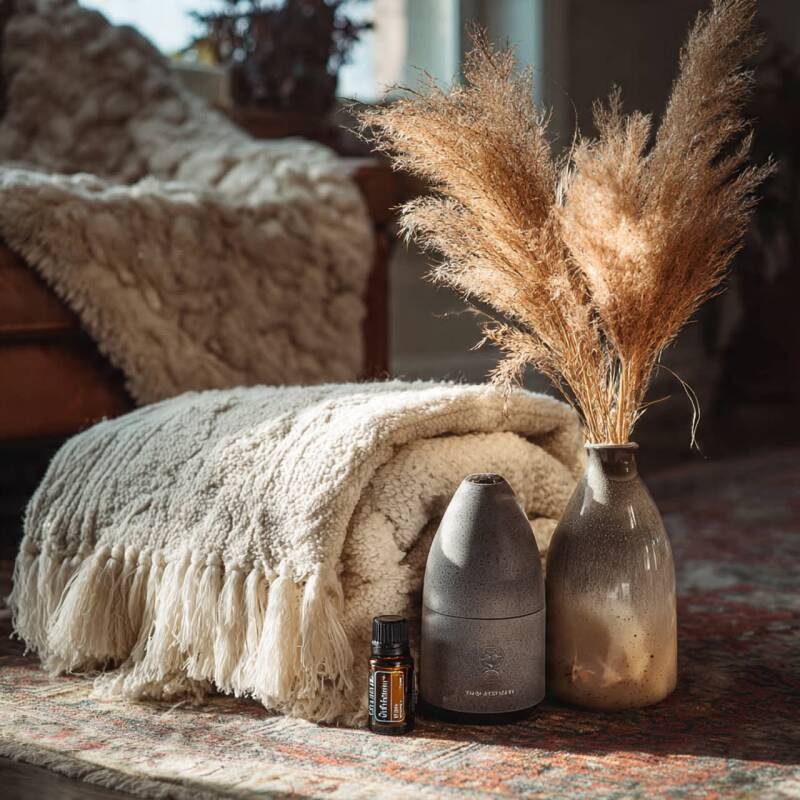
Scent is deeply emotional. It bypasses logic and goes straight to memory, safety, and comfort. During winter, I lean heavily into warm, grounding scents—especially coconut and vanilla. There’s something about them that feels like softness, like being wrapped in a blanket.
Whether it’s a candle, a perfume oil, or a diffuser, aromatherapy helps anchor me in my body when my thoughts start to spiral. When anxiety hits, focusing on scent gives my mind something gentle to hold onto. It reminds me that I’m here, I’m breathing, and this moment will pass.
I don’t underestimate the power of small sensory comforts anymore. If a scent makes you feel calmer, safer, or more at home in yourself, that’s not indulgent—that’s survival.

3. Cooking: Grounding Through Creation
Cooking has always been a form of mindfulness for me, even when I didn’t realize it. Chopping, stirring, seasoning—it forces me to be present. Especially in winter, cooking warm, comforting meals feels like an act of care toward myself.
There’s something deeply soothing about cooking food that takes time. Letting spices bloom in oil. Letting something simmer. Letting the house fill with warmth and familiar smells. It reminds me that not everything needs to be rushed. Some things are meant to unfold slowly.
Cooking also connects me to memory and culture, to moments of togetherness, to nourishment that goes beyond just eating. On days when I feel disconnected or overwhelmed, feeding myself something warm feels like a quiet way of saying, I’m still here.

4. Escaping Gently: The Sims and Safe Worlds
Sometimes coping doesn’t look like healing. Sometimes it looks like escape—and that’s okay. For me, The Sims has always been a safe place to disappear into when real life feels too loud.
There’s comfort in creating a world where you control the pace, the outcomes, the environment. Designing homes, building lives, watching routines unfold—it’s predictable in a way real life often isn’t. And when anxiety thrives on uncertainty, predictability can feel like relief.
I don’t escape to avoid life forever. I escape to rest my nervous system. To give my mind a break. To exist somewhere gentle for a little while before coming back.

5. Letting Winter Be What It Is
One of the hardest lessons I’ve learned is that winter doesn’t need to be fixed. It doesn’t need to be productive. It doesn’t need to be cheerful or meaningful or transformative. Sometimes it’s just quiet. Sometimes it’s lonely. Sometimes it’s heavy.
And that doesn’t mean you’re doing anything wrong.
Finding peace in the darkest months isn’t about forcing light. It’s about allowing softness. Lowering expectations. Choosing comfort without guilt. Letting yourself move slower, feelmore deeply, and rest more.
If all you did today was get through it, that is enough.
Closing Thoughts
If you’re struggling this season, know that you’re not alone—and you’re not weak for feeling it. Peace doesn’t always arrive in big, glowing moments. Sometimes it shows up quietly, in a candle lit at night, a meal cooked slowly, a journal page filled, or a virtual world that feels safer than the real one for a while.
Winter will pass. The light will return. Until then, be gentle with yourself. You deserve warmth, even in the coldest months.
A Short Grounding Exercise for Heavy Moments
If your mind feels loud or your chest feels tight, pause here for a moment.
Sit comfortably and place your feet flat on the floor. Let your shoulders drop. Take a slow breath in through your nose, then exhale through your mouth. Do that once more, just a little slower.
Now name five things you can see around you. Don’t rush. Next, notice four things you can physically feel—the weight of a blanket, the chair beneath you, the warmth of your hands. Then listen for three sounds, near or far. Notice two scents in the room, or one if that’s all you can find. Finally, name one thing you are grateful for in this exact moment, even if it’s small.
You don’t need to feel better right away. The goal isn’t happiness—it’s presence. You are here. You are breathing. This moment is survivable.
Add comment
Comments