
Cari Farver disappeared in November 2012. What followed was not just a homicide, but one of the most disturbing cases of prolonged identity impersonation in recent U.S. criminal history — a case that exposed failures in how disappearances, digital evidence, and victim credibility are handled.
Farver, a 37-year-old mother from the Omaha area, was last seen after visiting a man she had been casually dating. Soon after, she seemingly vanished from public view. However, text messages, emails, and social media activity continued to appear under her name for years. Those messages were often threatening, hostile, or erratic, directed at people in her life.
At the time, the messages were largely taken at face value.
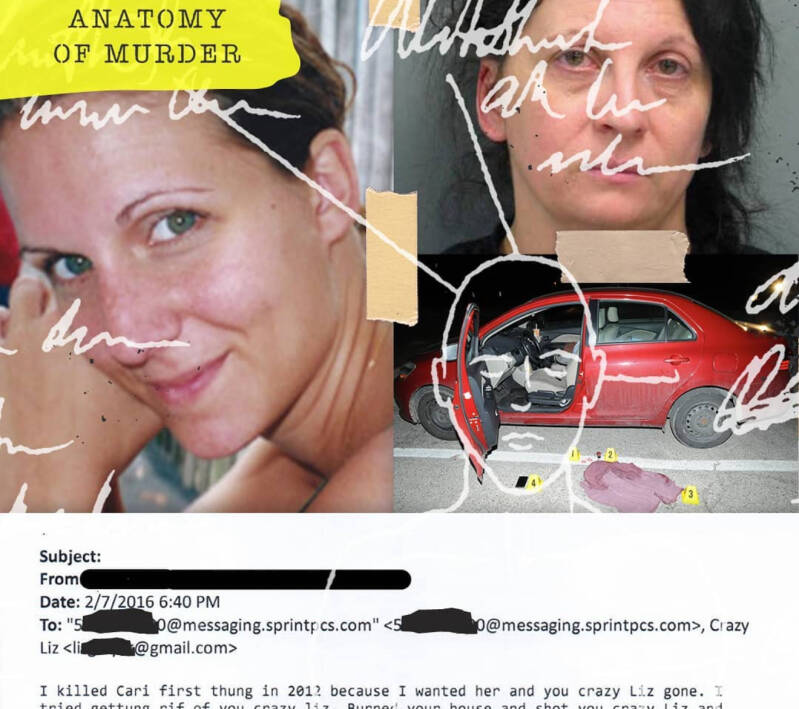
It was later determined that Farver had been murdered shortly after her disappearance. The person responsible, Shanna “Liz” Golyar, then spent nearly four years impersonating Farver online while simultaneously presenting herself as a victim of stalking and harassment.
A Manufactured Narrative
Golyar’s actions went far beyond digital impersonation. Investigators later revealed that she staged extreme events — including setting fire to her own home and inflicting a gunshot wound on herself — to support her claims that she was being targeted. During this time, she continued sending messages posing as Farver, reinforcing the illusion that Farver was alive, unstable, and responsible for the threats.
This deception proved effective. The continued digital activity created doubt about whether Farver was truly missing. The lack of physical sightings, which should have raised alarms, was instead overshadowed by the persistent stream of messages attributed to her.
Law enforcement later acknowledged the complexity of the case, noting that the impersonation and staged victimhood significantly delayed clarity.
Missed Red Flags
The case raises serious questions about missed warning signs.
For years, no one physically saw or spoke to Farver. All “contact” occurred digitally. The messages attributed to her were increasingly aggressive and inconsistent with her known behavior. Yet these factors were not enough, initially, to trigger an aggressive missing-person response.
Experts in digital crime have since emphasized that unexplained digital activity in the absence of physical confirmation should be treated as a red flag, not reassurance. Threatening messages, sudden personality shifts in communications, and long-term absence from in-person contact are indicators that require immediate scrutiny.
While manipulation by the perpetrator played a significant role, the case demonstrates how reliance on digital communication can obscure danger — and how easily a victim’s reputation can be reshaped in their absence.

The Break in the Case
The investigation ultimately turned on digital forensics and physical evidence.
In 2016, investigators recovered deleted files from an old electronic device belonging to Golyar. Among them was an image showing a tattooed foot later identified as Farver’s. Additional forensic evidence, including fingerprints and blood found in Farver’s vehicle, tied Golyar directly to the crime.
Law enforcement also employed investigative deception, feeding Golyar false information to observe her responses. Her actions during this period further implicated her and contradicted her claims of victimhood.
In 2017, Golyar was convicted of first-degree murder, arson, and related charges. She was sentenced to life in prison without the possibility of parole.
Broader Implications
The Cari Farver case highlights critical gaps in how disappearances are assessed in the digital age. Social media accounts and text messages can be manipulated, scheduled, or fabricated. Without physical verification, online activity should not be used to dismiss concerns about a person’s safety.
The case also underscores how quickly narratives form around missing women — particularly narratives that frame them as unstable, difficult, or responsible for their own disappearance. Once such narratives take hold, they can delay action and deflect accountability.
Farver was not just murdered; her identity was used to obscure the truth of her death. For years, she existed publicly only as a distorted version of herself, constructed by the person who killed her.
A Case That Demands Change
Cari Farver deserved urgency. She deserved to be treated as missing, not merely misunderstood. The prolonged impersonation that followed her death should prompt serious reflection on investigative protocols, digital evidence preservation, and public assumptions about absence.
Her case stands as a warning: when someone disappears, digital noise should never replace physical proof of life. Silence, especially prolonged silence, should not be dismissed.
The truth eventually emerged. But it came years too late.

Add comment
Comments
I didn’t know Cari personally, but I knew people who knew her — coworkers of friends, mutual circles that overlap the way they do in mid-sized communities. I’m around the age Cari would be now, and that’s what makes this case sit so heavily with me. She wasn’t some distant figure or abstract name. She was someone who existed in the same stage of life I’m in now, raising a child, working, navigating relationships, trying to live.
What haunts me most is the way she vanished quietly while a false version of her continued to exist. Looking back, it’s chilling how easy it was for people to accept digital messages as proof of life. No one physically seeing her for years should have been enough to trigger panic. Instead, her absence was explained away, and the version of her that remained was hostile, erratic, and completely unfair to who she actually was.
I’ve always believed the crime itself was brutally intentional — not impulsive, not accidental. The level of planning that followed tells me this wasn’t just about violence, but control. To take someone’s life and then take their identity, to speak as them, to turn them into the villain in their own disappearance — that feels like a particularly cruel form of erasure. It wasn’t enough to kill her. She had to be rewritten.
What makes it even worse is imagining how alone she must have been in those final moments, knowing no one was coming because the world believed she was still “out there.” The impersonation didn’t just delay justice — it stole urgency, dignity, and compassion from a woman who deserved all three.
Thank you for writing this article the way you did. Cari deserved to be seen clearly, even years later. And stories like this matter because they remind us that silence, especially when paired with digital noise, is not reassurance — it’s a warning.