By Yasmin Chaudhary — The Inkwell Times
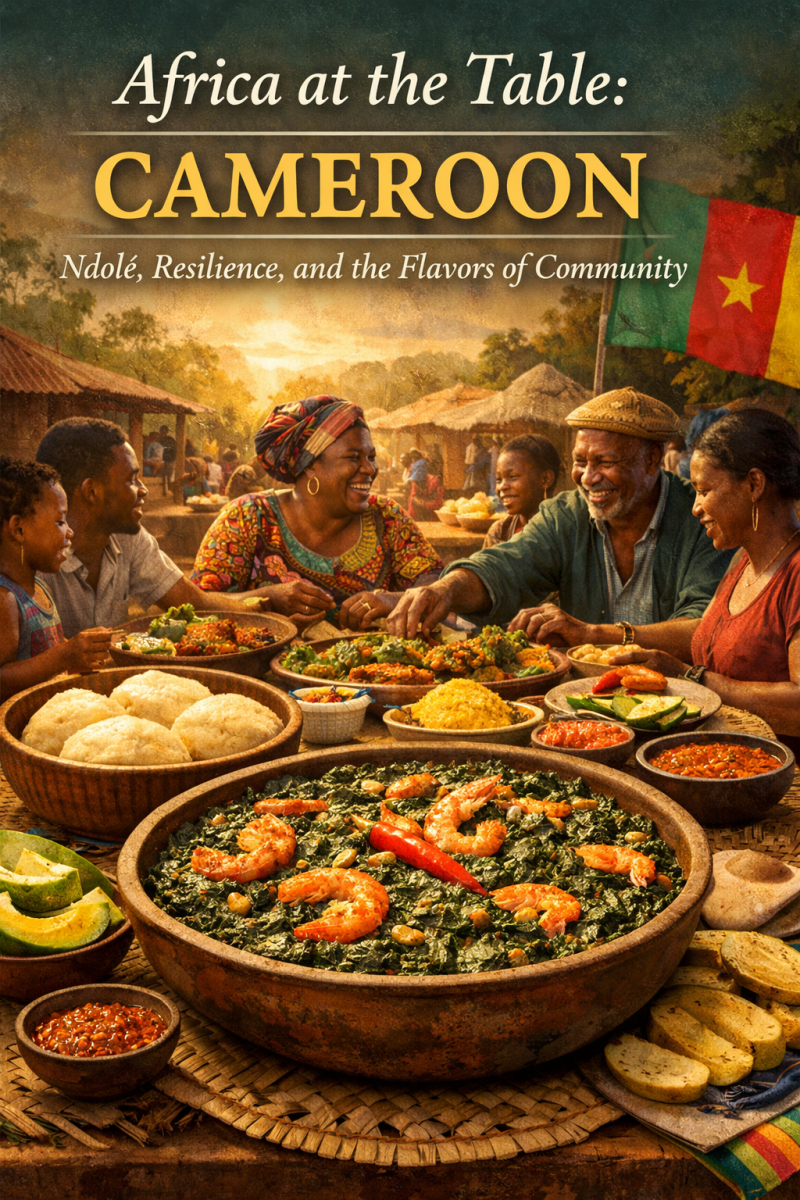
Food in Cameroon reflects the country’s extraordinary diversity. With hundreds of ethnic groups, multiple climate zones, and a rich cultural history, there is no single way to describe Cameroonian cuisine. Yet one dish is often recognized across the country as a symbol of national identity: ndolé.
Rich, hearty, and deeply flavorful, ndolé brings together bitter greens, peanuts, spices, and protein into a meal that tells a larger story about community, adaptation, and tradition. Like Cameroon itself, the dish is layered, complex, and shaped by generations of cultural exchange.
A Country of Many Culinary Traditions
Often called “Africa in miniature,” Cameroon contains an incredible variety of landscapes, cultures, and foodways.
The country’s cuisine reflects influences from:
- Coastal fishing communities
- Forest regions rich in native crops
- Northern pastoral traditions
- Trade routes connecting West and Central Africa
Across these regions, food is more than nourishment. Meals serve as opportunities for gathering, hospitality, and the passing of traditions from one generation to the next.
Ndolé is one of the dishes that brings many of these influences together.
What Is Ndolé?
Ndolé is a stew traditionally made with bitterleaf, ground peanuts, onions, spices, and meat, fish, or shrimp.
The dish originates with the Sawa peoples of Cameroon’s coastal regions, particularly around the city of Douala. Over time, however, it became beloved throughout the country and beyond.
One of the most distinctive features of ndolé is its balance of flavors.
The slight bitterness of the greens is softened by the richness of peanuts, creating a dish that is both comforting and deeply satisfying. Different families prepare it in different ways, but the core ingredients remain a source of cultural pride.
The Importance of Bitterleaf and Peanuts
Many traditional African cuisines make use of ingredients that reflect local environments and generations of agricultural knowledge.
In ndolé, two ingredients stand out:
- Bitterleaf, valued for its unique flavor and long culinary history
- Peanuts, which provide richness, protein, and texture
Together, they create a dish that is practical, nourishing, and adaptable.
Historically, families often relied on ingredients that could be grown locally or obtained through regional trade networks. These foods became the foundation of community meals and celebrations.
Food, Family, and Celebration
Ndolé is often associated with important gatherings.
It may appear at:
- Weddings
- Holiday celebrations
- Family reunions
- Community events
- Special Sunday meals
Preparing ndolé can be labor-intensive, especially when using traditional bitterleaf that requires careful washing to reduce bitterness.
Because of this, making the dish is often a shared activity. Family members gather in kitchens, exchange stories, and work together long before the meal reaches the table.
In this way, the preparation becomes just as meaningful as the meal itself.
Colonial History and Culinary Influence
Cameroon experienced German, French, and British colonial rule, each leaving influences on language, trade, and food systems.
Yet traditional dishes like ndolé remained important anchors of cultural identity.
While new ingredients and cooking techniques arrived over time, many communities continued preserving recipes passed down through generations.
Today, ndolé serves as a reminder that food can endure even through periods of profound social and political change.
Cameroonian Food Beyond Cameroon
Like many African cuisines, Cameroonian cooking has traveled with its people.
Cameroonian communities around the world continue preparing ndolé, introducing new generations to family traditions and cultural heritage.
Whether served in Yaoundé, Douala, Paris, London, or Washington, D.C., the dish carries a sense of home.
For many members of the diaspora, recipes become a way of maintaining connection across distance and time.
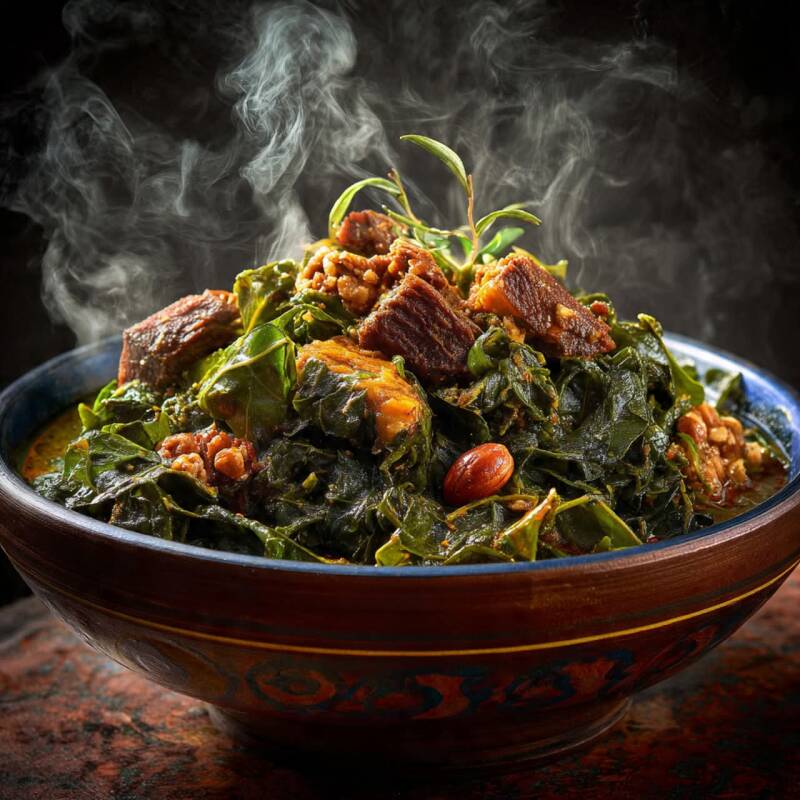
Easy Ndolé-Inspired Peanut Chicken Stew
Traditional ndolé can require specialty ingredients that may be difficult to find. This simplified version captures some of the dish’s signature flavors while using ingredients available in most grocery stores.
Ingredients
- 1 pound chicken breast or thighs, diced
- 1 tablespoon oil
- 1 onion, chopped
- 3 cloves garlic, minced
- 4 cups spinach or kale, chopped
- 1 cup natural peanut butter
- 3 cups chicken broth
- 1 teaspoon paprika
- ½ teaspoon cayenne pepper (optional)
- Salt and black pepper to taste
Instructions
- Heat oil in a large pot and cook the onion until softened.
- Add garlic and chicken, cooking until lightly browned.
- Stir in paprika, cayenne, and seasonings.
- Add broth and bring to a simmer.
- Whisk peanut butter into the broth until smooth.
- Add spinach or kale and cook for 10–15 minutes.
- Simmer until thickened and flavorful.
- Serve over rice.
This adaptation isn’t traditional ndolé, but it offers an accessible introduction to some of the flavors that make the dish so beloved.
Closing Reflection
Ndolé tells a story larger than a recipe.
It speaks of family kitchens and community gatherings.
Of ingredients shaped by local landscapes.
Of traditions carried across generations and continents.
In Cameroon, food is more than what fills the plate.
It is memory, identity, and a celebration of the people who gather around the table.
Add comment
Comments