By: Yasmin Chaudhary - The Inkwell Times
Every December, the world seems to collectively agree that it’s time for Christmas. Lights appear overnight. Trees go up. Music loops endlessly. And yet, for a holiday so widely celebrated, many people don’t actually know where its traditions come from—or how layered its history truly is.
Christmas, as we know it today, is not a single-origin holiday. It is the result of centuries of cultural blending, religious adaptation, and seasonal tradition. To understand Christmas fully, we have to go back long before December 25th became significant at all.
Winter Before Christmas: Why the Season Mattered
Long before Christianity, winter was sacred.
The winter solstice — the shortest day and longest night of the year — was a powerful moment for ancient civilizations. It symbolized death and rebirth, darkness giving way to light, survival in the harshest season. Communities across Europe, Asia, and the Middle East marked this time with rituals, feasts, fires, and symbols of life.
Winter wasn’t just cold — it was uncertain. Celebrations during this time were acts of hope.
Yuletide: The Foundation of Many Christmas Traditions
One of the strongest influences on modern Christmas comes from Yuletide, a winter festival celebrated by Germanic and Norse peoples.
Key Yuletide Traditions:
- Evergreen trees and branches symbolized life enduring through winter
- Yule logs were burned to bring warmth, protection, and good fortune
- Feasting and drinking marked survival and community
- Gift-giving honored kinship and reciprocity
- Candles and fire represented light returning to the world
These celebrations often lasted several days, not just one. The focus was on togetherness, warmth, and honoring the cycles of nature — not a single religious figure.
Sound familiar? It should.
The Date: Why December 25th Was Chosen
The Bible does not specify the date of Jesus’s birth.
Early Christians did not celebrate birthdays at all — that practice was considered pagan. It wasn’t until centuries later that church leaders chose December 25th, and this choice was strategic.
Why?
Because it coincided with:
- The Roman festival of Saturnalia
- Existing solstice celebrations
- Widespread pagan winter festivals like Yuletide
By aligning Jesus’s birth with already-beloved celebrations, Christianity could spread more easily. People didn’t have to give up their festivals — they simply reinterpreted them.
This wasn’t uncommon. It was adaptation.
Saturnalia: Rome’s Winter Celebration
Saturnalia was one of the most popular Roman festivals, celebrated in mid-December.
It included:
- Public feasting
- Gift-giving
- Role reversals (slaves and masters switching places)
- A general suspension of social rules
The joy, excess, and generosity of Saturnalia heavily influenced how Christmas later developed in Europe.
Christianity and Reinterpretation, Not Erasure
As Christianity spread, it absorbed local customs rather than eliminating them outright.
Evergreens became symbols of eternal life through Christ.
Light became symbolic of Jesus as “the light of the world.”
Feasts became celebrations of divine generosity.
What changed wasn’t the structure of the celebration — it was the meaning assigned to it.
This blending allowed Christianity to feel familiar rather than foreign.
The Christmas Tree, Santa, and Modern Additions
Many things we now consider “traditional Christmas” are actually quite recent.
The Christmas Tree:
- Popularized in Germany in the 16th century
- Spread globally in the 19th century
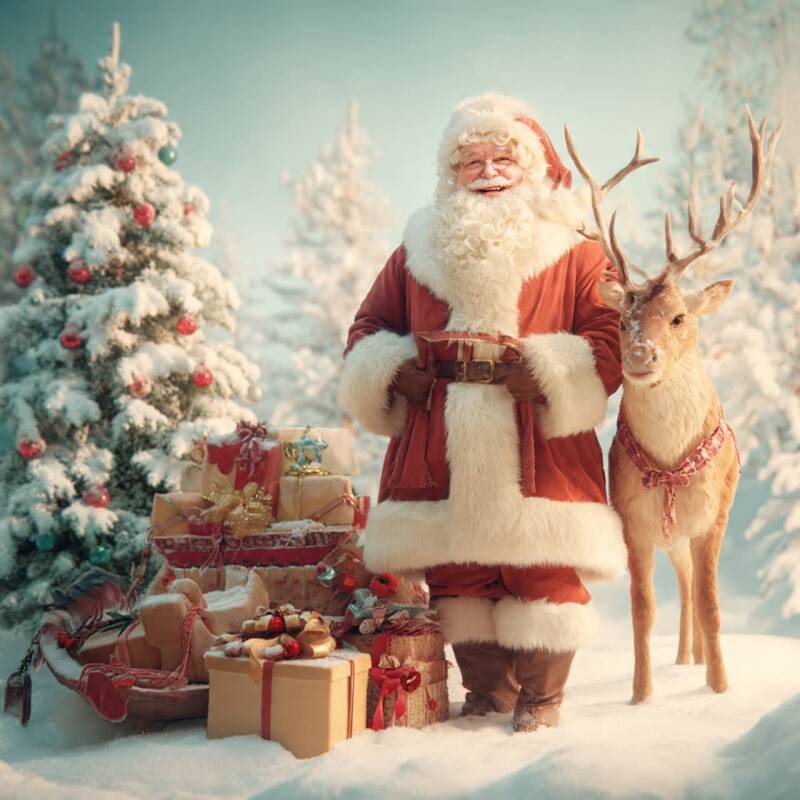
Santa Claus:
- Inspired by St. Nicholas, a real 4th-century bishop
- Combined with Nordic folklore (including Odin-like imagery)
- Fully modernized in the 1800s and 1900s
Gift-Giving:
- Rooted in Saturnalia and Yuletide
- Later tied to the biblical Magi story
Even Christmas cards, caroling, and many foods are regional traditions that evolved over time.
What Christmas Really Is Today
Christmas today is not a pure religious holiday, nor is it purely pagan. It is a cultural mosaic.
For some, it is deeply spiritual.
For others, it is about family and warmth.
For many, it’s a seasonal ritual of comfort and connection.
And that’s okay.
Understanding Christmas’s origins doesn’t take away its meaning — it adds depth. It shows us that humans across cultures have always sought light in darkness, connection in cold, and hope during uncertain times.
Why This History Matters
Knowing where Christmas comes from reminds us of something important: traditions are not fixed. They evolve because people do.
What matters most isn’t whether a tradition began as pagan or Christian — it’s how it’s practiced now. Whether it brings comfort, kindness, reflection, or generosity into the world.
Winter has always needed warmth.
Human beings have always created it together.
Closing Thoughts
Christmas didn’t appear fully formed. It grew — slowly, imperfectly, and beautifully — from centuries of shared human experience.
At its core, it is a winter tradition shaped by survival, hope, and community. And that truth transcends any single belief system.
Perhaps that’s why it continues to resonate: because long before doctrine, people simply wanted light in the dark.
Add comment
Comments
I absolutely loved this post! It reminded me of the true joy and meaning of Christmas. Every year, I love building gingerbread houses with my boys — it’s messy, chaotic, and full of laughter, but it’s our little way of celebrating God’s blessings and making memories together. My eldest is in college now, so these moments feel even more precious, and I cherish the time with my younger ones in elementary school. Yaz, knowing you and reading your thoughts on the origins of Christmas made this even more special — it brought so much warmth to my heart!