By Yasmin Chaudhary - The Inkwell Times
Before I begin, I want to acknowledge something openly and with care. I had intended to share this piece earlier, but as today is Christmas, this article will be going live afterward. Hanukkah deserves its own space, its own attention, and its own respect—not as an afterthought, but as a meaningful celebration rooted in history, faith, and resilience.
This post is shared in that spirit.
I also want to be clear and intentional in my language. My respect and solidarity are with Jewish people, Jewish history, and Jewish faith. I do not conflate Judaism with the actions of any modern government or political state. Criticism of policies or violence is not a rejection of a people, a religion, or a culture. Jewish lives, stories, and traditions matter—always.
With that said, let’s talk about Hanukkah.
What Is Hanukkah?
Hanukkah, often called the Festival of Lights, is an eight-day Jewish holiday that commemorates resistance, survival, and the preservation of religious freedom. While it is sometimes misunderstood as a “Jewish Christmas,” Hanukkah is its own observance with a very specific historical and spiritual origin.
At its core, Hanukkah is about refusing erasure—holding onto identity even when powerful forces attempt to extinguish it.
The Historical Origins of Hanukkah
Hanukkah dates back to the 2nd century BCE, during a period when Judea was under the rule of the Seleucid Empire, led by King Antiochus IV Epiphanes.
Antiochus enforced policies that:
- Outlawed Jewish religious practices
- Desecrated the Second Temple in Jerusalem
- Forced assimilation into Hellenistic (Greek) culture
- Criminalized Torah study and Jewish observance
In response, a small group of Jewish rebels known as the Maccabees, led by Judah Maccabee, rose up against the empire. Despite being vastly outnumbered, they fought to reclaim their religious freedom and their sacred spaces.
Against all odds, they succeeded.
The Miracle of the Oil
After reclaiming the Temple, the Maccabees sought to rededicate it. According to Jewish tradition, they found only one small jar of ritually pure oil—enough to light the Temple’s menorah for just one day.
Miraculously, the oil burned for eight days, giving them enough time to prepare more.
This miracle is why Hanukkah is celebrated for eight nights, and why light plays such a central role in the holiday.
The Menorah and Its Meaning
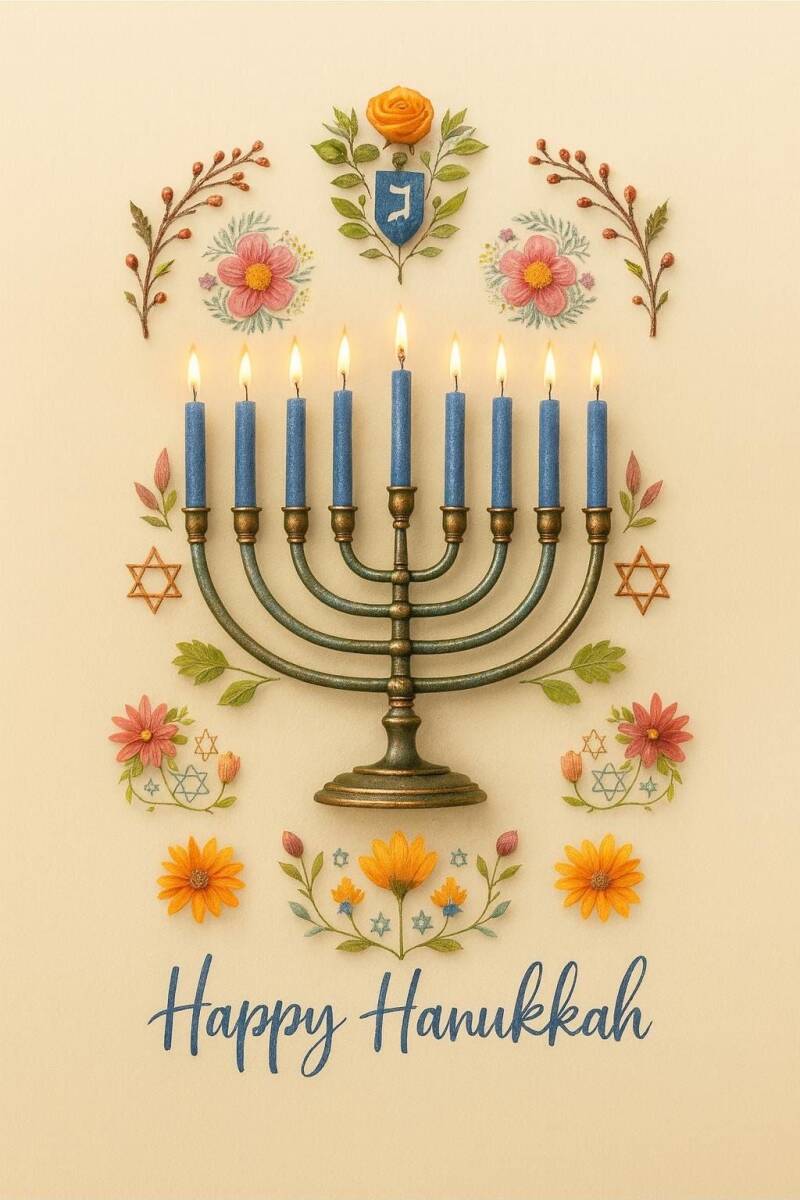
During Hanukkah, Jewish families light a hanukkiah, a nine-branched menorah:
- Eight branches represent the eight nights
- One central candle (the shamash) is used to light the others
Each night, an additional candle is lit, symbolizing:
- Growing light
- Endurance
- Hope that increases rather than diminishes
In Jewish tradition, light is not just physical—it represents wisdom, faith, and divine presence.
Hanukkah Traditions
Hanukkah is celebrated with customs that are both joyful and deeply symbolic:
- Lighting candles each night with blessings
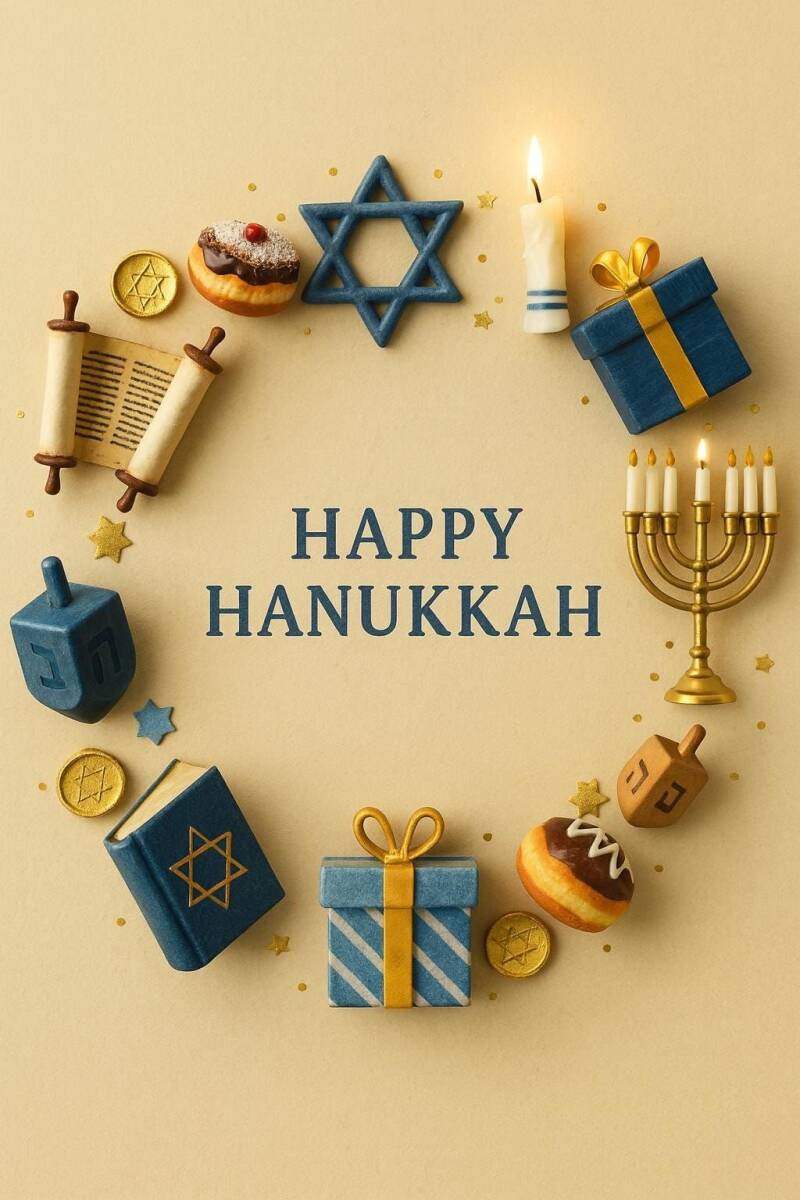
- Playing dreidel, a spinning top game rooted in historical resistance
- Eating foods fried in oil, such as latkes and sufganiyot, to honor the miracle
- Giving gelt (coins or gifts), especially to children
- Singing songs and sharing stories of perseverance
These traditions are acts of remembrance, not spectacle.
Why Hanukkah Matters Beyond the Holiday
Hanukkah is not about conquest or dominance. It is about survival in the face of forced assimilation. It tells the story of a people who refused to abandon their faith even when doing so came at great cost.
In a world where identity is often politicized, misunderstood, or weaponized, Hanukkah reminds us that:
- Faith is not the same as power
- People are not the same as governments
- Culture is not the same as policy
Honoring Hanukkah means honoring Jewish history without distortion, erasure, or conditional empathy.
A Closing Reflection
Light has always mattered most in dark times.
Hanukkah is not loud. It does not demand attention. It grows quietly, one flame at a time, teaching that even a small, fragile light can endure when it is protected with care and intention.
May we all learn to hold space for one another’s histories—especially when the world makes that difficult.
Add comment
Comments