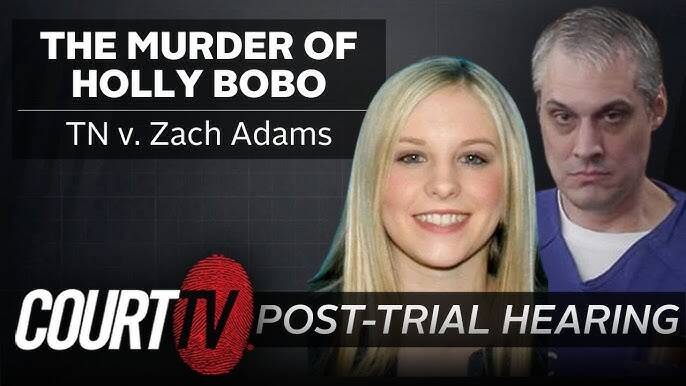
By Yasmin Chaudhary — The Inkwell Times
On the morning of April 13, 2011, 20-year-old Holly Lynn Bobo woke early at her family’s home in rural Parsons, Tennessee, to study for an exam. Her parents had already left for work and her brother was still asleep when she stepped outside. Shortly before 8 a.m., Clint Bobo, her brother, heard the dogs barking and saw Holly walking with a man in camouflage into the woods behind their property — a sight neither of them ever forgot.
After Holly’s disappearance, the community launched one of the most exhaustive searches in Tennessee history. Friends, family, volunteers, and law enforcement scoured woods and fields across Decatur County, but for years there was no definitive sign of what happened to her.
The Discovery and the Investigation
It wasn’t until September 2014, more than three years after she vanished, that Holly’s partial remains were found by ginseng hunters in a wooded area roughly six miles from her home. The remains were identified through skeletal fragments, and her death was ultimately ruled a homicide — caused by a gunshot to the back of the head.
Six men were eventually implicated in connection with her disappearance and death, but the legal path to accountability has been complex, emotional, and at times controversial.
Trials, Pleas, and Convictions
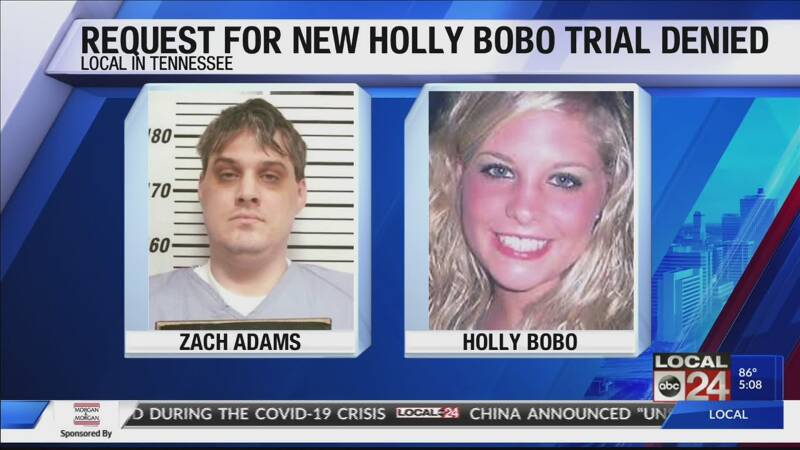
In early 2014, before Holly’s remains were found, Zachary Adams, his brother John Dylan “Dylan” Adams, and their acquaintance Jason Autry were arrested and charged with aggravated kidnapping, first-degree murder, and rape in connection with Holly’s disappearance.
In September 2017, a jury in Savannah, Tennessee, convicted Zachary Adams on all charges, including first-degree murder, aggravated kidnapping, and rape, sentencing him to life in prison plus 50 years.
Dylan Adams entered an Alford plea in January 2018 — meaning he did not admit guilt but acknowledged the prosecution had enough evidence to convict — and received a 35-year prison sentence. Autry agreed to testify against Zach Adams in exchange for a reduced sentence and was released after serving about eight years, but would later face unrelated federal weapons charges.
Controversy and Questions
Despite the convictions, this case remains mired in controversy and debate. There was no DNA or solid physical evidence tying the accused to the crime scene, and much of the prosecution’s case relied on testimony from Autry — testimony he has since recanted, saying he fabricated his account to avoid a life sentence. Autry’s reversal triggered petitions and renewed legal scrutiny, including a recent request by Zachary Adams for a new trial based on this development.
In mid-2025, courts began hearings related to this post-conviction effort. Adams has emphasized the importance of Autry’s recantation, insisting his original conviction was influenced by testimony that Autry now says was not truthful. A judge has already ruled some of this evidence inadmissible in court, and appellate options continue to unfold.
This complexity has fueled ongoing public debate, especially among true-crime communities and local residents who feel the case, while adjudicated, may not be fully resolved. Some argue that without clear physical evidence — only testimony that has since been recanted — deep questions remain about the official narrative.
The Human Cost
What should never be lost in discussions about legal strategy or procedural fairness is the loss of a life. Holly was a young woman with plans, relationships, and a future taken from those who loved her. Her mother, Karen, fainted while testifying at trial; her brother Clint’s memories of that morning have been replayed countless times in public testimony and media coverage.
In 2025, Holly’s case returned again to national conversation with the release of a six-episode podcast, What Happened to Holly Bobo?, hosted by Eva Pilgrim and featuring previously unreleased interviews, including with Clint Bobo himself. The series revisits the case’s emotional, investigative, and legal complexities, drawing attention back to what still feels unresolved for many.
Ongoing Reflection and Justice
The murder of Holly Bobo is more than a cold case story; it’s a reminder of the fragility of justice and the difficulty of truth in systems reliant on human testimony and imperfect processes. Even as convictions stand, appeals continue, and public discourse persists, the challenge remains to balance the need for accountability with the acknowledgment that evidence can be flawed and memories can be manipulated.
For Holly’s family, the search for answers did not end with a verdict. For communities that followed her disappearance and the lengthy legal battle that followed, the case resonates as an example of how the pursuit of truth can be complicated by uncertainty, procedural ambiguity, and conflicting narratives.
Add comment
Comments
As awful as this case is, I still believe the right people were convicted. The evidence wasn’t perfect, but it wasn’t nothing either. At some point, the justice system has to act, even when the story is messy. Holly Bobo deserves that.
This case has always bothered me. There were too many mistakes early on, too many leads that went nowhere, and too much reliance on jailhouse testimony. Whether the men convicted are guilty or not, the investigation itself raised serious questions that were never fully answered.
No matter where people stand on guilt or innocence, a young woman lost her life, and her family has had to relive this tragedy over and over again. It’s heartbreaking that after all these years, there’s still so much debate instead of peace.
I just can’t stop thinking about Holly and her family. I really hope her brother doesn’t blame himself — there’s no way he could have known what was happening. Sending love and strength to everyone affected by this tragedy.